

What Is the Culture of Pakistan? A Complete Explainer
Ask “what is the culture of Pakistan” and you get a hundred answers — because Pakistan is not one culture but a federation of them, bound by faith, language and shared history. This explainer gives you the full picture: the roots, the regional cultures, and the values that make Pakistani culture distinct.
Quick answer: The culture of Pakistan is a blend of Islamic values and the traditions of its Punjabi, Pashtun, Sindhi, Baloch, Saraiki and northern communities — expressed through the Urdu language, shalwar kameez dress, a Mughlai-Persian cuisine, Sufi-influenced arts, and a social code of family loyalty and hospitality.
Historical Roots
Pakistani culture stands on 5,000 years of civilisation — the Indus Valley cities of Mohenjo-daro and Harappa — layered with Persian, Greek, Central Asian and Mughal influences, then reshaped by British rule and the 1947 Partition. Islam, arriving with Arab traders and Sufi saints, became the binding framework: the calendar, the ethics, the aesthetics. The result is neither purely “Islamic” nor purely “South Asian” but a distinct synthesis.
Regional Cultures
- Punjabi: the culture of the plains — Sufi poetry (Bulleh Shah, Waris Shah), bhangra, melas, and the shrine culture of Lahore and Multan.
- Pashtun: governed by Pashtunwali — the code of honour, hospitality (melmastia) and revenge; the Attan dance and hujra gatherings.
- Sindhi: the Indus civilisation’s heir — Shah Latif’s poetry, Ajrak, Sindhi topi, and the shrine of Lal Shahbaz Qalandar at Sehwan.
- Baloch: tribal honour, epic poetry (sipatt), embroidered dress, and the chaap dance.
- Northern (Gilgit-Baltistan, Chitral): polo at Shandur, the Kalash festivals, and mountain hospitality traditions.
Core Values
- Family first: joint families, elder authority, arranged marriages with family consent.
- Hospitality (mehmaan nawazi): guests receive the best of everything.
- Modesty (haya): in dress, speech and conduct — especially valued.
- Community: weddings, funerals and Eid are collective, not private, affairs.
- Faith in daily life: from “Insha’Allah” in conversation to charity (zakat) as obligation.
Culture Today
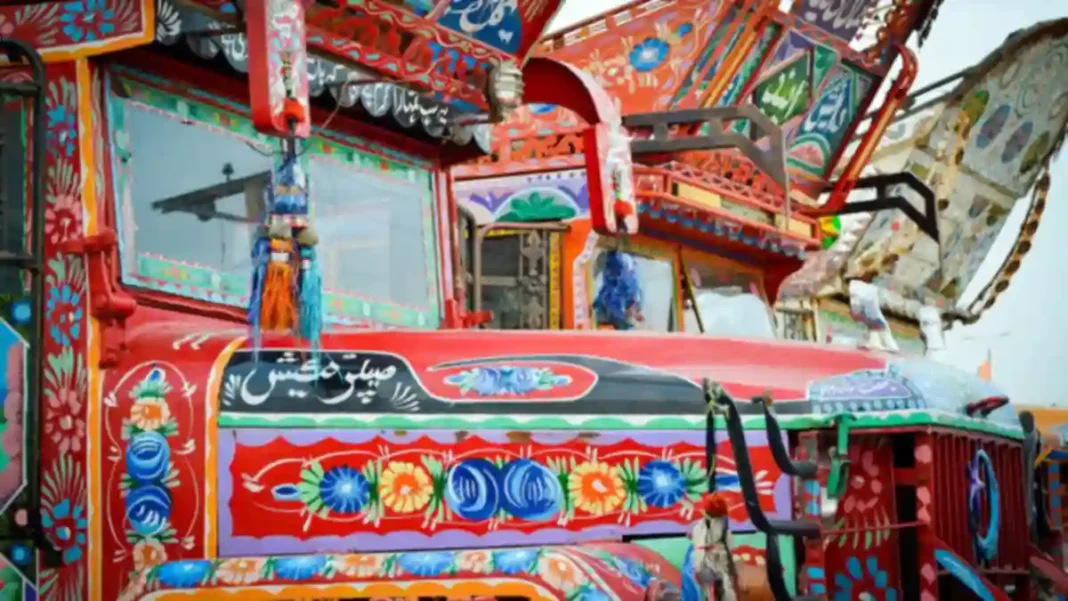
Urban Pakistan blends tradition with modernity — Coke Studio reimagines folk for global audiences, truck art goes to fashion weeks, and the diaspora (9+ million Pakistanis abroad) carries the culture worldwide. Yet the core — family, faith, hospitality — remains remarkably intact across generations.
Frequently Asked Questions
What are the main elements of Pakistani culture?
Islamic values, regional ethnic traditions (Punjabi, Pashtun, Sindhi, Baloch, northern), the Urdu language, shalwar kameez dress, Mughlai cuisine, Sufi arts and music, and strong family and hospitality norms.
Is Pakistani culture the same as Indian culture?
They share deep South Asian roots — language, cuisine, music — but Pakistan’s culture is distinctly shaped by Islam as state religion, Persianate court traditions, and its own regional mix. The two diverged sharply after 1947.
What is the most important value in Pakistani culture?
Most Pakistanis would name family — loyalty to parents and kin structures daily life — followed closely by faith and hospitality to guests.