Slug: home-based-workers-exploitation-wages-lahore
Category: Culture & Society
Focus keyphrase: home-based workers Pakistan wages
SEO title: Home-Based Workers Trapped in Exploitation
Meta description: Pakistan’s home-based workers earn as little as Rs50 an hour while inflation soars, with women facing pay gaps, harassment and no social protection.
Tags: home-based workers, women labour, piece-rate wages, gender pay gap, informal economy, labour rights, Lahore, social protection
Original element: own data point contrast — our prior coverage of pension cover for domestic/agricultural workers and Labour Day rights pieces shows what formal protections look like, sharpening what these workers lack; explainer context on piece-rate economics and the International Home-Based Workers Day event
Home-Based Workers Trapped in Exploitation as Wages Freeze at Rs50 an Hour
Pakistan’s home-based workers are labouring for what speakers at a Lahore event called sub-human wages, some earning as little as Rs50 an hour while inflation and utility bills keep climbing. The home-based workers Pakistan wages crisis, laid out at a gathering marking International Home-Based Workers Day, shows an informal workforce trapped in severe economic exploitation and systemic neglect.
The speakers said earning power for these workers remains frozen at levels from three years ago, even as basic living costs have shot up. Trade union representatives and grassroots workers voiced concern over unpaid wages, occupational health hazards, open gender pay discrimination and a complete absence of government social protection.
Home-Based Workers Pakistan Wages: The Numbers
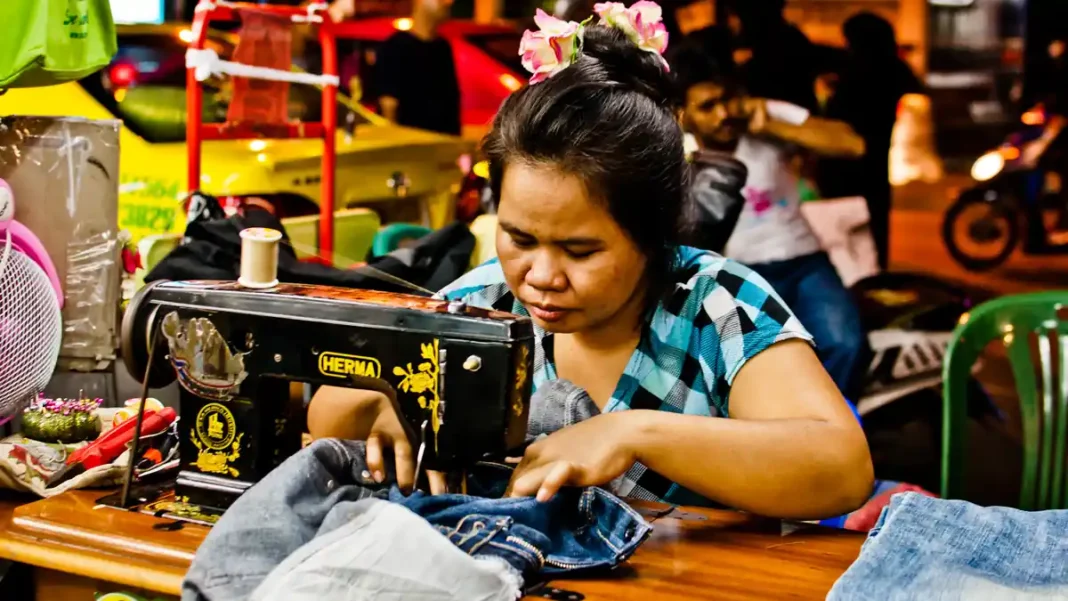
The testimonies gave the exploitation a human scale. A worker producing lace said she earned Rs200 for four hours of continuous work, which comes to Rs50 an hour. Others reported receiving as little as Rs16 to sew intricate lace onto shirt necklines, damans and cuffs.
Saima, a toy maker, said assembling a gross of 144 toy units takes eight to twelve hours of gruelling effort for pay of Rs60 to Rs100. She said factory owners openly enforce a gender pay gap, offering men higher rates and justifying lower wages for women on the pretext that women miss work more often because of personal or child health issues.
Other workers told similar stories. Muqaddas attaches 1,444 small pearls for Rs100. Shamim spends two full days stitching a single shirt for Rs100. Sughran said daily earnings hovered between Rs50 and Rs100, adding that contractors bluntly tell workers to quit whenever they complain about low pay.
More Than Low Pay
The event was not only about wages. Kaneez Fatima said hyperinflation and crippling electricity bills had badly eroded families’ purchasing power while piece-rate wages stayed flat.
Home-Based Workers Union Vice President Jamila said long hours of repetitive labour in fixed postures cause serious physical ailments. She urged workers to form localised union units to fight collectively for their rights.
Workers also raised harassment and safety. Aneeqa described persistent harassment of women, including the case of a worker on a monthly salary of Rs22,000 who makes just Rs20 per shirt by finishing only two shirts a day. Union President Ashra told how she worked with ten women workers to confront a workplace harassment incident, stressing that isolated individuals cannot secure justice.
The Call for Collective Action
Jalvat Ali opened the event by explaining the history and significance of International Home-Based Workers Day, setting a serious tone for the testimonies that followed.
Union General Secretary Sabira pointed to internal hurdles too, including weak coordination among union members. She said workers must rely on their own united strength to win social security coverage and wage revisions, and to knock on the government’s door together.
What Formal Protection Looks Like
The contrast with the formal sector is sharp. Pakistan has moved, however slowly, to extend pension cover to domestic and agricultural workers. Labour Day coverage each year rehearses the same promises of rights and dignity for workers. Even in formal industry the picture is uneven: power-loom workers in Faisalabad are battling an import-driven crisis, and dismissed utility store workers waited on a Rs11.3 billion payout.
Home-based workers sit outside all of it. They have no minimum wage enforcement, no social security, no health cover and no formal channel for complaints. The piece-rate system means every rupee depends on output, while contractors control the rates and can replace anyone who objects.
That is the real original element of this story: it is not only about low wages, but about a workforce that the entire architecture of labour protection simply does not see. Until piece-rate work is brought inside the law, the Rs50-an-hour economy will keep running on women who have no other option.
Frequently Asked Questions
How much do home-based workers in Pakistan earn?
Wages reported at the Lahore event ranged from Rs50 an hour for lace work down to Rs16 per task for detailed stitching. Toy makers earn Rs60 to Rs100 for eight to twelve hours of work assembling 144 units.
What is International Home-Based Workers Day?
It is a day marked to recognise the contribution and rights of home-based workers, observed with events where workers and unions highlight wages, safety and social protection.
Do home-based workers have social security in Pakistan?
No. The workers and union leaders at the event said there is a complete absence of government social protection for home-based workers, and they demanded social security coverage and wage revisions.
What is the gender pay gap in this work?
Women workers reported that factory owners and contractors openly pay men higher rates for the same work, justifying lower pay for women on the grounds that they miss work more often for personal or child health reasons.