Pakistan Auto Financing Hits Record Rs416.5bn
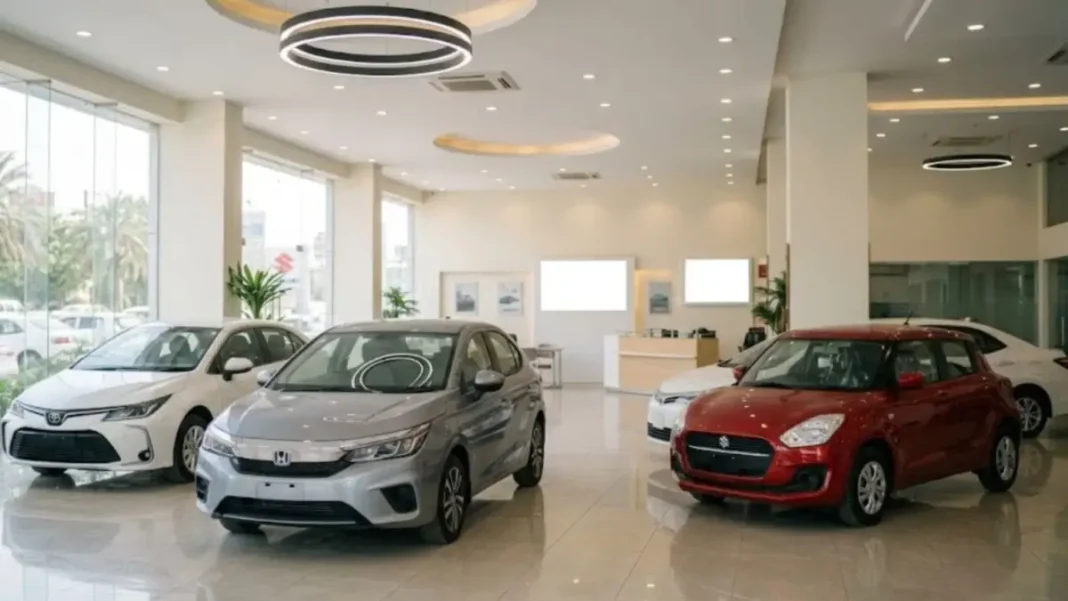
Pakistan auto financing rose for a 23rd consecutive month to Rs416.5 billion in October, as car sales surged and cheaper credit kept buyers coming to showrooms. State Bank of Pakistan data shows outstanding car loans climbed from Rs407 billion in September.
The steady rise in car loans points to a market that has found its footing after years of tight credit. Sales of cars, sports utility vehicles, pickups and vans reached 24,418 units in October, up 41 per cent from a year earlier and 62 per cent from September.
Sales in the first four months of the current fiscal year reached 74,898 units, up 26 per cent from the same period last year. The figures cover the July to October period and show demand holding up across most segments.
Rate cuts fuelled the boom, but costs are rising again
The financing boom follows a sharp fall in interest rates. The State Bank cut its policy rate from a peak of 22 per cent to 11.5 per cent over the past year, and cheaper loans brought buyers back to the market.
That trend may now be turning. The central bank raised the policy rate to 12 per cent on October 26, and a banker said the impact would show in the November data. The same banker said new auto-policy measures would also shape lending in the coming months.
Mashood Ali Khan, an auto parts maker and exporter, said the central bank had cut the policy rate significantly from its earlier peak, but the recovery appeared to be moderating. He said rates on the Karachi Interbank Offered Rate, the benchmark banks use to price loans, had started to edge up.
The warning matters for buyers who took loans at lower rates. If borrowing costs keep rising, monthly instalments will climb, and demand for financed cars could cool. For now, though, the October figures show the market still running hot.
Some private banks are reportedly offering corporate customers financing covering up to 70 per cent of a vehicle’s value, with tenures of up to five years. The terms make new cars reachable for salaried buyers and small businesses that could not pay cash.
New auto policy may lift limits for electric cars
The government is also preparing changes to auto policy that could push financing higher. Proposed changes would raise financing limits to as much as Rs10 million for electric and hybrid vehicles, and extend loan tenures to five years.
The move would suit a market that is shifting fast. Chinese brands are expanding in Pakistan, and interest in hybrid and electric models is rising. XPeng launched its L03 in Pakistan with both extended-range and battery-electric versions, and Toyota brought its Land Cruiser 300 hybrid to the local market.
Smaller electric options are arriving too. Nora’s NEO and Metro are quadricycle-style electric vehicles with reported prices under Rs3 million, aimed at city buyers who want low running costs. If financing limits rise for electric and hybrid cars, these models become easier to buy on credit.
Not every launch has gone smoothly. Peugeot halted bookings for its 2008 model in Pakistan after demand outpaced supply, a sign of how quickly buyers are moving toward new models.
Pakistan auto financing boom raises a foreign exchange warning
The financing boom has a side that worries economists. If most financed cars are imported as fully built units, or assembled from imported kits, the surge adds to Pakistan’s import bill and foreign exchange pressure.
The concern is straightforward. Car loans help buyers, but they do not build local industry on their own. If financing mainly supports imported completely built units and semi or completely knocked down kits, without meaningful local manufacturing, Pakistan could face a bigger foreign exchange burden.
That is why the new auto policy matters. Its terms will decide whether cheap credit supports local assembly and parts makers, or simply funds more imports. The policy rate path matters too. If rates keep rising, the financing boom could slow on its own, before the policy takes effect.
For buyers, the message is mixed. Loans are still available, and banks are lending. But the cheapest credit of this cycle may already be behind them, and the November figures will show whether the October rate rise has started to bite. The State Bank of Pakistan publishes the lending data each month, and the next release will be watched closely by dealers and buyers alike.
Frequently asked questions
How much is Pakistan auto financing now?
Outstanding car loans reached Rs416.5 billion in October, up from Rs407 billion in September, according to State Bank of Pakistan data. It was the 23rd consecutive monthly rise.
How much did car sales rise in October?
Combined sales of cars, SUVs, pickups and vans reached 24,418 units in October, up 41 per cent from a year earlier and 62 per cent from September. Sales in the first four months of the fiscal year reached 74,898 units, up 26 per cent.
Why did auto financing grow so fast?
The State Bank cut its policy rate from a peak of 22 per cent to 11.5 per cent, which made car loans cheaper. Banks also offered financing of up to 70 per cent of a vehicle’s value for corporate customers, with tenures of up to five years.
What changes are proposed for electric and hybrid cars?
Proposed auto-policy changes would raise financing limits to as much as Rs10 million for electric and hybrid vehicles and extend loan tenures to five years. The aim is to support the shift toward cleaner cars.
Could the financing boom hurt Pakistan’s foreign exchange?
Yes, if financed cars are mostly imported as fully built units or assembled from imported kits. Economists warn that without meaningful local manufacturing, the surge could add to the import bill and increase foreign exchange pressure.