Pakistan Natural Resources Worth $10 Trillion, Says Dar
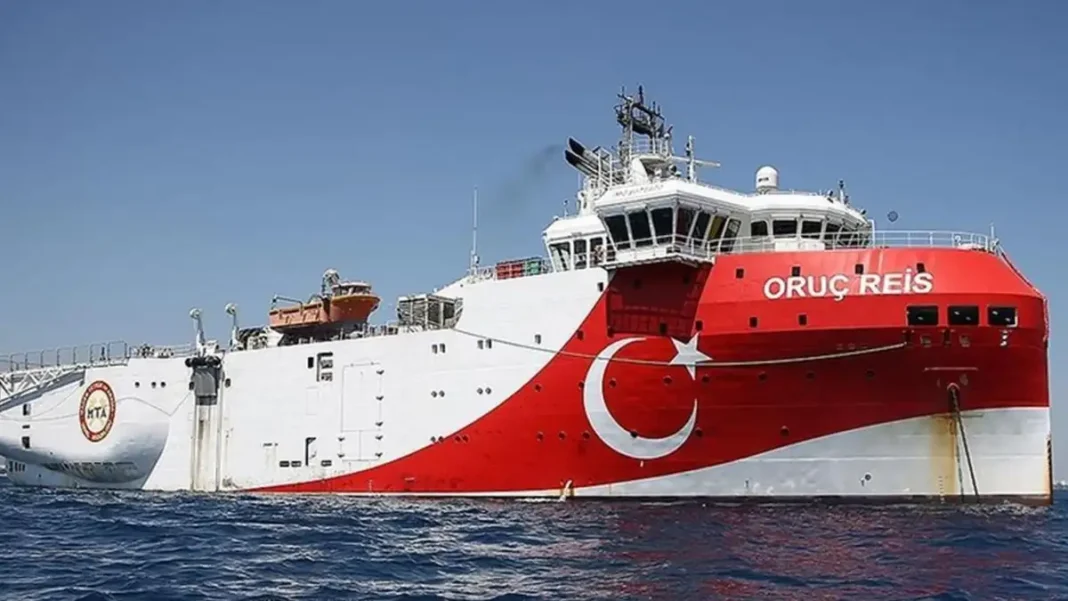
Pakistan natural resources could be worth up to $10 trillion, Deputy Prime Minister and Foreign Minister Ishaq Dar said on Friday, welcoming the Turkish seismic vessel Oruc Reis at Karachi Port. The estimate covers minerals, hydrocarbons and gemstones, and Dar set it against Pakistan’s debt.
Dar put the conservative value at between $8 trillion and $10 trillion. Government debt stood at about $100 billion, he said, and about $130 billion once the foreign liabilities of private firms and public enterprises were included.
“Sometimes people talk about Pakistan being a heavily indebted country or a debt-trap country. I always negate [that],” he said. “The most conservative estimate of the things I counted, the mines and minerals, natural resources, hydrocarbons, gemstones and other God-gifted natural resources in this country, is anything between $8 trillion and $10 trillion.”
Pakistan natural resources: the claim in context
Dar gave no breakdown or method, so the figure is his own estimate rather than a formal valuation of proven reserves. No ministry paper was cited to support it. The claim landed in the middle of a live push to map and market Pakistan’s resource base, which Feature Pakistan has tracked step by step.
The Oruc Reis docked at Karachi Port this week to begin offshore survey work, the first major offshore push after an 18-year gap in offshore bidding. Pakistan has also announced 13 mineral cooperation deals, Finland is targeting investment in Pakistan’s energy and minerals, a UK-Pakistan geological surveys partnership is planned, and a Saudi-backed gas programme worth $30 billion is under study. Khyber Pakhtunkhwa has also cracked down on illegal gold mining as the mineral push widens.
What the Oruc Reis survey will do
The vessel will collect 3D seismic data across 670 square kilometres of the Indus offshore basin, then 2D surveys along 2,353 kilometres of lines in the Makran blocks, Turkish Energy Minister Alparslan Bayraktar told the ceremony. Dar said the survey would take five to six months, with drilling targeted for 2027.
Turkish Petroleum Corporation (TPAO) is working with Pakistan’s national energy companies, Oil and Gas Development Company Limited (OGDCL), Pakistan Petroleum Limited (PPL) and Mari Energies. Licensing is complete for five blocks, three offshore and two onshore, and operations have begun.
Dar was careful not to promise a discovery. “Offshore exploration is complex, capital-intensive and inherently uncertain. A seismic survey cannot guarantee a commercial discovery, but no discovery can be made without seismic and exploration,” he said.
Bayraktar pointed to Turkey’s Black Sea gas find in 2020, the largest offshore discovery in the world that year. Companies in the programme have committed about $80 million for first-phase studies, with total investment possibly rising to $750 million to $1 billion if drilling goes ahead.
A long-term partnership with Turkiye
Dar called the vessel’s arrival a new chapter of scientific exploration and strategic cooperation, and thanked Turkish President Recep Tayyip Erdogan and Foreign Minister Hakan Fidan for their personal commitment. He said Pakistan wanted a long-term energy partnership with Turkiye covering offshore exploration, minerals and renewable energy, backed by three memorandums of understanding. He also wants Pakistani geologists and engineers to work closely with their Turkish counterparts, and Pakistani universities to build partnerships in marine science, geoscience and offshore engineering.
What happens next
The survey runs for five to six months, and the data will be the first test of Dar’s confidence. Dar joked with Bayraktar at the ceremony: “I told our brother, the energy minister from Turkey, that this seismic survey would take about five to six months. I said, ‘You won’t be allowed to leave unless you give us good news of a real discovery’.”
He said he hoped the mission would lead to Pakistan’s first successful offshore drilling, with operations in identified fields planned for 2027 if the data supports it. For now, the $8-10 trillion figure remains a claim rather than a booked asset, to be judged by what the survey finds.
Frequently asked questions
What did Dar say Pakistan’s natural resources are worth?
Minerals, hydrocarbons and gemstones, conservatively estimated at $8-10 trillion.
How does that compare with Pakistan’s debt?
About $100 billion, and about $130 billion including the foreign liabilities of private firms and public enterprises.
What will the Oruc Reis do in Pakistan?
3D seismic data over 670 square kilometres of the Indus basin, then 2D data along 2,353 kilometres of lines in the Makran blocks, over five to six months.
When could drilling start?
Exploration operations in identified fields are targeted for 2027, if the seismic data supports them.
Who is Pakistan working with on the survey?
Turkish Petroleum Corporation is working with OGDCL, Pakistan Petroleum Limited and Mari Energies, under licences for five blocks, three offshore and two onshore.