
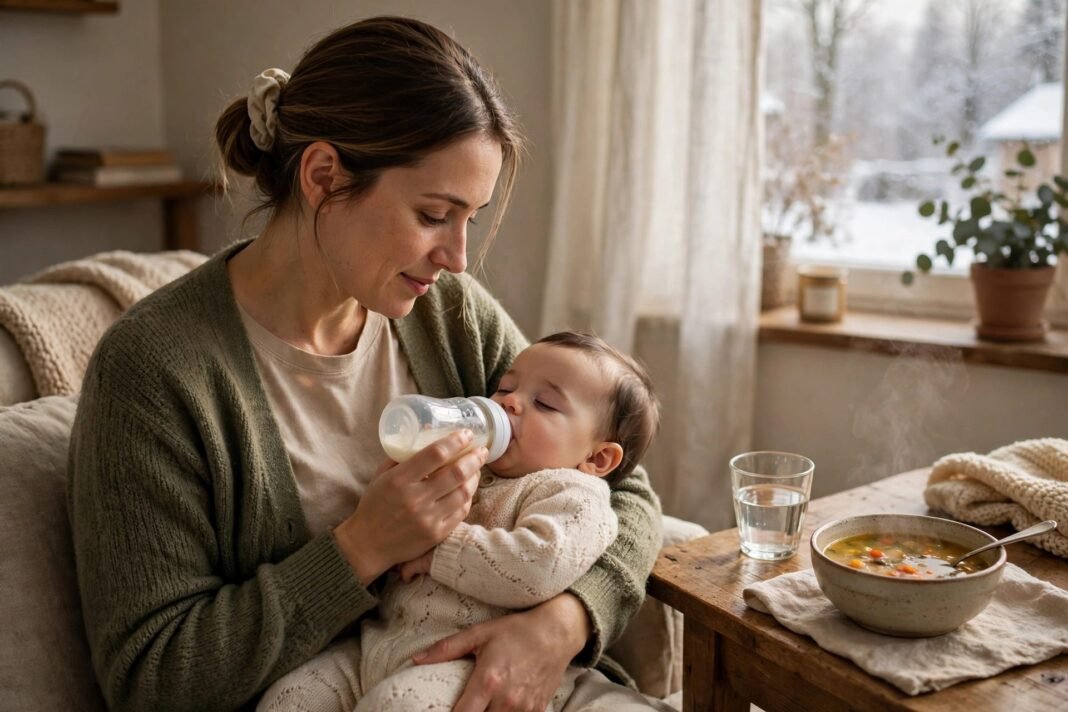
Winter feels like a season of colds and coughs, not thirst. Yet your baby can lose fluid fast in cold weather too. Keeping baby hydrated in winter matters more than most new mums realise.
Babies are small, and small bodies feel fluid loss quickly. In fact, babies are more at risk of dehydration than adults, because their low body weight makes them sensitive to small fluid loss. So a stuffy nose or a missed feed can matter more than you think.
This guide shows you why winter dries babies out, which signs to watch, and how to keep your baby drinking well. It also explains the water rules by age.
Why Keeping Baby Hydrated in Winter Matters
Your baby’s body needs steady fluids to work well. Milk gives food and drink in one. However, winter adds fluid loss you may not notice. Dry heated air, colds and fevers all take water from your baby’s body.
A baby cannot ask for a drink or tell you their mouth feels dry. As a result, you are their best watcher. The good news is that the signs are simple once you know them. And keeping baby hydrated in winter is mostly about small, steady habits.
Think of hydration as part of daily care, like nappy changes and sleep. A baby who feeds well and wets plenty of nappies is usually drinking enough. So watch the nappies and the feeds, and trust what you see.
Why Winter Dries Babies Out
Heated air is the main culprit. When the heating comes on, the air in your home turns dry. That dry air pulls moisture from your baby’s skin, nose and mouth all day. In addition, a baby with a cold breathes faster, and that loses more water.
Colds make it worse too. A blocked nose makes feeding harder, so your baby may take less milk than usual. As a result, they drink less at the very time their body needs more fluid. So a simple cold can quietly lead to dehydration.
Fever adds to the loss too. A warm baby sweats more, even in winter. And if your baby vomits or has diarrhoea, fluid leaves the body fast. That is why winter illness and hydration go together, so watch both.
The Signs of Dehydration to Watch For
The signs of dehydration in a baby are clear once you know them. Look for fewer wet nappies than usual, and pee that looks dark yellow. A dry mouth and dry lips are signs too, and your baby may cry with few or no tears.
Check the soft spot on top of your baby’s head. If it looks sunken, that can be a sign of dehydration. Sunken eyes are another sign. Your baby may also seem drowsy, floppy or irritable. Fast breathing and cold, blotchy hands and feet can be signs as well.
You can read the full list of signs of dehydration in babies on the NHS Inform page. If you spot any of these signs, call your doctor the same day. Early help makes a real difference.
Counting Wet Nappies: The Simplest Check
Wet nappies are the easiest way to check hydration. After the first week of life, a healthy baby usually has at least six heavy wet nappies in 24 hours. So count them for a day if you are worried.
Fewer wet nappies than usual is an early warning sign. Nappies that feel lighter than normal count too. If your baby goes many hours without a wet nappy, call your doctor, even if your baby seems well otherwise.
Keep a simple note on your phone if it helps. Write down feeds and wet nappies for a day or two. That record helps you see patterns, and it helps your doctor too. Counting wet nappies is the simplest part of keeping baby hydrated in winter.
Milk Is Still the Main Drink
For babies under 6 months, milk is everything. Breast milk or formula gives your baby all the fluid they need. In fact, milk gives both food and fluid in every feed, so a baby who feeds well is a baby who drinks well.
Offer feeds as often as your baby wants, day and night. In winter, your baby may want to feed a little more often. More feeds mean more fluid, and that protects against dehydration.
If your baby is ill, keep offering milk in small amounts, more often. A baby who will not take a full feed may still take short feeds. That can be enough to keep them hydrated. If your baby refuses all feeds, call your doctor the same day.
Water: When It Is Safe and When It Is Not
The water rule is simple. Babies should be breastfed exclusively for the first 6 months of life. That means breast milk only, with no other food or drink, not even water, unless a doctor says otherwise.
Why no water? A young baby’s stomach is tiny, and water can fill it up without giving any food value. In addition, too much water can upset the balance of salts in a small body. So milk alone is safest for the first 6 months.
From around 6 months, when solid foods start, you can offer small sips of water with meals. Use a cup or beaker, not a bottle. Milk still stays the main drink until your baby’s first birthday.
Never add extra water to formula. Always make it up exactly as the instructions say. Adding water changes the food value of the feed, and it can be dangerous.
Keeping Baby Hydrated in Winter When Your Baby Has a Cold
A cold makes drinking harder, but fluids matter even more then. A blocked nose means your baby breathes through their mouth, and that dries the mouth out. As a result, your baby may feed less and lose more fluid at the same time.
Try shorter, more frequent feeds. If your baby’s nose is blocked, a feed may be easier after you clear the nose gently. Saline nose drops from the pharmacy can help, and your pharmacist can show you how to use them.
Keep the room air moist if you can. A cool-mist humidifier can help. However, keep the room at a comfortable temperature. Overheating can make your baby sweat and lose more fluid.
Keeping baby hydrated in winter means watching the wet nappies closely while your baby has a cold. If the count drops, or your baby seems drowsy, call your doctor. Colds are common, but dehydration is not something to wait out.
Feeding Tips for Weaned Babies and Toddlers
Once your baby eats solids, food can help with fluids too. Soft fruits, yoghurt and soups all add water to the day. Warm soup is a lovely winter choice for a weaned baby or toddler. Just make sure it is cool enough to eat safely.
Offer sips of water with every meal and snack. Keep a small cup within reach during play. Toddlers often forget to drink when they are busy, so a gentle reminder helps. In fact, a regular drink routine is the easiest way of keeping baby hydrated in winter.
Warm drinks can help in winter too. A little warm milk or warm water is fine for a toddler. Avoid sugary drinks, because they are not good for teeth or tummies. Never give fruit juice to a baby with diarrhoea or vomiting, because it can make it worse.
If your baby has diarrhoea or vomiting, your pharmacist can advise about oral rehydration solution. This special drink replaces lost water and salts. Give it in small sips, a few times an hour, along with usual feeds.
What Not to Give a Thirsty Baby
Not every drink is safe for a baby. Fruit juice is not a good choice, even when diluted. It can upset a small stomach, and it can make diarrhoea worse. Fizzy drinks, tea and coffee are not suitable for babies or toddlers.
Do not dilute formula to make it go further. Diluted formula gives your baby less food than they need, and it can be harmful. Always follow the instructions on the pack.
Do not give honey to a baby under 12 months. Honey can carry bacteria that cause infant botulism, a very serious illness. This rule applies even to honey in food or drinks.
Keeping Baby Hydrated in Winter: When to Call the Doctor
Call your doctor the same day if your baby has fewer wet nappies, a dry mouth, or cries without tears. Also call if the soft spot on your baby’s head looks sunken, or your baby seems unusually sleepy or hard to wake.
Call sooner if your baby has vomited three or more times in 24 hours, or has had six or more episodes of diarrhoea. Fast breathing, cold blotchy hands and feet, and refusing all feeds are also reasons to call now.
Adults can get dehydrated in winter too. Our guide to winter dehydration signs in adults covers what to watch for in yourself.
And if you are heading back to work, our guide to childcare rights for working mothers explains what support exists around the world.
Keeping baby hydrated in winter is mostly about watching and offering. Watch the nappies, offer the milk, and call early if you worry. What helps your baby drink enough in winter? Share your tip in the comments.
This article is for general information only. It is not medical advice. If you are worried about your baby’s fluids or feeding, please talk to your doctor, pharmacist or health visitor.