
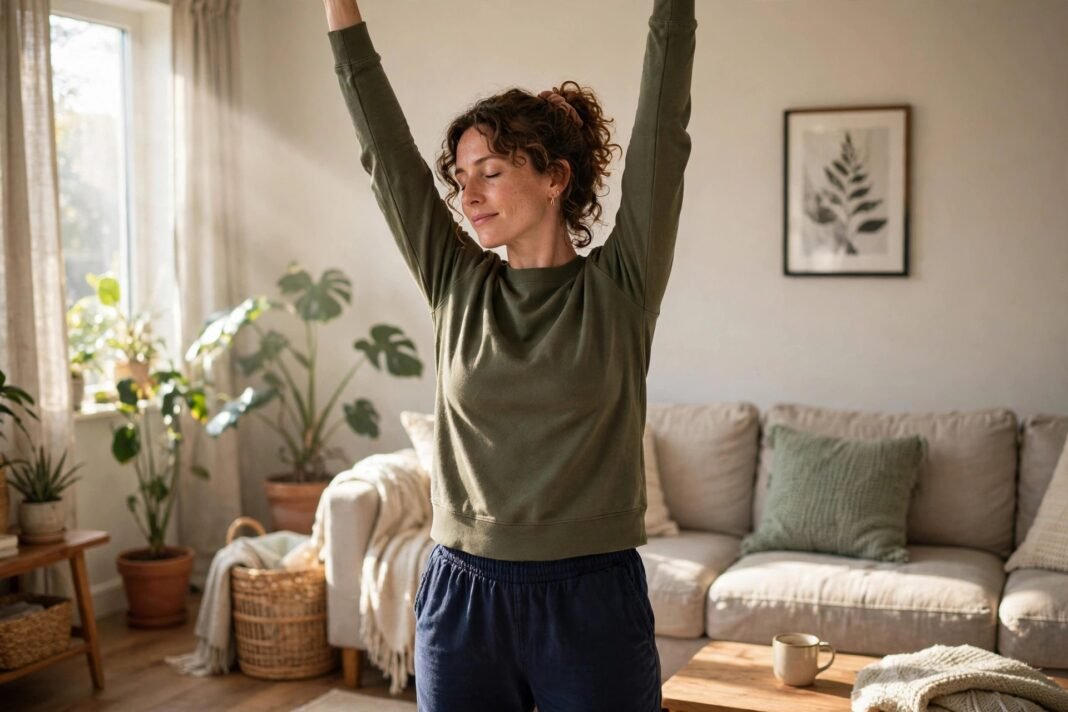
You wake up, and your body feels stiff. Your neck is tight, your back aches, and your legs feel heavy. Morning stretching can change that in just a few minutes.
It does not need a gym or special clothes. In fact, you can do it beside your bed in your pyjamas. All it takes is slow, gentle movement and a few deep breaths.
Why Morning Stretching Wakes Up Your Body
Your body rests all night, so your muscles cool down and tighten. That is why the first steps of the day can feel stiff. Morning stretching warms the muscles up again and helps them move freely.
Stretching improves flexibility, and better flexibility helps your joints move through their full range of motion. As a result, simple tasks like bending down or reaching up feel easier. It can also help your muscles work better during the day.
Many people notice the change fast. After a few days, the morning stiffness starts to fade. In addition, your body feels lighter and more awake.
What Morning Stretching Does for Your Back and Neck
Sitting all day tightens the front of your body. Your shoulders roll forward, your hips stiffen, and your neck aches. Morning stretching opens these areas up again.
Focus on the big muscle groups: your calves, thighs, hips, lower back, neck and shoulders. Stretch both sides the same way, because uneven flexibility can strain your body.
A gentle stretch should feel like a mild pull, not pain. If it hurts, you have gone too far. So ease back until the pain stops, then hold the stretch there.
Over time, regular stretching may lower your risk of injury. It also helps your joints move smoothly, so daily movement feels easier. For example, getting out of a chair or climbing stairs becomes less of an effort.
A Gentle Routine You Can Do at Home
Start with a short warm-up. Walk slowly around the room for a little while, because stretching cold muscles can cause harm. A warm muscle stretches more safely than a cold one.
Then try these gentle moves, one at a time. Roll your shoulders slowly, forwards and then backwards. Let your neck tip gently to each side, and hold it for a few slow breaths.
Next, reach both arms above your head and stretch tall. Then bend softly to each side, like a tree swaying in the wind. Keep your breathing slow and even.
After that, place your hands on a wall and step one foot back for a calf stretch. Then stand tall and pull one foot gently towards your body for a thigh stretch, using a chair for balance if you need it.
Finally, sit on the edge of a chair and round your back gently, then sit tall again. Move slowly between the two shapes. This wakes up your spine and your core.
Hold each stretch for a few slow breaths, and never bounce. Bouncing can injure a muscle and make it tighter. Smooth, steady movement is always safer.
How Morning Stretching Lifts Your Mood
A slow start can change the tone of your whole day. When you move gently and breathe deeply, your mind has time to wake up too. In fact, many people find that a calm morning makes the rest of the day feel easier.
Stretching gives you a quiet moment before the noise of the day begins. You are not rushing, checking your phone, or worrying about work. Instead, you are simply paying attention to your body.
This small pause can help you feel more in control. As a result, stress feels smaller and the day feels more manageable. It is a simple habit with a big effect.
Mistakes to Avoid
The first mistake is stretching cold muscles. Always warm up with a little movement first, because cold muscles can tear more easily.
The second mistake is bouncing. A bouncing stretch jerks the muscle instead of lengthening it. So move slowly and hold each stretch still.
The third mistake is chasing pain. A stretch should feel like gentle tension. If it hurts, stop and ease off.
The final mistake is stretching only one side. Your body works best when both sides are equal, so always stretch the left and the right. If you have an injury or a health condition, talk to your doctor before you start a new routine.
How to Make Morning Stretching a Daily Habit
The best routine is the one you actually do. So tie stretching to something you already do each morning, like brushing your teeth or waiting for the kettle. After a week, it starts to feel automatic.
You do not need to stretch for long. Even a few minutes, two or three times a week, can help. But a short daily habit works even better, because the benefits fade if you stop.
Keep it simple and keep it near your bed. A mat or a clear patch of floor is all you need. In addition, a short walk after stretching can wake you up even more. Our guide to the benefits of walking 10,000 steps a day explains how daily walking supports your health.
Older readers can start even more gently. Our guide to safe exercises for seniors shows gentle movement that keeps you strong. Whatever your age, the rule is the same: move slowly, breathe deeply, and stop if it hurts.
You can read more about safe stretching technique in this guide to stretching and flexibility.
This article is general information, not medical advice. Talk to your doctor about your own health.
Ten minutes in the morning is a small price for a body that moves well all day. So try it tomorrow. Wake up, stretch slowly, and see how different your day feels.
Do you stretch in the morning, or is this a habit you want to start? Tell us in the comments.