COP31 Draft Fossil Fuel Text Rejected as Talks Slip
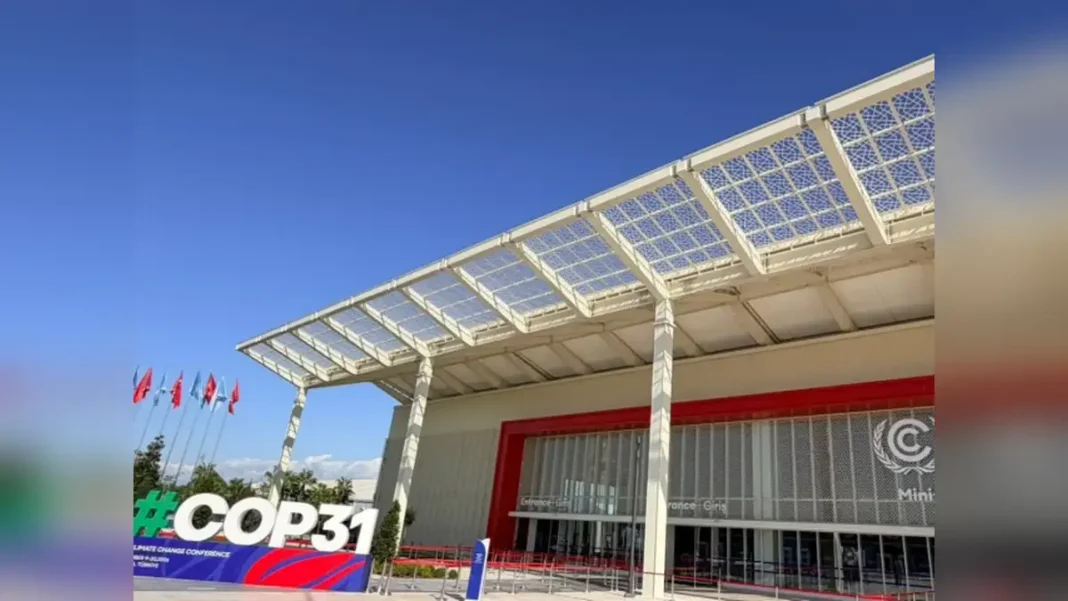
Negotiators at COP31 in Antalya face a choice between a weak cover decision and longer talks, after campaigners rejected the latest text and the summit slipped towards overtime. The COP31 draft fossil fuel text, released by the Australian presidency just before the scheduled close, has removed every reference to transitioning away from fossil fuels.
In place of a phase-out, the draft leans on carbon capture, utilisation and storage as the central pillar of the energy transition. Targets to store hundreds of millions of tonnes of carbon a year by 2035 remain bracketed in the text, a provision critics call a lifeline for the fossil fuel industry, The Express Tribune reported.
COP31 draft fossil fuel text drops adaptation finance
Adaptation finance fared no better. A proposed $120 billion target has disappeared entirely. It has been replaced by a vague commitment to discuss tripling adaptation funds by 2035, with no baseline, delivery pathway or new pledges.
The call to raise electricity’s share of global energy demand to 35 per cent by 2035 has also been weakened, since the text no longer says electricity must come from renewable sources. That leaves a loophole for fossil-fuel power to count as clean electrification.
The draft accepts warming is now projected to pass the Paris Agreement’s 1.5°C threshold. It refuses to name the cause or set out the duties that would make a transition real.
‘The worst COP ever’
Tasneem Essop, executive director of Climate Action Network International, said her network was “unambiguously stating that we are rejecting what is currently on the table”, and urged governments, above all in the Global South, to reject it too. “There is nothing on the table that protects people or addresses the priorities of the Global South,” she said.
Mohamed Adow, founder and director of Power Shift Africa, was blunt. “The COP Presidents want to tell us this has been a great COP. Well, I can tell you without any doubt that this has been the worst COP ever,” he said. He blamed wealthy countries for demanding ambition from developing states while blocking finance. “You cannot keep your foot on the brake and complain that countries are not moving fast enough,” he said.
Avantika Goswami of the Centre for Science and Environment in India criticised the European Union for blocking “discussions of substance on many critical issues” while posturing in the media.
Anabella Rosemberg of CAN International said the presidency’s cover decision “emptied each and every negotiating room” and made just transition its casualty. Denise Cauchi of Climate Action Network Australia called the text “a disgrace” and said Australia had “put up its hand to shepherd these negotiations, and it’s failing”.
What happens next
With talks likely heading into overtime, delegates face a choice: accept a text that protects fossil fuel interests and puts off the hard decisions, or keep the summit open until it produces something better for the countries least able to bear climate change.
Essop made clear that walking away was not an option. “We have to defend this multilateral space,” she said. “If we moved away from it, the international cooperation countries need to protect their people would disappear.”
The cover decision follows the revised COP31 text Feature Pakistan covered earlier, which had already dropped any mention of fossil fuels, and it drew a sharper rebuke from campaigners. Pakistan has used the summit to press its own case, with the Pakistan Red Crescent pushing locally led climate action and Sindh calling for climate justice at COP31. Pakistan has also proposed a virtual green university for youth at the talks.
For countries facing floods, droughts and failed harvests, the question is whether the extra hours produce a deal worth signing, or only a longer delay.
Frequently asked questions
What did the COP31 draft remove?
The revised text removed every reference to transitioning away from fossil fuels. It leans instead on carbon capture, utilisation and storage.
What happened to the adaptation finance target?
A proposed $120 billion target disappeared, replaced by a vague commitment to discuss tripling adaptation funds by 2035, with no baseline, delivery pathway or new pledges.
Why are campaigners calling it the worst COP ever?
Mohamed Adow of Power Shift Africa called it “the worst COP ever”, saying wealthy countries blocked finance and just transition while demanding ambition from developing states.
What did the draft say about the 1.5°C limit?
It accepts that warming is now projected to pass 1.5°C, the Paris Agreement threshold, but it does not name the cause or set out duties to drive a transition.
Will the talks run past their deadline?
Yes, negotiations were likely heading into overtime, with delegates choosing between accepting a weak text and keeping the summit open.