
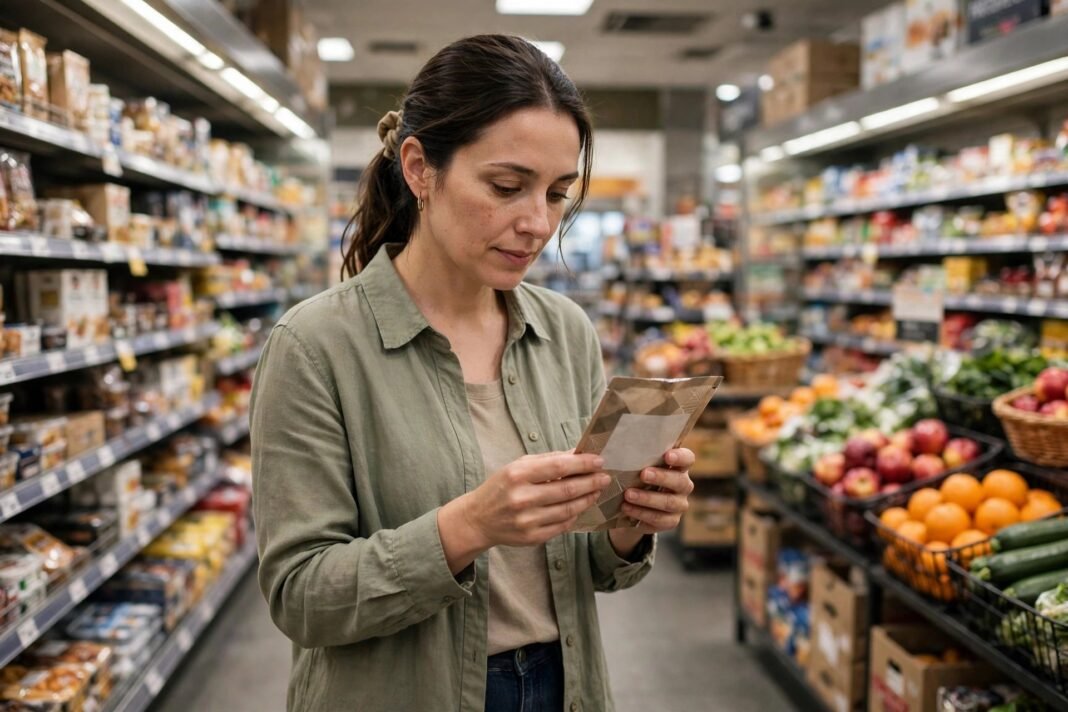
You pick up a box in the supermarket and turn it over. The back is covered in numbers, grams and percentages, and none of it looks simple. If you have ever wondered how to read food labels without a headache, you are not alone.
Most shoppers glance at the calories and stop there. But the label holds much more useful information, and it takes less than a minute to read it well. Once you know what each number means, you can compare two similar foods in seconds.
This guide walks you through each part of the label, from serving sizes to sugar, salt and fat.
How to Read Food Labels: Start With the Serving Size
Always start at the top of the label. The serving size tells you the amount that all the other numbers refer to. If a bag lists two servings and you eat the whole bag, you have eaten double everything on the label.
Serving sizes are set so similar foods can be compared fairly. They show the amount people usually eat in one sitting. But they are not a suggestion of how much you should eat.
So check the servings per pack first. A small snack bar may look light, yet the pack may hold two or three servings.
Calories: What the Number Really Tells You
Calories measure the energy in one serving of the food. The number looks simple, but it only makes sense beside the serving size. A bowl of soup with 150 calories per serving is very different if the tin holds two servings.
Many labels use 2,000 calories a day as a general guide. Your own needs may be higher or lower, and they depend on your age, size and how active you are. So use the calorie number to compare foods, not to judge a single meal.
The 5% and 20% Rule for Daily Values
The percentage of daily value tells you how much of a nutrient one serving gives you for the whole day. It turns grams and milligrams into one simple scale, and the rule is easy to remember.
Five percent or less means the food is low in that nutrient. Twenty percent or more means it is high. For example, a soup with 37% of the daily value for sodium is a high-salt food.
Use this rule to pick foods with more fibre, calcium, iron and potassium. At the same time, look for lower numbers for saturated fat, sodium and added sugars. Fibre also feeds the good bacteria in your gut, as our guide to improving gut health naturally explains.
Sugar, Salt and Fat: The Three to Watch
Labels list total sugars and added sugars as two separate lines. Total sugars include the natural sugars in fruit and milk, as well as any added sugar. Added sugars are the ones put in during processing, such as table sugar, syrups and honey.
For salt, watch the sodium line. Salt and sodium are not the same thing, but the sodium number tells you how salty the food really is. Foods with more than 20% of the daily value for sodium count as high in salt. If you want to cut back, our guide to foods that help lower blood pressure is a good place to start.
Fat comes in different types, and the label breaks them down. Saturated fat is the one to limit most, while trans fat should be as low as possible. In fact, many food makers have now removed artificial trans fat from their products.
How to Read Food Labels With Traffic Lights
Some packs show red, amber and green colours on the front. These traffic lights rate fat, saturated fat, sugar and salt at a glance. Red means high, amber means medium, and green means low.
A food with mostly green lights is usually a healthier choice. Amber means the food is neither high nor low, so you can eat it most of the time. But a red light means the food is high in that nutrient, so enjoy it less often and in small amounts.
Traffic lights make comparing foods quick. When two similar products sit side by side, choose the one with more greens and fewer reds.
The Ingredients List Tells Its Own Story
Ingredients are listed by weight, from most to least. So the first few items tell you what the food is mostly made of. If sugar, syrup or refined flour comes first, the food is mostly sugar or refined flour.
Watch for sugar hiding under other names. Honey, syrup, fruit juice concentrate and dextrose are all added sugars. If several of them appear in one list, the food may hold more sugar than it seems.
A short ingredients list is often a good sign. However, a long list does not always mean the food is bad, so read it beside the nutrition numbers. Small foods can pack in a lot of good nutrients too, as our guide to the health benefits of seeds shows.
How to Read Food Labels in Five Quick Checks
Next time you shop, run through these five checks. Firstly, look at the serving size and the servings per pack. Secondly, check the calories in one serving. Thirdly, use the 5% and 20% rule for sugar, salt and saturated fat. Then glance at the traffic lights if the pack has them. Finally, read the first three ingredients on the list.
With practice, these five checks take less than a minute. And once the habit sticks, you will spot the healthier choice without thinking twice.
What is the first label you will check on your next shop?
This article is general information, not medical advice. Talk to your doctor about your own health.