
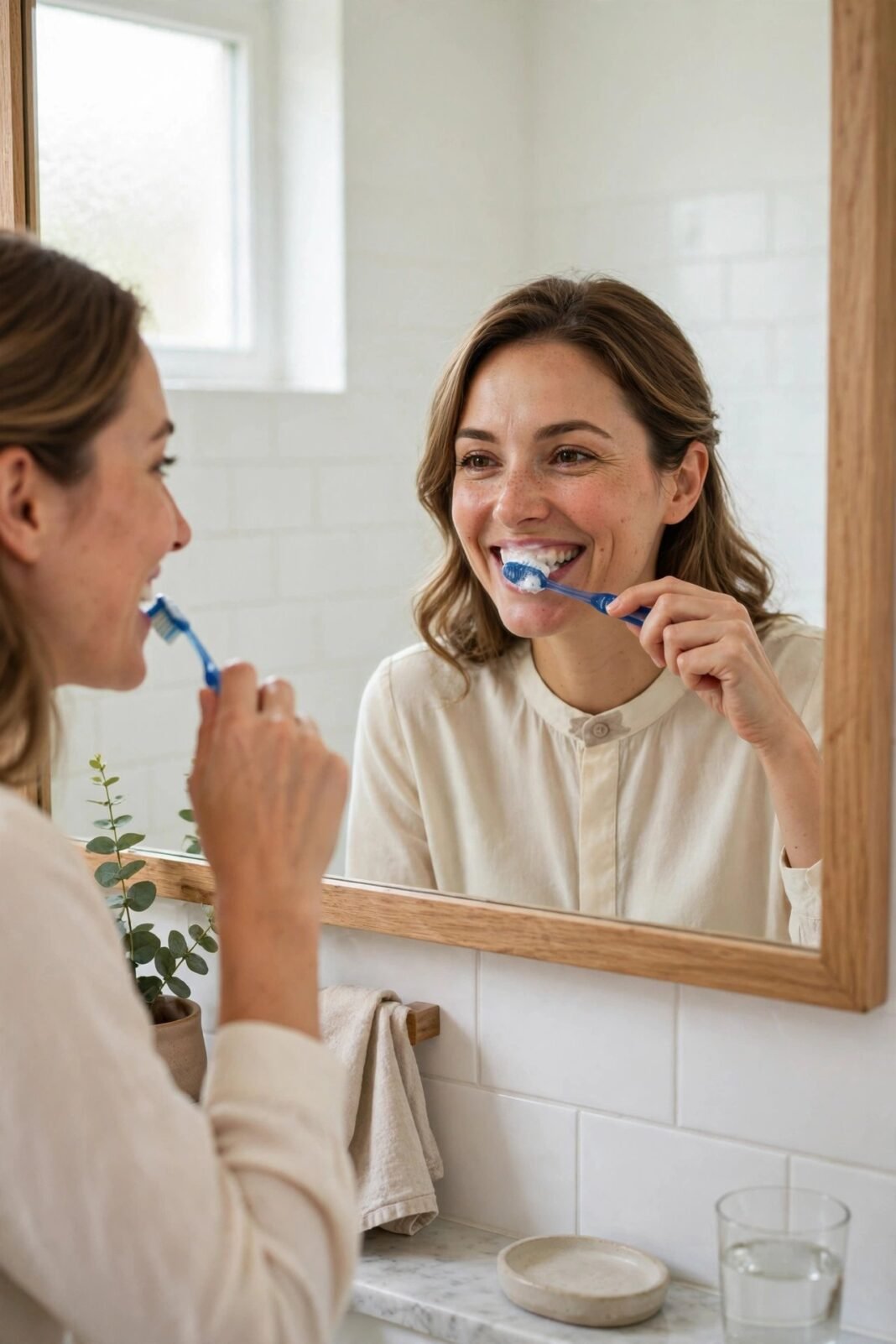
Your teeth work hard every day, but they ask for very little in return. A few simple habits can keep them strong for life. This guide explains how to take care of your teeth, step by step.
The good news is that none of it is hard. In fact, most of it takes just a few minutes a day. The secret is doing the small things every day, not doing big things once in a while.
How to Take Care of Your Teeth: Start With Brushing
Brush your teeth twice a day with fluoride toothpaste. Each time, brush for about two minutes, and clean every surface: the fronts, the backs, and the tops you chew with.
The most important brush is the last one before bed. Night-time brushing is important, so make it the one you never skip.
It does not matter if your brush is electric or manual. Both work well, as long as you reach every tooth and use fluoride toothpaste. For adults, the toothpaste should contain at least 1,350 parts per million of fluoride.
After brushing, spit out the toothpaste but do not rinse. Rinsing washes away the fluoride that protects your teeth. So spit, and let the fluoride keep working.
Replace your toothbrush every three months, or sooner if the bristles look worn. A tired brush cannot clean well, no matter how hard you try.
Floss Every Day, Even When Your Teeth Feel Clean
Learning how to take care of your teeth means cleaning between them too. A toothbrush cannot reach between your teeth. That is where floss comes in, because it clears away food and plaque along the gum line.
Floss once a day, ideally before you brush. Curve the floss into a C-shape around each tooth and slide it gently up and down. Be gentle, because snapping the floss can hurt your gums.
Regular flossing may also reduce gum disease, tooth decay and bad breath. In addition, it reaches the places where problems often start. If floss feels tricky, small interdental brushes work well too, especially if you have gaps between your teeth.
Do not use wooden toothpicks to clear food from between your teeth. They can damage your gums and even cause an infection. Your dentist can show you the best tool for your mouth.
How to Take Care of Your Teeth Between Meals
What you eat matters as much as how you brush. Sugar feeds the germs that cause tooth decay, so cutting back on sugary food and drinks helps your teeth a lot.
It is best to keep sugary food and drinks to mealtimes only. Between meals, your teeth get a break, and your mouth has time to recover. Sipping a sweet drink all day gives your teeth no rest at all.
Water is the kindest drink for your teeth. In fact, drinking water after a meal helps wash away food. Crunchy foods like vegetables also help, because chewing them cleans the teeth as you eat.
A healthy diet supports your teeth and your whole body. Our guide to the health benefits of seeds shows how small foods can pack a lot of nutrition into your day.
The Small Habits That Protect Your Smile
A fluoride mouthwash can help prevent tooth decay, but timing matters. Do not use it straight after brushing, because it washes away the fluoride from your toothpaste. Use it at a different time, such as after lunch.
After using a fluoride mouthwash, wait half an hour before eating or drinking. This gives the fluoride time to work on your teeth.
Your tongue matters too. Germs gather on its surface, so a gentle brush of your tongue helps keep your breath fresh. Add it to your routine and it soon becomes automatic.
Your mouth is where digestion begins, so a healthy mouth supports your whole body. Our guide to improving gut health naturally explains how small daily habits support digestion from the start.
Warning Signs You Should Never Ignore
Healthy gums do not bleed every day. If your gums bleed when you brush, keep brushing gently, and the bleeding often stops. But if it goes on for more than a week, see your dentist.
A toothache is your tooth asking for help. Do not wait for it to go away on its own. In fact, early care is almost always simpler than late care.
Other signs need a dentist too: a loose tooth, bad breath that will not go away, or a sore in your mouth that does not heal. These are not things to ignore or guess about.
See your dentist regularly, as often as they suggest. A check-up can catch small problems before they grow. Your dentist can also give you advice based on your own teeth.
How to Take Care of Your Teeth for Life
Good teeth are built by small habits, not big efforts. Brush twice a day, floss once a day, and watch what you eat between meals. These three habits cover most of what your teeth need.
Children need help too. They should have help or supervision with brushing until they are at least seven years old. Teaching them young gives them a healthy smile for life.
You can read more about brushing and flossing in this NHS guide to keeping your teeth clean.
This article is general information, not medical advice. Talk to your doctor about your own health.
Your smile is worth a few minutes a day. So start tonight: brush for two minutes, floss once, and spit, don’t rinse. Your teeth will thank you for years.
Which habit do you find hardest — flossing every day, or skipping sugary snacks? Tell us in the comments.