The evening rain has stopped, but the hallway tiles still shine with wet footprints. You carry a warm cup of tea across the room, one slow step at a time. Suddenly, your slipper slides a little on the damp floor, and your heart jumps. Thankfully, you catch the door frame and stay on your feet. Still, the small scare stays with you all evening. Moments like this show why learning to prevent falls seniors winter brings into the home matters so much.
Winter changes the ground under your feet, both outside and inside the house. Rain and wet leaves make paths slippery in the early dark. Meanwhile, wet shoes carry that slipperiness straight across your floors at home. As a result, a simple walk to the kitchen can quietly turn risky. However, most of these dangers shrink with a little calm planning.
Why Winter Raises the Risk of a Fall
Cold weather makes muscles stiff and slow to react. Because of this stiffness, your body cannot catch itself quickly after a slip. Heavy coats and thick layers also limit how freely you can move. In addition, stiff winter shoes often have smooth soles with weak grip. Low light adds another problem on long, dark evenings. For example, dim hallways hide wet patches, loose rugs and small steps. Finally, many people rush indoors to escape the cold wind. That hurry, together with wet footwear, creates a perfect moment for a fall.
Prevent Falls Seniors Winter: Safer Floors and Shoes
Start with the doorway, because most winter wetness enters there. Place a strong mat just inside the door, and wipe your shoes on it every time. Then leave wet shoes on the mat instead of walking them through the house. In addition, keep a dry pair of indoor shoes or firm slippers by the door. Choose slippers with closed backs and rough, non-slip soles. Indeed, loose backless slippers slide off the foot at the worst moment.
Next, look at your floors with fresh eyes. Mop up wet patches quickly, especially on tiles and smooth wood. Also, move loose rugs away from hallways during the wet months. If a rug must stay, fix it firmly so its edges cannot curl up. Our guide to fall prevention for seniors covers simple home checks that help all year round.
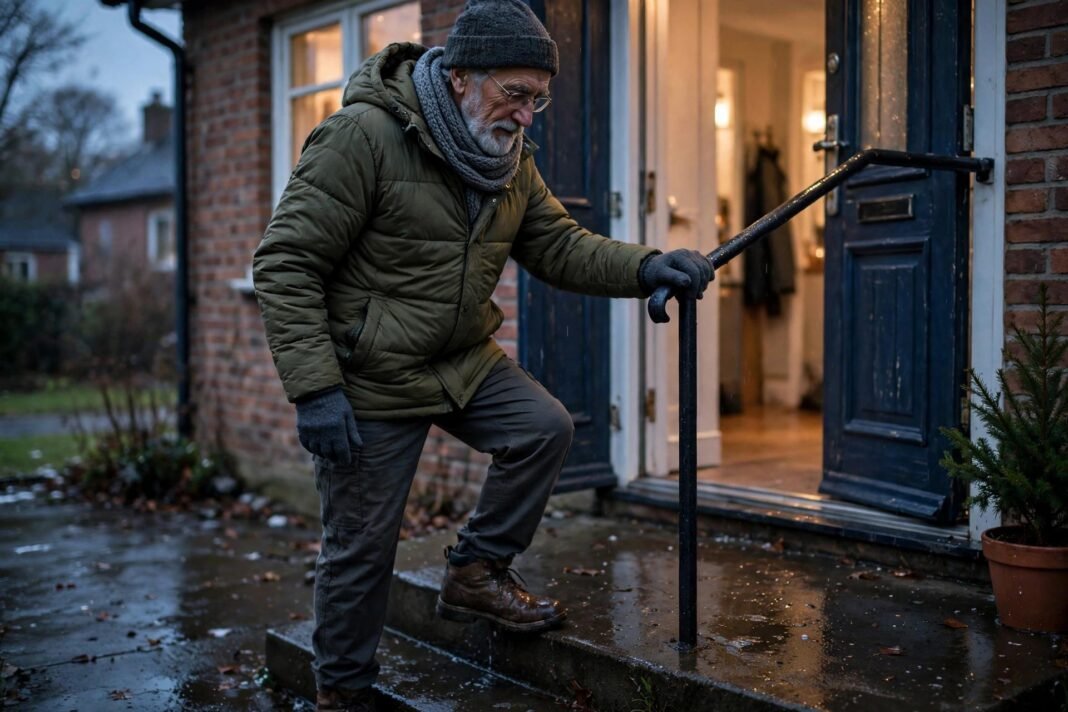
Outdoor paths need the same care during the cold season. Wet leaves on a pavement can feel as slippery as ice. So choose the drier, better-lit route, even if it takes a little longer. Wear shoes with deep tread, and avoid smooth soles on wet days. If you use a walking stick, check its rubber tip often in winter. A worn tip slides easily, while a fresh one grips the ground firmly.
Timing also plays a quiet part in winter safety. Short days mean many small trips happen in the dark. Whenever possible, plan shopping and visits for the brighter middle of the day. Bright light helps you spot wet patches, kerbs and uneven ground early. In contrast, dusk hides these dangers until you are already upon them. A little planning turns an anxious trip into a relaxed one.
Light, Warmth and Steady Muscles
Good light is a quiet hero on dark winter evenings. So switch on lights before you walk through a room, not after you enter it. Keep a small lamp or night light burning along the path to the bathroom. Moreover, warm rooms help your muscles stay loose and ready. Cold muscles react slowly, but warm muscles answer much faster. Dress in layers that keep you warm without trapping your arms and legs.
Clothing choices matter more than many people expect. Long scarves and loose hems can catch on furniture or steps. Instead, pick warm layers that end neatly at the waist and wrist. Gloves keep hands warm, yet bare hands grip rails better indoors. Therefore, take your gloves off when you climb steps inside the home.
Gentle daily movement also keeps your legs strong through the cold months. For instance, slow walks inside the home keep your balance awake. Holding a sturdy chair while you move can add confidence at first. Our page on safe exercises for seniors shares gentle movements that support strength and balance.
Prevent Falls Seniors Winter: Small Habits That Protect You
Small habits, repeated daily, give the strongest protection of all. Slow down at the door, even when the cold wind pushes you to hurry. Use handrails on steps, and take one step at a time in the dark. Also, keep a dry cloth near the entrance for quick floor wipes. If you feel dizzy, sit down at once instead of pushing on. Above all, ask family or neighbours for help with slippery outdoor jobs.
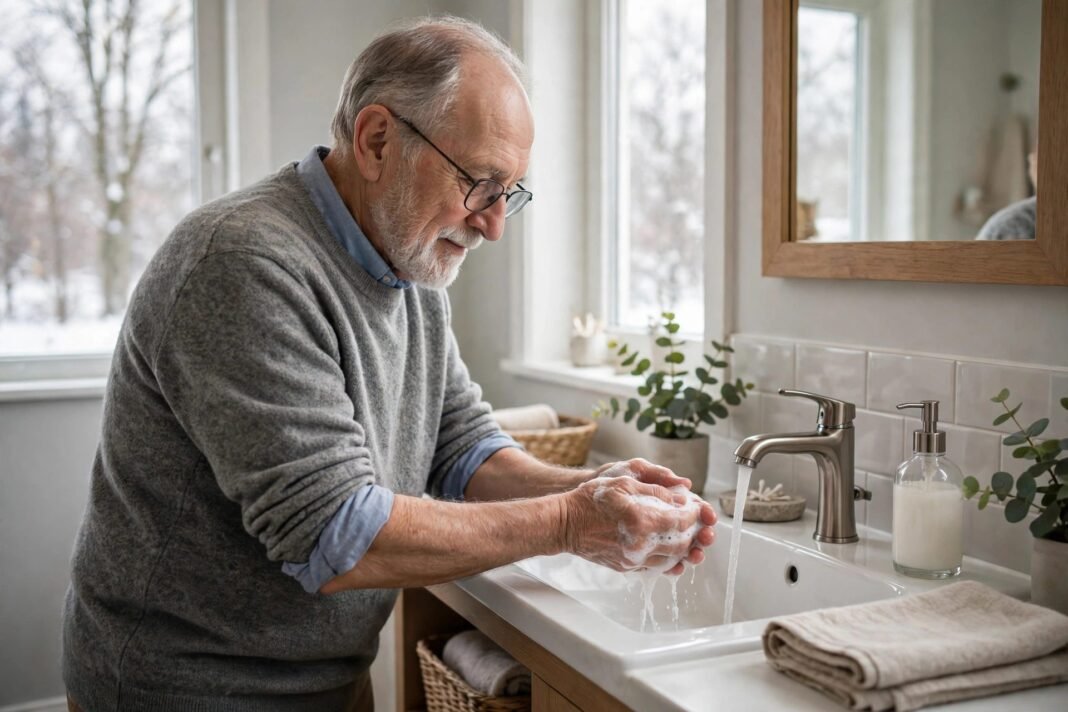
Kitchens and bathrooms deserve extra care on wet days. Water splashes near sinks, and steam makes tiles damp and smooth. Keep a small towel within reach, and dry the floor as soon as you notice water. Also, wear your firm indoor shoes in these rooms, never socks alone. Socks on wet tiles slide faster than almost anything else.
This article is general information, not medical advice. Please speak to a healthcare professional if you are worried about your health.
Winter does not have to steal your confidence or your freedom. With dry floors, good light, warm layers and steady habits, your home stays your safe place. Instead of fearing the season, you can meet it prepared and calm. After all, you deserve to enjoy winter’s quiet joys without worry. Which small change will you make first to keep your steps safe this winter?