The kettle takes a little longer on cold mornings, and so do you. Your knees complain as you rise from the bed. Your fingers feel stiff around the warm mug in your hands. If this sounds familiar, you are truly not alone. Many older adults look for joint pain relief seniors can rely on when winter settles in. The good news, happily, is simple. Gentle habits, repeated each day, can make stiff joints feel kinder.
Winter asks more patience from an older body. Stairs feel steeper, and garden gates feel heavier. Even simple tasks, like opening a jar, can take longer. However, stiffness does not mean you must simply endure it. Instead, small comforts can add up to real relief. This guide gathers the gentlest ones, step by step.
Why Cold Days Make Joints Complain
Cold weather does not damage your joints. However, it often makes aches and stiffness feel stronger. Muscles tighten in the cold, so joints feel less free. In addition, we move less on short, dark days indoors. As a result, joints miss the gentle motion that keeps them comfortable. If you want the fuller story, read our guide on why joints hurt more in cold weather. For now, though, relief matters more than reasons.
Joint Pain Relief Seniors Can Find in Warmth
Warmth is the oldest comfort for stiff joints. For example, a warm bath can loosen a tight body beautifully. The heat relaxes the muscles around sore knees and hips. Meanwhile, warm water holds your weight, so movement feels easier. Afterwards, dress warmly at once, before the chill returns. In this way, the comfort of the bath lasts longer.
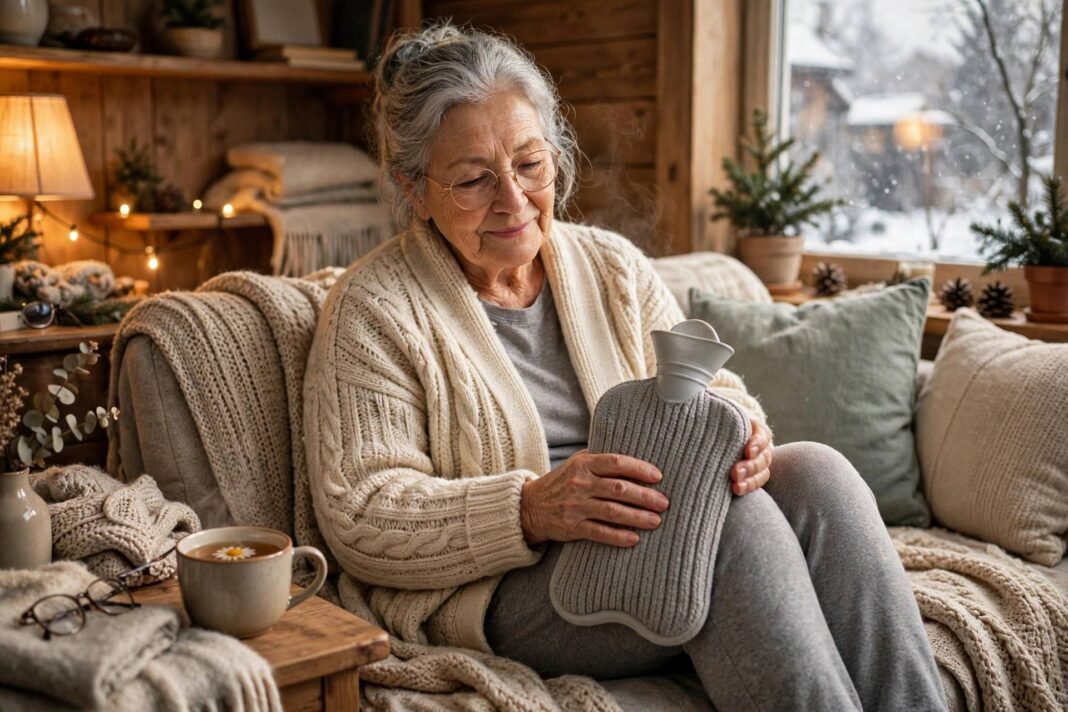
A warm shower works well too, especially in the morning. Let the water run over stiff shoulders and hands. Then move each joint slowly through its easy range. Additionally, a covered hot water bottle can comfort one sore spot. Place it gently over a knee or against your lower back. Always check the heat against your skin first, though. Warmth should feel soothing, never sharp or burning.
Layers of clothing protect joints throughout the day. Warm socks, for instance, keep feet and ankles far more comfortable. Gloves help stiff fingers stay loose and useful outdoors. Similarly, a soft scarf keeps the neck and shoulders relaxed. Cold muscles guard themselves by tightening, after all. When you stay warm, your whole body can soften instead.
A warm drink brings comfort from the inside, too. Hold the mug with both hands, and enjoy the gentle heat. Warmth through the palms can loosen stiff fingers kindly. In addition, dress in layers before you actually feel cold. Once your body chills, stiffness becomes harder to shift. So keep a cosy cardigan close by all day.
Joint Pain Relief Seniors Can Build With Gentle Movement
It may sound strange, yet gentle movement truly eases stiffness. Joints love motion, because motion feeds and loosens them. In contrast, long stillness lets stiffness settle in deeper. So the secret is balance: move a little, then rest a little. Short, easy walks around your home count fully. Even marching gently on the spot can wake up sleepy legs.
Start each morning with slow, kind movements in bed. Bend and straighten your knees gently, one at a time. Circle your ankles, and then open and close your hands. Next, sit on the bed edge before you stand up. This slow start gives stiff joints time to wake. Consequently, the first steps of the day feel steadier.
Throughout the day, change position often and kindly. If you sit to read, stand and stroll between chapters. If you stand to cook, sit down while the pot simmers. Our guide to safe exercises for seniors shares more gentle ideas like these. Above all, move only within your own comfort. Gentle movement should ease your body, never punish it.
Rest matters just as much as movement, of course. After a busy hour, sit down with your feet raised. A cushion under sore knees can feel wonderful, too. Indeed, rest and movement are partners, not rivals. Together, they keep joints happier through the cold months. Listen to your body, and it will guide the balance.
Small Daily Habits That Protect Your Joints
Warm rooms help more than many people realise. Keep your main living space comfortably warm all day. In particular, warm your bedroom before you go to sleep. Cold sheets can stiffen a body overnight, sadly. A warm bed, in contrast, invites deeper, easier rest.
Supportive shoes protect your joints with every step. Wear firm, cushioned shoes indoors, not thin slippers alone. As a result, your knees and hips absorb less shock. Also, keep daily essentials within easy reach at home. Reaching and stretching less often spares sore shoulders. Finally, ask family to move heavy items to lower shelves.
Kindness toward yourself completes the picture each day. Some mornings will feel stiffer than others, and that is normal. On hard days, simply do less and rest more. On better days, enjoy a short walk and fresh air. Over time, these small choices build a gentler winter. Your joints have carried you faithfully for decades, after all.
This article is general information, not medical advice. Please speak to a healthcare professional if you are worried about your health.
Winter will pass, as it always does. Meanwhile, warmth, gentle movement and patient habits can carry you kindly. You deserve mornings that begin with comfort, not dread. So choose one small habit from this page today. Which gentle habit will you try first this week?