Article 17 of the Constitution of Pakistan guarantees the freedom of association — the right of citizens to form associations, unions and political parties. It is the constitutional foundation beneath Pakistan’s trade unions, professional bodies, civil society organisations and the political parties that contest every election. Without it, collective public life as Pakistanis know it would have no legal footing.
Quick answer: Article 17 guarantees freedom of association, including the right to form political parties — subject to reasonable restrictions in the interest of Pakistan’s sovereignty and integrity.
In this guide
- The Text of Article 17
- The Right to Form Associations and Unions
- The Right to Form Political Parties
- Why Article 17 Matters in Practice
- Frequently Asked Questions
- What does Article 17 of the Constitution of Pakistan guarantee?
- Can government servants join political parties?
- Who decides if a political party is acting against Pakistan’s sovereignty?
- Are there any limits on freedom of association?
Like the other civil liberties in Chapter 1 of Part II of the Constitution of Pakistan 1973, Article 17 states the right first and then the limits. This guide explains both.
The Text of Article 17
Article 17 is titled “Freedom of association.” It provides:
(1) Every citizen shall have the right to form associations or unions, subject to any reasonable restrictions imposed by law in the interest of the sovereignty or integrity of Pakistan, public order or morality.
(2) Every citizen, not being in the service of Pakistan, shall have the right to form or be a member of a political party, subject to any reasonable restrictions imposed by law in the interest of the sovereignty or integrity of Pakistan and such law shall provide that where the Federal Government declares that any political party has been formed or is operating in a manner prejudicial to the sovereignty or integrity of Pakistan, the Federal Government shall, within fifteen days of such declaration, refer the matter to the Supreme Court whose decision on such reference shall be final.
The Right to Form Associations and Unions
Clause (1) covers the everyday associational life of the country: trade unions, bar associations, student bodies, professional societies, welfare organisations and pressure groups. The right belongs to every citizen, and it may only be restricted by law — and only on the stated grounds:
- Sovereignty or integrity of Pakistan — associations working against the country’s sovereignty can be restrained.
- Public order — groups formed to foment disorder fall outside the protection.
- Morality — the law may draw a line at associations whose purposes offend public morality.
The key word is reasonable. Restrictions must be reasonable and must be imposed by law — executive dislike of an organisation is not enough. Courts can and do examine whether a restriction genuinely serves one of the permitted purposes or is simply a pretext for shutting dissent down.
The Right to Form Political Parties
Clause (2) gives every citizen not in the service of Pakistan the right to form or join a political party. The service-of-Pakistan exception is significant: it keeps the civil service, the armed forces and the judiciary out of partisan politics, preserving the neutrality of state institutions.
The clause then sets out a careful procedure for the extreme case — a party accused of acting against the sovereignty or integrity of Pakistan:
- The Federal Government may declare that a party is operating prejudicially to sovereignty or integrity.
- Within fifteen days of that declaration, the government must refer the matter to the Supreme Court.
- The Supreme Court’s decision on the reference is final.
This design is deliberate. The executive can raise the alarm, but it cannot be the judge in its own cause — the final word belongs to the judiciary. That judicial backstop is what keeps the restriction mechanism from becoming a tool for banning rivals, a safeguard that resonates with the Supreme Court’s institutional role as guardian of the constitutional order.
Why Article 17 Matters in Practice
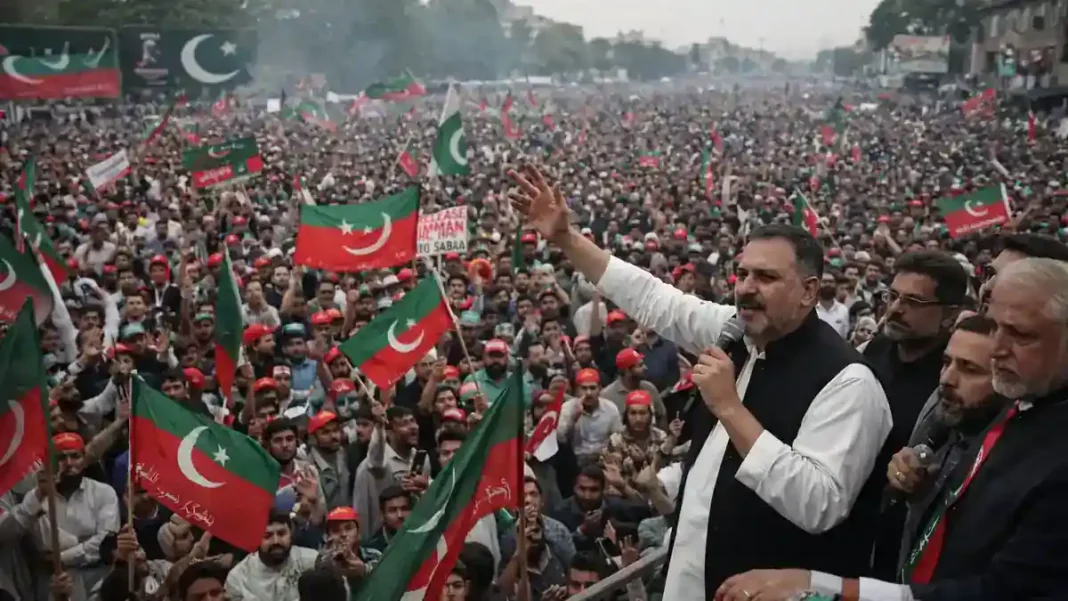
Every election in Pakistan — including the local government polls administered by the Election Commission — runs on Article 17. Parties register, campaign, hold rallies and contest seats because this article says they may. Trade unions negotiate, bar councils elect their leadership, and civil society organises, all under the same clause.
The article also draws the boundary every democracy must draw: freedom of association is broad, but it stops where the sovereignty and integrity of the country begin. The Constitution trusts the courts, not the government of the day, to police that boundary.
Frequently Asked Questions
What does Article 17 of the Constitution of Pakistan guarantee?
Article 17 guarantees every citizen the right to form associations or unions, and gives every citizen not in the service of Pakistan the right to form or join a political party — subject to reasonable legal restrictions in the interest of Pakistan’s sovereignty or integrity.
Can government servants join political parties?
No. Article 17(2) expressly excludes persons “in the service of Pakistan” from the right to form or join political parties, keeping state institutions politically neutral.
Who decides if a political party is acting against Pakistan’s sovereignty?
The Federal Government may make the declaration, but it must refer the matter to the Supreme Court within fifteen days, and the Supreme Court’s decision is final.
Are there any limits on freedom of association?
Yes. Restrictions must be imposed by law, must be reasonable, and must serve the permitted purposes: the sovereignty or integrity of Pakistan, public order, or morality.
Related Constitution Guides