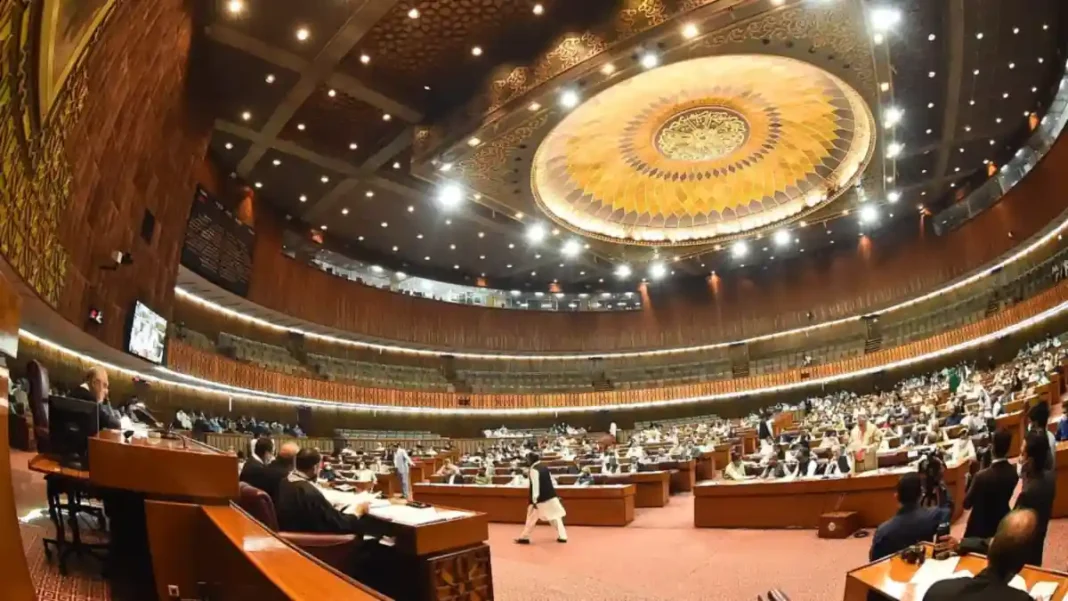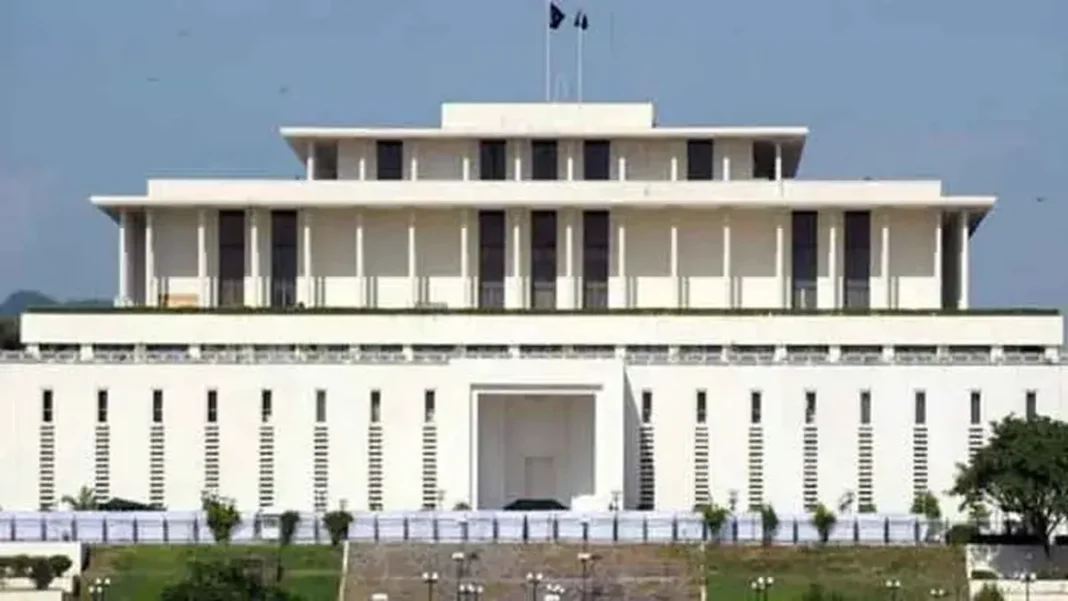


Ask “what type of government does Pakistan have?” and the Constitution answers in four words: a federal parliamentary Islamic republic. Each word does real work — and this guide unpacks all four, showing how they shape the Pakistan government structure in practice.
Quick answer: Pakistan is a federal parliamentary Islamic republic. “Federal” means power is shared between the centre and four provinces; “parliamentary” means the Prime Minister governs with Parliament’s confidence; “Islamic republic” means Islam is the state religion and no law may be repugnant to the Quran and Sunnah.
In this guide
The four words that define the state
Article 1 of the 1973 Constitution names the country the Islamic Republic of Pakistan and declares it a federation of four provinces and the Islamabad Capital Territory. The Pakistan government system then organises that federation on parliamentary lines: sovereignty belongs to Almighty Allah, authority is exercised by the people through their chosen representatives, and the whole edifice rests on the Constitution as supreme law.
What ‘Islamic republic’ means in practice
Islam is the state religion, and the Constitution requires that all laws be brought into conformity with the injunctions of Islam as laid down in the Quran and Sunnah. The Council of Islamic Ideology advises on this, and the Federal Shariat Court can strike down any law found repugnant to Islamic injunctions. The President and Prime Minister must be Muslims, and the Objectives Resolution — the Constitution’s preamble — anchors the state’s Islamic character. None of this displaces democracy: the Islamic provisions operate within a parliamentary framework, not instead of it.
Federal, not unitary
Pakistan is not governed from Islamabad alone. The Constitution divides legislative subjects between the federation and the provinces, and since the 18th Amendment (2010) the provinces control areas like health, education and agriculture outright. Each province elects its own assembly and chief minister. This federal bargain — centre and provinces as constitutional partners — is what distinguishes Pakistan’s political system from a unitary state where all power flows downward from the capital.
Parliamentary, not presidential
Unlike a presidential system (such as the United States), Pakistan’s head of government is not directly elected and does not serve a fixed term independent of the legislature. The Prime Minister must continuously command the National Assembly’s confidence; the President’s role is largely ceremonial. Our guide to the form of government in Pakistan traces why the country chose — and kept — the parliamentary path.
Frequently asked questions
What type of government does Pakistan have?
Pakistan is a federal parliamentary Islamic republic under the 1973 Constitution — federal in its division of power, parliamentary in its chain of command, and Islamic in its constitutional identity.
Is Pakistan a democracy or an Islamic state?
Both. It is a parliamentary democracy whose Constitution also establishes Islam as the state religion and requires laws to conform to Islamic injunctions. The two identities coexist within one constitutional framework.
What does ‘federal’ mean in Pakistan’s case?
It means sovereignty is constitutionally shared: the federal government handles defence, foreign affairs, currency and the like, while provinces run devolved subjects such as health and education through their own elected governments.
Has Pakistan always had the same government type?
No. The 1956 constitution was parliamentary, the 1962 constitution imposed a presidential system, and the 1973 Constitution restored the federal parliamentary Islamic republic that endures today.