

Every country has a gap between the rights its constitution promises and the rights its citizens experience. In Pakistan that gap is documented in unusual detail — by the state’s own commissions, by independent monitors, and by UN bodies. This guide walks through the six human rights issues in Pakistan that dominate the evidence in 2026, with the latest verified data for each.
Quick answer: The leading human rights issues in Pakistan in 2026 are violence against women, misuse of blasphemy laws against minorities, abduction and forced conversion of minority girls, custodial torture, pressure on press freedom, and child labour and child marriage. The state’s own NCHR and independent monitors document all six; the 2022 anti-torture law and 2025 Minorities Rights Bill are the main reform responses.
In this guide
1. Violence Against Women
Domestic violence, honour crimes and workplace harassment remain among the most reported rights issues in Pakistan. The legal response has grown steadily: the 2010 workplace-harassment law, the 2011 acid-crime law, provincial protection centres, women police stations and the 1099 helpline. Yet conviction rates stay low and underreporting is widespread. The National Commission on the Status of Women continues to push for stronger enforcement — and Pakistani women themselves keep winning: read about successful Pakistani women who defied the odds.
2. Blasphemy Law Misuse
Sections 295-B and 295-C of the Pakistan Penal Code carry severe penalties, including death for defiling the Prophet’s name. The problem documented by monitors is not the law’s existence but its misuse: false accusations used to settle personal scores or target minorities. The NCJP’s Human Rights Monitor 2026 recorded eight Christians accused of blasphemy in 2025 — and eight acquitted, a pattern showing how accusations destroy lives even when courts ultimately clear the accused. In June 2025, the Supreme Court acquitted Anwar Kenneth, a 72-year-old Christian, after 23 years on death row. Federal Law Minister Azam Nazeer Tarar has said the government is working on procedural safeguards to prevent misuse and ensure timely justice.
3. Forced Conversions of Minority Girls
Abduction followed by forced conversion and marriage of Hindu and Christian girls — concentrated in Sindh and southern Punjab — is one of the most disturbing documented patterns. Civil-society estimates cited in UN submissions put the figure at around 1,000 girls a year. In April 2026, UN human rights experts expressed serious concern over continuing patterns, noting that roughly 75 per cent of 2025 victims were Hindu and 25 per cent Christian, with girls aged 14 to 18 most vulnerable. Families report police refusing to register kidnapping complaints and lower courts accepting coerced statements from minors.
4. Custodial Torture
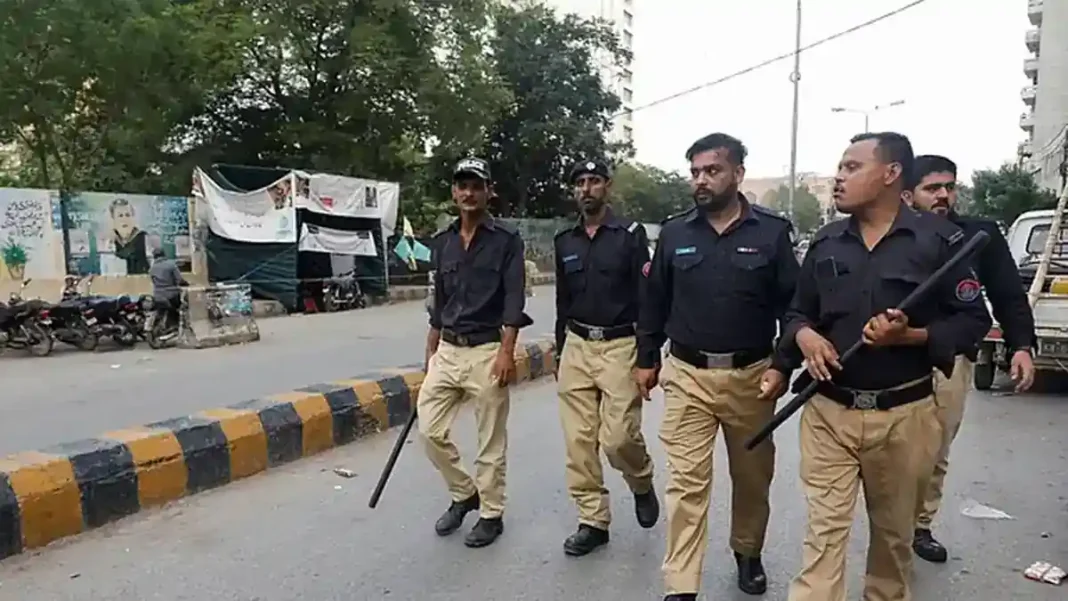
Pakistan criminalised torture by public officials with the Torture and Custodial Death (Prevention and Punishment) Act 2022 — a genuine landmark. But the NCHR’s 2026 alternate report to the UN Committee Against Torture identified critical gaps: the statutory definition of torture does not fully align with international standards, penalties are not clearly proportionate to the gravity of the offence, and victim compensation and rehabilitation provisions are insufficient. The NCHR visited 150 police stations and logged more than 1,300 custodial-abuse complaints between 2018 and 2022. For context on detention conditions, see our report on Pakistan’s prison population and undertrial crisis.
5. Press Freedom
Pakistani journalists work under intimidation ranging from legal pressure to abduction. The country climbed from 157th to 150th on the World Press Freedom Index in 2023 — modest progress, but reporters covering the military, militancy or corruption still face serious risk. Media outlets also practise self-censorship on the most sensitive subjects, which rights groups say narrows the public’s access to information guaranteed by Article 19-A of the Constitution.
6. Child Rights
Child labour, child marriage and out-of-school children complete the picture. Pakistan has ratified the Convention on the Rights of the Child (1990), created the NCRC and ZARRA’s alert system, and Article 25A guarantees free compulsory education — yet millions of children remain out of school. Provincial bright spots exist: Sindh distributed 1,000 tablets to centres teaching out-of-school children in 2025.
Frequently Asked Questions
What is the biggest human rights issue in Pakistan?
No single issue dominates; monitors consistently highlight six: violence against women, blasphemy-law misuse against minorities, forced conversions of minority girls, custodial torture, press-freedom restrictions and child-rights violations. The HRCP’s annual reports and the NCHR’s findings document all six with case data.
How many blasphemy cases were reported in Pakistan in 2025?
The NCJP’s Human Rights Monitor 2026 recorded eight Christians accused of blasphemy during 2025, with two obtaining bail and eight others acquitted. The landmark case was Anwar Kenneth, acquitted by the Supreme Court in June 2025 after 23 years on death row.
What did the UN say about Pakistan’s human rights in 2026?
In April 2026, UN human rights experts expressed serious concern about continuing patterns of abduction and forced religious conversion through marriage in Pakistan, urging effective child protection measures, impartial investigations and access to justice for minority families. The NCHR separately submitted an alternate report to the UN Committee Against Torture.