Society and Culture of Pakistan: The Structures Behind Daily Life
To understand Pakistan, look past the headlines to the biradari (kinship network), the mohalla (neighbourhood), the jirga/panchayat (community council) and the joint family. These are the institutions that actually organise Pakistani life — more than any government office. This guide explains the social structure, the urban-rural divide, and how it is changing.
Quick answer: Pakistani society is organised around the extended family and biradari (kinship) networks, with strong community institutions (mosque, mohalla, jirga), a sharp urban-rural divide, and deep respect for elders. Cities are modernising fast — nuclear families, working women, digital life — while rural areas hold traditional structures more firmly.
In this guide
Family and biradari: the core units
The joint family — parents, married sons, grandchildren under one roof or in one compound — remains the ideal, especially outside big cities. Decisions on marriage, business and migration are collective. Above the family sits the biradari, the extended kinship group that functions as a welfare system (loans in crisis), a political bloc (votes move in biradari blocks), and a marriage network. Outsiders often underestimate it; politicians never do.
Two Pakistans: urban and rural
| Aspect | Urban Pakistan | Rural Pakistan | |
|---|---|---|---|
| Family | Nuclear families rising; apartments and housing societies | Joint families dominant; ancestral homes | |
| Work | Services, industry, freelancing, government jobs | Agriculture, livestock, remittances from abroad | |
| Women’s roles | Growing workforce participation, universities full of women | More restricted; change is slower but real | |
| Disputes | Courts, police, lawyers | Jirga/panchayat first; courts as backup | |
| Culture | Malls, cafes, Coke Studio, PSL | Melas, Urs, harvest festivals, folk music |
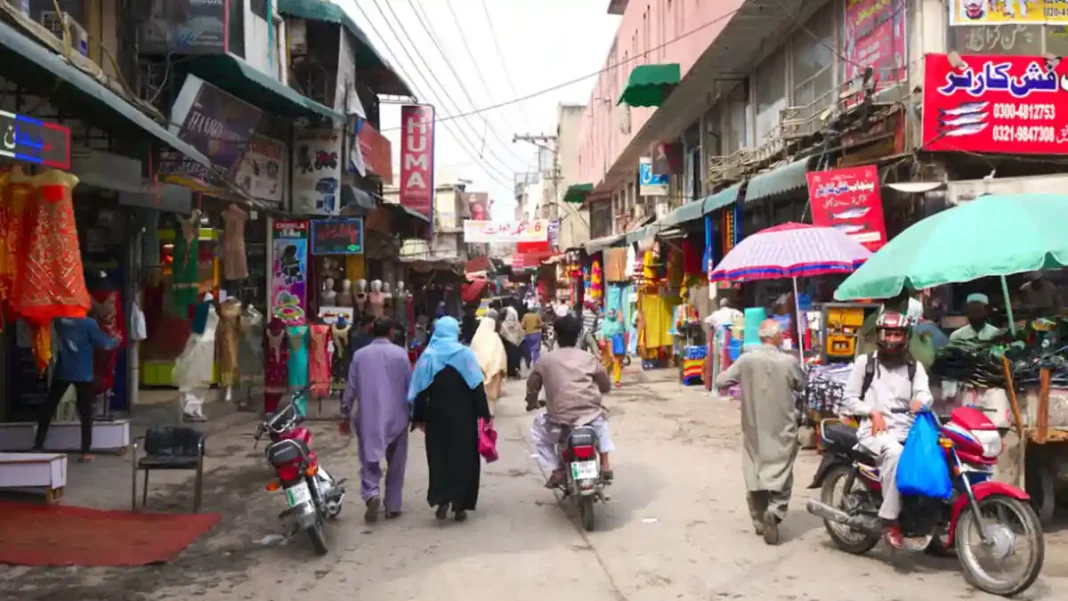
Roughly a third of Pakistanis now live in cities — Karachi, Lahore, Faisalabad, Rawalpindi, Multan, Peshawar — and urbanisation is the single biggest force reshaping society.
Class and social mobility
Pakistani society has visible strata: the landed and business elite, a growing urban middle class (teachers, officers, traders, IT workers), and the working poor. Education — especially English-medium and professional degrees — is the great escalator: a CSS officer’s or doctor’s family can rise a class in a generation. Remittances from the Gulf, Europe and America have transformed thousands of villages, funding houses, shops and schooling. But mobility is uneven, and connections (sifarish) still matter alongside merit.
What is changing
The direction is clear even if the pace varies: women’s education and employment are at historic highs; social media has given youth a public voice their parents never had; urbanisation keeps pulling millions to cities; and the diaspora (over 9 million Pakistanis abroad) imports new ideas with every returning visit. What is not changing: the centrality of family, the honour code, hospitality, and faith. Pakistan modernises without Westernising — the society absorbs the new while keeping its core, a theme explored in our characteristics of Pakistani society guide.
Frequently asked questions
What is the family system in Pakistan?
The joint/extended family system dominates: multiple generations live together or nearby, elders are cared for at home, and major decisions are made collectively. Nuclear families are growing in cities but remain the exception nationally.
What is biradari in Pakistani society?
Biradari is the extended kinship network — a clan-like grouping that provides mutual support, arranges marriages, pools resources in crises, and acts as a political and social bloc, especially in Punjab and rural areas.
Is Pakistani society urban or rural?
Both. About a third of Pakistanis live in cities, and urbanisation is accelerating. Urban society is more individualistic and modern; rural society remains organised around agriculture, biradari and traditional councils.