

JI Will Not Meet PM Shehbaz Unless Petroleum Levy Is Abolished, Says Hafiz Naeem
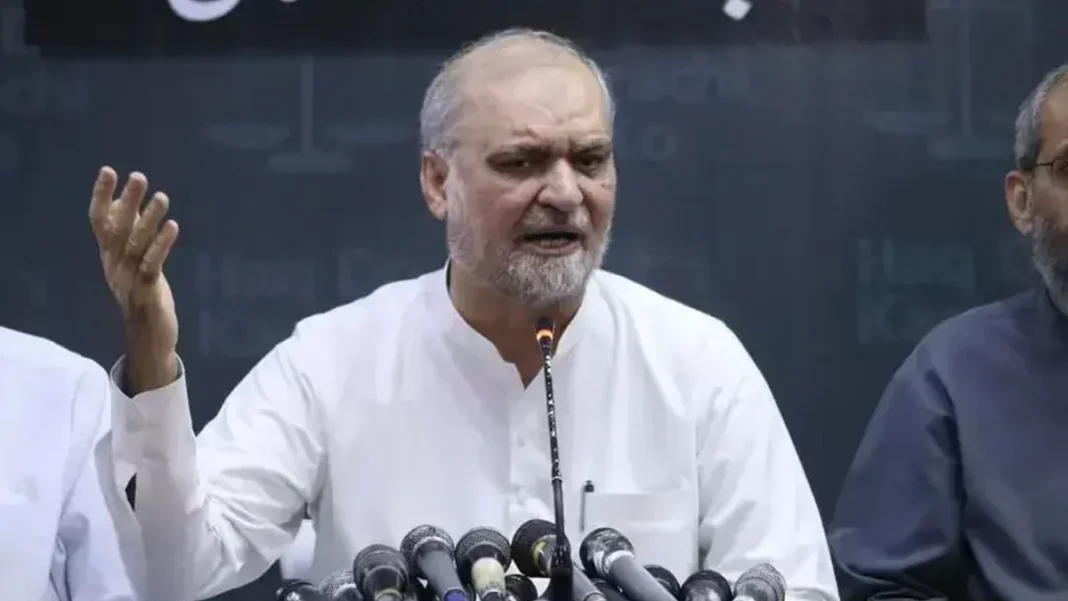
Jamaat-i-Islami emir Hafiz Naeemur Rehman has made any meeting with Prime Minister Shehbaz Sharif conditional on the abolition of the petroleum levy. “If the petroleum levy is not abolished, we have no desire to meet the prime minister,” the JI chief said at a press conference in Mansoorah, Lahore, on Saturday.
The prime minister had sought the meeting after asking the JI to put its protest march on hold. Planning Minister Ahsan Iqbal carried the message to the party through JI vice chief Liaqat Baloch. Rehman said the party would not sit across the table without a firm commitment on the levy.
Petroleum levy at the centre of the standoff
The petroleum levy is a per-litre charge the federal government applies to petroleum products, and it feeds directly into the prices motorists pay at the pump. It is also a major source of revenue for the exchequer, which is why governments are reluctant to give it up. Read our earlier explainer on how the petroleum levy is collected through the FBR.
Rehman demanded meaningful relief for consumers and argued that Pakistan should pass on the benefit of Saudi Arabia’s reported five-dollar-per-barrel oil price cut for Asia. Pump prices have stayed high even as international prices softened. Petrol was revised to Rs396.65 per litre in the October 8 price revision, only days after an earlier hike took it to Rs392.76.
March date to be announced after October 12
The JI chief warned that if the government announces no relief, the party will set a date for its Islamabad march after October 12. Ministers’ statements so far indicate the levy will not be abolished, he said.
The warning caps a long-running campaign. The party has staged 42 days of sit-ins against price hikes, and its signature campaign is still under way. A public meeting is planned in Okara today (Sunday). The tone of Rehman’s remarks signals that the recent fuel price relief measures have not satisfied the party.
IMF argument challenged
Rehman questioned the argument that IMF conditions leave the government no room to cut the levy. He pointed to official luxuries, including an Rs11 billion aircraft, as evidence that money is found when the government wants to spend it.
He also cited the rising cost of farm inputs, with DAP fertiliser up by Rs3,000 per 50kg bag, and pointed to poverty data: the World Bank puts poverty at 23 per cent, while national criteria place it above 40 per cent. The figures, he said, show how heavily price hikes weigh on ordinary households.
The JI chief has kept the party active on several fronts at once, including its Makkah pact initiative on Palestine, but the price-hike campaign remains its main domestic push.
What happens next
All attention is now on October 12. If the government announces no relief by then, the JI will name a date for the Islamabad march, a step that would raise the political temperature further. The government, for its part, has given no sign it will abolish the levy. The two positions leave little middle ground.
The Dawn report on the press conference is here.
Frequently asked questions
What is the petroleum levy?
It is a per-litre charge the federal government applies on petroleum products. It is built into pump prices and serves as a major source of revenue for the exchequer.
Why is the JI refusing to meet the prime minister?
JI emir Hafiz Naeemur Rehman says the party will only meet PM Shehbaz Sharif if the government commits to abolishing the petroleum levy. Without that commitment, he said, the party has “no desire” for the meeting.
When will the JI announce its Islamabad march?
The party says it will announce a date for the march after October 12 if the government does not provide relief on the levy.
What relief is the JI demanding?
Abolition of the petroleum levy and meaningful relief for consumers, including passing on the benefit of Saudi Arabia’s reported five-dollar-per-barrel oil price cut for Asia.