UNITED NATIONS: Pakistan warns UN: India has formalised last year’s unprovoked military aggression into an official, declared policy, claiming a unilateral right to launch strikes against Pakistan on manufactured pretexts.
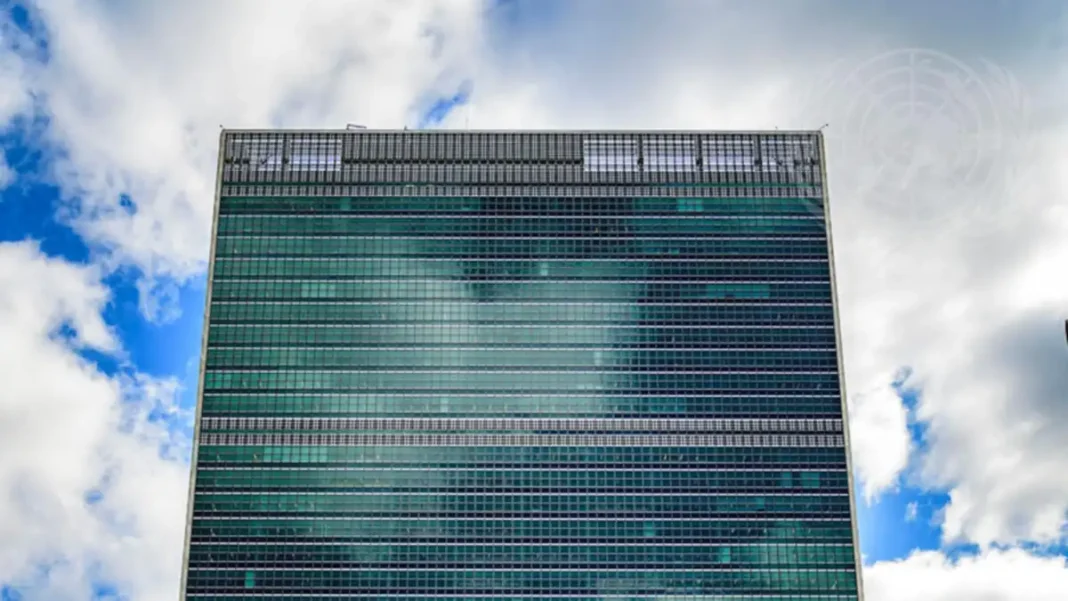
Ambassador Tahir Andrabi, Pakistan’s permanent representative to the UN offices in Geneva, delivered the warning while addressing the General Assembly’s First Committee, which deals with disarmament and international security. He said South Asia remained hostage to what he called a doctrine of force.
“South Asia remains hostage to a doctrine of force,” the envoy said, referring to the May 2025 assault and Pakistan’s response. The clash has kept India-Pakistan tensions on the UN’s agenda ever since.
Pakistan warns UN India policy risks escalation
Andrabi said India had since turned that aggression into declared policy, which he described as a “so-called new normal” under which New Delhi claims the right to strike Pakistan at a time of its choosing and on any pretext it can manufacture.
He declared that Pakistan possessed both the capability and the resolve to defend its sovereignty decisively against any misadventure. The envoy added that India was engaged in the largest military build-up in the region, covering intercontinental-range, sea-based and hypersonic systems. He said this expansion had been enabled by discriminatory exemptions from export controls.
He said the last formal talks between the two neighbours on nuclear and conventional confidence-building measures were held in 2012. Pakistan, he said, had repeatedly flagged India’s backing of terror groups through Afghan proxies at the world body in recent days.
Pakistan, the envoy stressed, did not seek an arms race. But the country had demonstrated its capacity to defend itself, as shown by its response in May 2025.
“We will, therefore, maintain Full Spectrum Deterrence within the framework of Credible Minimum Deterrence,” Ambassador Andrabi said.
He warned that the notion that a limited conventional war could be fought and contained under a nuclear overhang was “a dangerous delusion”. The statement drew a sharp response from the Indian delegation, which said New Delhi would not be deterred by what it called nuclear blackmail.
Diplomacy, not war, remains the goal
Despite the tough tone, Andrabi said Pakistan’s preference was not war but diplomacy. He said Islamabad remained ready for meaningful dialogue on all outstanding issues, including the Jammu and Kashmir dispute, in line with UN Security Council resolutions.
“Our proposal for a Strategic Restraint Regime in the region remains on the table,” he said.
The envoy also spoke on the wider Middle East. He said Pakistan stood for immediate de-escalation, restoration of normal passage, and respect for the sovereignty and territorial integrity of all states in the region. His remarks came days after Pakistan urged the Security Council to act against Houthi attacks on Saudi Arabia under the Makkah Joint Defence Agreement, a defensive pact with Riyadh and Turkiye that he described as consistent with the UN Charter.
On Gaza, Andrabi said the ceasefire remained fragile and had to hold. He also voiced concern that arms control was being dismantled at the global level, with nuclear weapons being modernised.
India’s response at the UN
India rejected Pakistan’s charges at the same committee meeting. Anmol Sher Bedi, a senior adviser in India’s Permanent Mission, said India would not bow to nuclear blackmail and would respond to terror attacks. He said any terrorist attack would receive a fitting response, with no distinction between those who sponsor terrorism and those who mastermind it.
Bedi said India’s strikes last year followed the terrorist attack in Pahalgam that killed 26 civilians. He said India acted in self-defence and that the actions were measured, targeted and designed to be non-escalatory. With the Riyadh airport missile strikes also widening the region’s security worries, the UN’s disarmament committee has become the latest stage for the dispute.
The original reporting came from The Express Tribune.
What does Full Spectrum Deterrence mean for Pakistan?
Pakistan said it would maintain Full Spectrum Deterrence within the framework of Credible Minimum Deterrence, warning that the idea of fighting a limited conventional war under a nuclear overhang is “a dangerous delusion”.
What did Pakistan tell the UN about India?
Ambassador Tahir Andrabi told the UN General Assembly’s First Committee that India has formalised last year’s military aggression into declared policy, claiming a unilateral right to strike Pakistan on manufactured pretexts.
What is the “new normal” Pakistan mentioned?
Pakistan said India had turned its May 2025 assault into declared policy, a “so-called new normal” under which New Delhi asserts the right to strike Pakistan at will.
What did India say in response?
India’s envoy said New Delhi would not bow to nuclear blackmail, would respond to any terrorist attack, and defended last year’s strikes as self-defence following the Pahalgam attack in which 26 civilians were killed.