Textile exporters have warned the government to expect a steep fall in goods exports during the October-December quarter. The textile exports decline warning came from the Pakistan Textile Exporters Association (PTEA), which said weak demand in Western markets, higher freight charges and rising production costs were closing in on the industry at the same time.
In a statement issued on Sunday, PTEA Patron-in-Chief Khurram Mukhtar said the export sector faced mounting pressure from several directions. That pressure, he said, threatened both Pakistan’s competitiveness and its share in international markets. Business Recorder carried the same warning, which covered the second quarter of the current fiscal year.
Textile exports decline warning: the three pressures
Demand is the first problem. Inflation in Western markets has cut spending by international buyers, so orders are thinner. The October-December quarter matters because it covers the Western winter retail season, when clothing and home-textile orders usually peak.
Freight is the second problem. Sea freight charges have risen by 1.5 to 2.5 times, according to the association. Those costs come straight off margins that were already thin. Input and logistics costs at home form the third problem, and they make Pakistani products harder to price against rival suppliers.
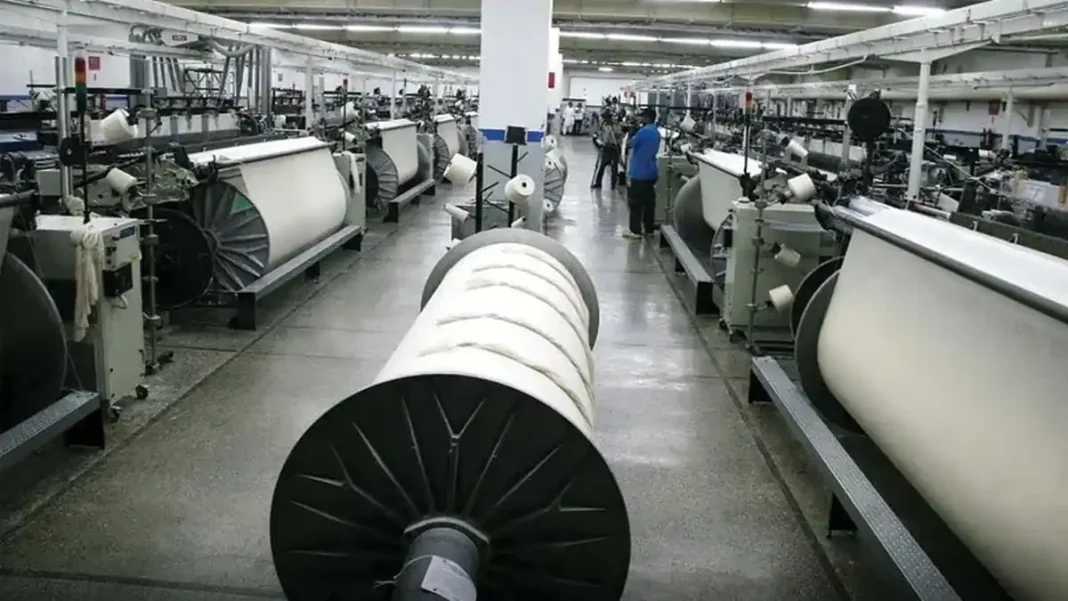
Mr Mukhtar said the fall in export trade volume was unprecedented. He warned that only financially strong exporters would survive the current conditions. He also cautioned that market share, once lost to a rival country, is extremely hard to win back. The squeeze runs through the whole value chain, from ginning and spinning to weaving, processing and knitting. Weak domestic demand, caused by high inflation at home, has put several segments under severe financial pressure at the same time.
What the exporters are asking for
The association asked for temporary support through the Duty Drawback of Local Taxes and Levies scheme, at a rate of 6 to 8 per cent. That support, it argued, would help exporters hold their international market share through the weak quarter. It also demanded the immediate clearance of outstanding refunds under various heads, to ease the liquidity crisis across the supply chain. Its third demand was the removal of cross-subsidies built into industrial energy tariffs, which raise production costs for mills.
Financing drew the sharpest criticism. The government announced a fixed Export Finance Scheme rate of 4.5 per cent in the Finance Bill, Mr Mukhtar said, but the decision has not been implemented. Banks are charging exporters a minimum of 5.5 per cent, he said, and some are charging as much as 8.5 per cent.
He also questioned where the scheme’s money has gone. Around Rs200 billion in financing was extended to yarn exporters, he claimed, although yarn sits on the scheme’s negative list. Sugar exporters also received financing, he said, despite sugar being a highly regulated sector. In contrast, he said, some textile exporters who deliver five to six times the mandatory export performance, against a required threshold of two times, cannot get allocations. The association welcomed the increase in scheme allocations for small and medium enterprises, but questioned whether the additional Rs300 billion set aside for them could be used effectively.
What is at stake for Pakistan
Textiles are the backbone of Pakistan’s exports. Our guide to Pakistan textile exports puts the sector’s earnings at $13.5 billion in FY2025-26, and our overview of the major exports of Pakistan shows how heavily the full basket leans on this one industry. Value-added lines carry much of that weight, from readymade garments to the cotton yarn and cloth that feed them.
That is why a one-quarter fall would hurt beyond the mills. Export earnings pay for imports and support the rupee, and the textile chain employs workers in almost every industrial city. The exporters’ case now sits with the government. Refund clearance and the promised 4.5 per cent financing rate are both decisions Islamabad can take quickly, if it chooses to. (Source: Dawn)
Frequently asked questions
Who issued the textile exports decline warning?
The Pakistan Textile Exporters Association issued it through its Patron-in-Chief, Khurram Mukhtar, in a statement on Sunday. It covers goods exports in the October-December quarter of the current fiscal year.
Why do exporters expect exports to fall?
They cite three reasons: inflation in Western markets has weakened buyer demand, sea freight charges have risen 1.5 to 2.5 times, and production costs at home keep rising.
What support have textile exporters demanded?
They want Duty Drawback of Local Taxes and Levies support at 6 to 8 per cent, immediate clearance of outstanding refunds, removal of cross-subsidies from industrial energy tariffs, and implementation of the announced 4.5 per cent Export Finance Scheme rate.