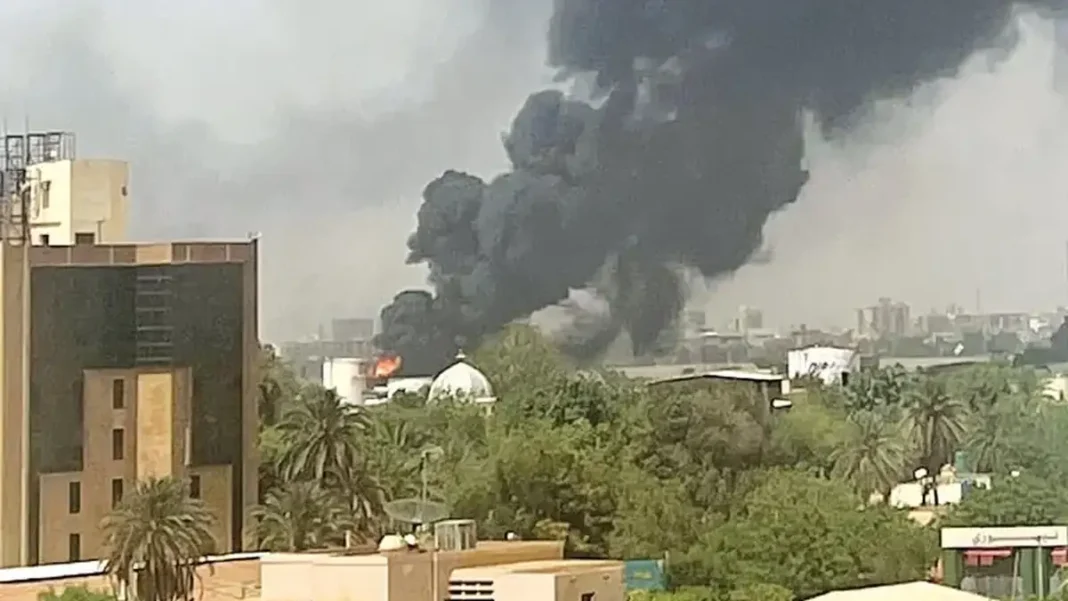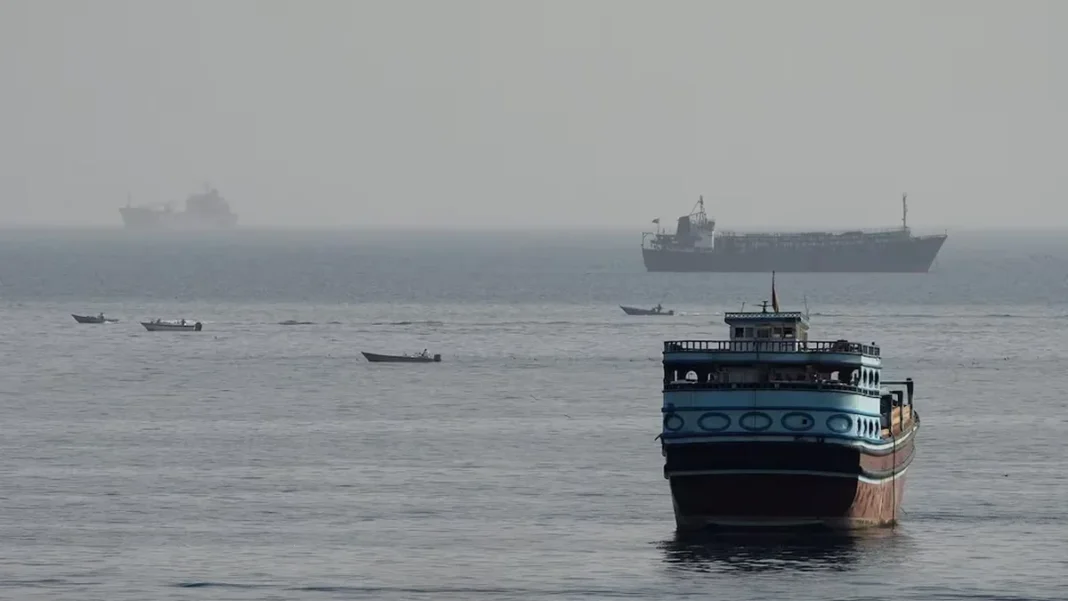
A third tanker strikes mine in Strait of Hormuz waters in two days, Iran’s Islamic Revolutionary Guard Corps (IRGC) Navy said on Sunday, warning that any vessel crossing with its navigation systems switched off would be treated as hostile.
The IRGC Navy said the crude carrier, a supertanker able to carry around two million barrels of oil, hit a naval mine in the southern part of the strait on Sunday evening. The explosion set off a fire in the engine room. The vessel, the statement carried by the Guard’s Sepah News outlet said, had switched off its navigation and identification systems and was leaving along an unauthorised route.
The tanker was the third since Saturday to strike a mine on what Tehran calls a prohibited route. The first, reported on Saturday, also caught fire. Tehran has not named any of the vessels or released casualty or damage figures, and the mine claims have not been independently verified.
Tanker strikes mine in Strait of Hormuz: the IRGC warning
After the latest incident, the IRGC Navy repeated its warning. Every vessel in the strait that switches off its navigation and identification systems will be classed as hostile, it said, and will face a decisive response. Tehran argues that ships running dark are moving oil outside the routes it has designated since tightening control.
The mine strikes also mark a shift in method. Earlier this month, the IRGC said it had struck a tanker in the strait over an illegal route, a direct action by Iranian forces. On October 3, a Kuwait-flagged tanker, the Kazimah III, was struck in the strait and five Indian crew members were rescued. Mines, by contrast, put every ship on the wrong lane at risk.
A waterway Washington said had been cleared
Sunday’s statement sits awkwardly beside a recent American claim. In late August, US Central Command (CENTCOM) said shipping lanes in the strait had been reopened after US forces removed Iranian naval mines. Iran, however, had announced on July 12 that it was closing the strait again, a week after US attacks resumed on July 8.
The wider war explains the deadlock. The United States and Israel launched their war on Iran on February 28. Tehran answered with missile and drone strikes across the region and effectively closed the strait, while Washington blockaded Iranian ports. A June memorandum of understanding on freedom of navigation stalled, and Iran has since linked any reopening of Hormuz to a list of US commitments.
Smuggling claims and a warning for Washington
The mine announcement came with a second, sharper claim. Mohsen Rezaei, secretary of Iran’s Supreme National Security Council, told state-run Press TV that CENTCOM chief Admiral Brad Cooper was running oil-smuggling operations in the strait with UAE military help, using five or six small boats to load large tankers. Iranian forces, he said, had struck five or six such vessels each night for two or three months. Neither Washington nor Abu Dhabi has commented.
Rezaei also rejected President Donald Trump’s assertion that the strait is open, saying traffic remains far below pre-war levels. He warned that a fresh US attack would put US-linked technology infrastructure in the region, from undersea cables to data centres, on Iran’s target list, valuing it at more than $2 trillion.
Why the mine strikes matter for Pakistan
Pakistan watches the strait closely because so much of its fuel comes through it, and every new incident feeds straight into shipping risk and oil prices. Earlier this month, trading house Vitol warned that oil could reach $200 a barrel as the Hormuz tanker crisis deepened. Domestic prices are already climbing, with petrol rising again in the October 8 revision.
For now, the question is whether commercial crews treat Tehran’s warning as a real boundary. If dark running stops, the mine risk falls with it. If it does not, Sunday’s fire may not be the last one this week. (Source: The Express Tribune)
Frequently asked questions
What happened in the Strait of Hormuz on Sunday?
The IRGC Navy said a supertanker struck a naval mine in the southern part of the strait on Sunday evening, causing an explosion and a fire in its engine room. It was the third tanker to hit a mine on an unauthorised route since Saturday.
Why does the IRGC call these ships hostile?
Tehran says the tankers switched off their navigation and identification systems and used routes it has not authorised. It has warned that any vessel running dark in the strait will be identified as hostile and dealt with decisively.
Has the United States responded to the mine claims?
There was no immediate US comment on the mine incidents or on the separate smuggling allegation. CENTCOM said in late August that shipping lanes had been reopened after US forces removed Iranian mines.