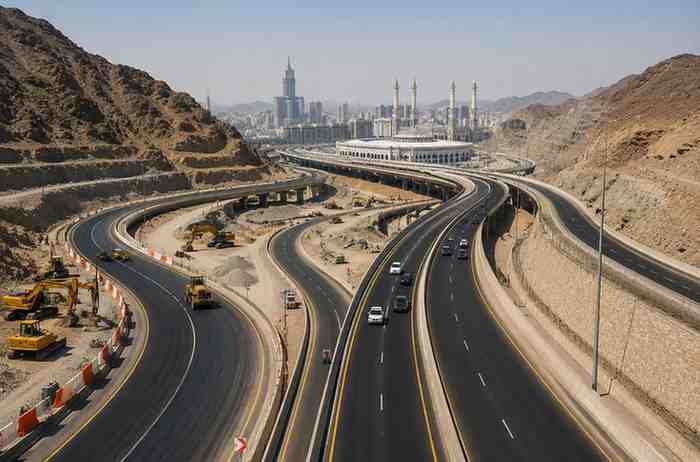
Authorities in Mecca have launched major Hajj Road Projects to improve transportation facilities for millions of pilgrims. The new development plan aims to strengthen road infrastructure before the upcoming Hajj season.
According to Arab media reports, the General Authority for Roads started 10 major projects with a total budget of 495 million riyals. Officials believe these Hajj Road Projects will help reduce traffic pressure and improve travel safety around holy sites.
The inauguration ceremony was held under the supervision of the regional authorities. In addition, the Saudi Minister of Transport and Logistics attended the launch event and reviewed the upcoming development work.
The Hajj Road Projects include the expansion and dualization of several important highways. The total road length under development exceeds 100 kilometers. Officials expect these upgrades to improve traffic movement during peak pilgrimage days.
Several major routes are part of the new plan. These include Hazn Turbah Road, Ranyah Road, Khurmah Road, Taif Expressway, Sail Al-Kabirah Riyadh Road, Mahd Road, Wadi Al-Jamoum Road, and Jeddah Road. Furthermore, authorities will repair and restore damaged sections on roads connecting Mecca, Taif, and Al-Baha.
Officials said the Road Projects focus on operational readiness and long-term infrastructure improvement. Therefore, workers will continue upgrading roads, repairing damaged areas, and improving travel routes leading to the holy sites.
Saudi authorities continue to expand transport facilities each year to support the growing number of pilgrims. As a result, these Hajj Road Projects will likely improve traffic flow and reduce travel delays during the busy pilgrimage season.
The government also plans to enhance road safety standards and improve driving conditions for visitors arriving from different regions. In addition, better roads may help emergency and transport services operate more efficiently during Hajj operations.
The latest Hajj Road Projects reflect Saudi Arabia’s ongoing efforts to modernize transport infrastructure and provide smoother travel experiences for pilgrims visiting the holy cities each year.