

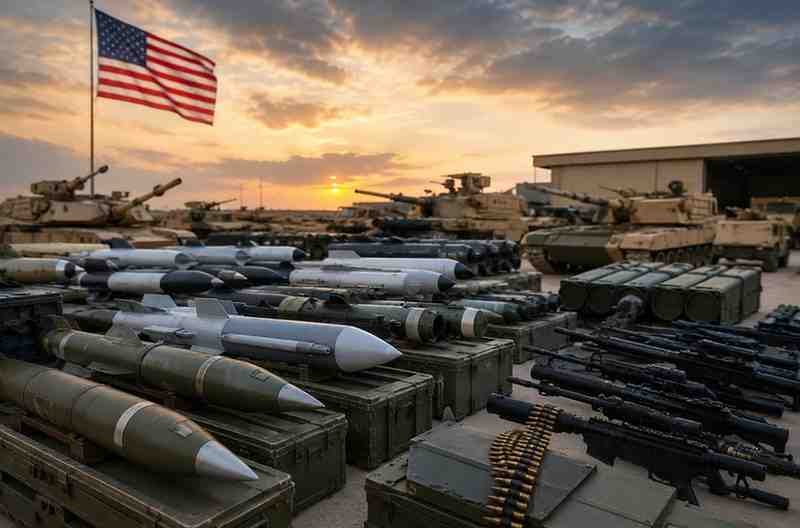
The United States has approved a major Middle East arms deal worth $25.8 billion for allied countries in the Gulf region. The decision reflects Washington’s continued focus on strengthening military cooperation with its regional partners amid rising security concerns.
According to international media reports, the latest Middle East arms deal includes advanced defense systems, weapons, and military support equipment for key US allies in the region. American officials believe the agreements will improve the defensive capabilities of partner nations facing growing regional threats.
Earlier, the US administration had announced emergency weapons supplies worth $8.6 billion for Gulf countries. However, newly released figures revealed that the total approved amount has now increased to $25.8 billion.
Officials stated that the difference in numbers was mainly due to administrative calculations. The US government reportedly considered several amendments to defense agreements and previously approved deals rather than classifying them as entirely new contracts.
The Middle East arms deal drew international attention amid ongoing tensions between Iran and several Gulf states. American authorities said the agreements demonstrate Washington’s commitment to supporting allies that have faced security threats since late February.
In addition, US officials stressed that regional stability remains a top priority for the administration. They argued that stronger defense partnerships can help allied countries respond more effectively to potential attacks and security challenges.
The new Middle East arms deal also highlights the strategic importance of the Gulf region for the United States. Analysts believe Washington wants to maintain a strong military presence and deepen cooperation with friendly governments across the Middle East.
Meanwhile, critics of large-scale arms sales continue to raise concerns about rising military spending and increasing tensions in the region. Some international observers fear that expanded weapons supplies could further destabilize the situation if diplomatic efforts fail.
Despite criticism, the US administration defended the agreements, calling them necessary for regional security. Officials added that allied countries require modern defense systems to protect critical infrastructure and maintain national security.
The Middle East arms deal is expected to strengthen military coordination between the United States and Gulf allies in the coming months. Experts also predict that additional defense partnerships may emerge as regional security concerns continue to grow.