On October 5, Pakistan Stands With Its Teachers
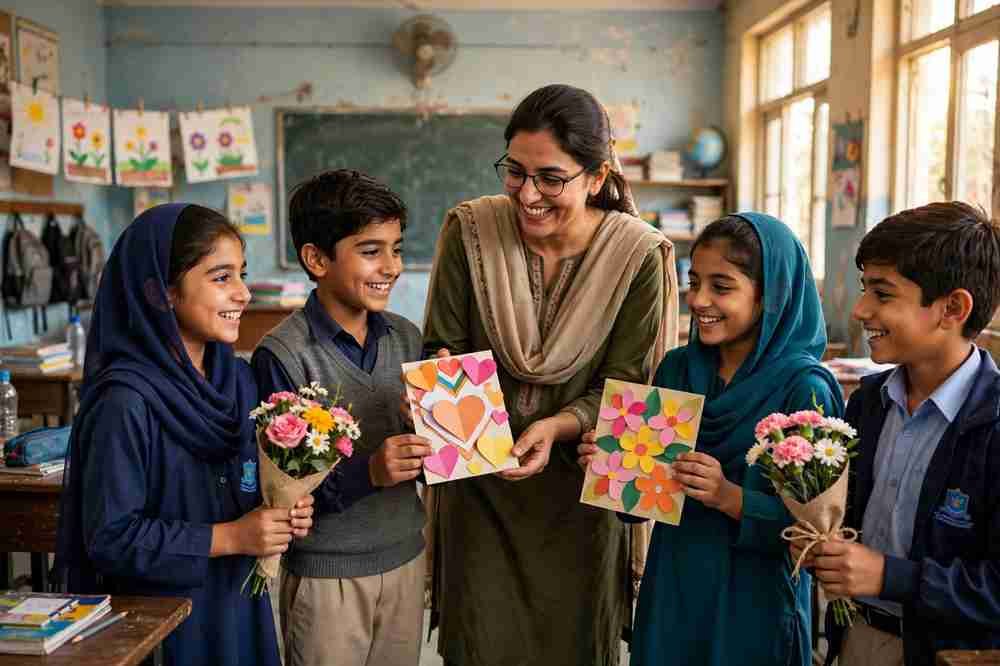
Behind every doctor in a Karachi hospital, every engineer building a motorway in Punjab, and every lawyer arguing in a Lahore courtroom, there is a teacher. Someone who stayed a little later, believed a little more, and gave a little extra. On Monday, 5 October 2026, Pakistan joins the world in observing World Teachers’ Day, a moment to recognize the men and women who quietly carry the future of the country on their shoulders.
This year’s observance is especially meaningful. The 2026 global theme set by UNESCO is “Standing with teachers: 60 years of protecting the profession, advancing its status and shaping our futures,” marking the 60th anniversary of the 1966 ILO/UNESCO Recommendation concerning the Status of Teachers, the world’s first international standard for teachers’ rights, training, and working conditions. Sixty years later, the world is being asked a simple question: are we truly standing with our teachers? UNESCO estimates the world needs 44 million more teachers by 2030, and Pakistan’s share of that challenge is enormous.
How Teachers Change Lives in Pakistan
Education in Pakistan is often discussed in numbers: enrolment rates, exam results, budgets. But the true work of education happens quietly, in the space between a teacher and a child. A teacher is the first person outside a family to tell a child, “You can be more than your circumstances.”
Teachers shape character long before they teach syllabi. It is a teacher who notices the shy girl who never raises her hand and gives her courage to speak. Lessons in honesty, courage, and hard work are caught, not taught, and children catch them from watching their teachers.
Teachers are also the great door-openers of opportunity. For a child in a low-income household, the teacher is often the first person to speak of universities and careers. One educated child can pull siblings, and later a whole family, out of poverty. Many of Pakistan’s leading professionals can trace their ambition to a single teacher who refused to let them settle. And in a country where many parents cannot guide their children’s studies, the teacher becomes not just an instructor but a second parent and a counsellor.
Illustrative example: the teacher who walks miles
Consider the story of a village schoolteacher in a remote rural district. To be clear, this is an illustrative example, not a report about a real named person or a real school.
Every morning, before sunrise, a primary school teacher in a far-off village begins a journey of several kilometres on foot along dusty, unpaved paths. There is no bus and no public transport. In summer heat and winter fog, the teacher walks, because twenty-five children are waiting in a one-room schoolhouse with no other teacher to replace him. The school has few desks and one worn-out chalkboard, yet the teacher arrives with hand-written lesson plans and brings extra pencils from his own small salary for children whose parents cannot afford them.
This is not one story; it is the daily reality of thousands of teachers in remote parts of Pakistan. Their dedication is the reason countless rural children can read and write at all.
The Challenges Pakistani Teachers Face
To honor teachers honestly, we must look at what the role of teachers in Pakistan costs them. The profession that carries the nation’s future is, too often, starved of respect and resources.
Low salaries
Pay remains the deepest wound. Teachers’ organizations in Punjab have reported teachers with basic qualifications working for monthly salaries between PKR 7,000 and PKR 10,000, far below the government’s minimum wage. Even in mainstream private schools, teacher pay is frequently low and late. When a teacher cannot support a family with dignity, society is silently saying their work does not matter.
Overcrowded classrooms
A typical government school classroom may hold sixty, eighty, or more students in a room built for forty, with no assistant and sometimes not even enough chairs. Individual attention, the heart of good teaching, becomes nearly impossible. Teachers are exhausted before the day begins, not by teaching, but by managing numbers no professional should face alone.
Rural and remote postings
Teachers posted to remote areas face isolation, poor housing, long commutes, and schools missing basic facilities. Tens of thousands of teachers in Punjab have been transferred to areas far from their homes. For female teachers, the challenges multiply: security concerns, lack of transport, and cultural pressure. Yet these are the very postings where teachers are needed most.
Contract employment and job insecurity
A growing share of Pakistani teachers work on contracts rather than as permanent staff, earning less with fewer benefits and the constant fear of non-renewal. Punjab’s outsourcing of thousands of government schools to private operators has deepened this insecurity, with permanent posts eliminated and replaced by lower-paid contract positions. Add the planned mandatory teacher licensing from 2026, which unions describe as a threat to job security for experienced teachers, and the profession’s foundations are clearly shaking.
Limited training and resources
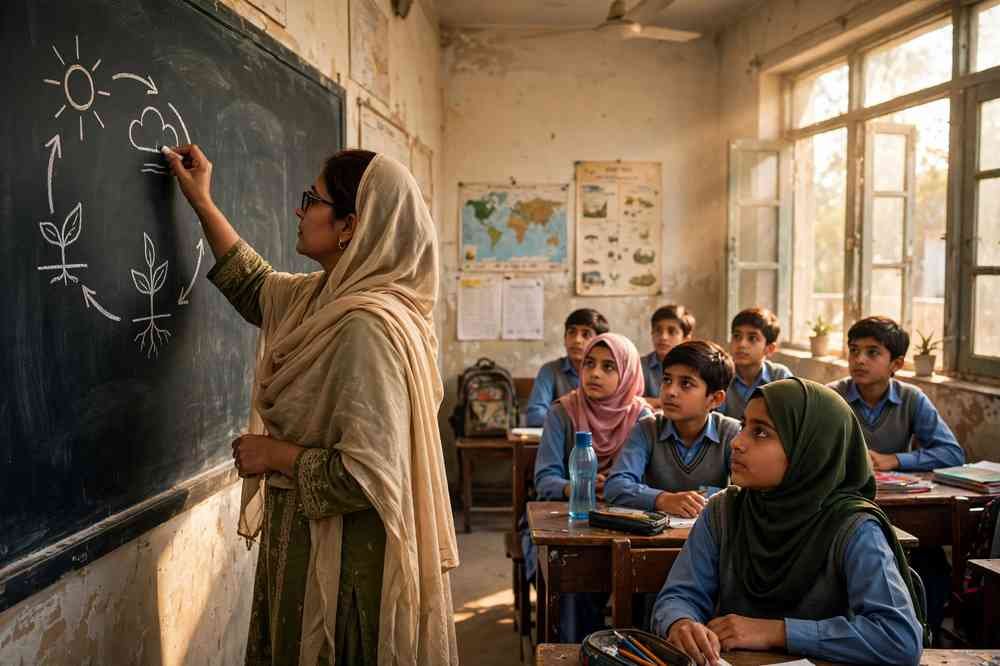
Many teachers enter classrooms with inadequate training and little professional development. Schools frequently lack libraries, laboratories, computers, and even clean drinking water and electricity. Teachers are asked to produce modern results with old tools, or sometimes no tools at all.
The respect gap
In too many homes, teaching is seen as a last resort rather than a calling. Administrators treat educators as clerks, burdening them with census duties, election work, and survey assignments that steal teaching hours. UNESCO’s 2026 message speaks directly to this: a profession that is not symbolically, professionally, and materially valued cannot fully exercise its role.
Illustrative example: the fee paid in secret
The following is an illustrative example, a composite picture of real-life kindness. It is not a report about a real named person or a real school.
Consider a middle-school teacher in a small city school who notices that one of her brightest students has stopped coming to class. The boy, the eldest son of a daily-wage laborer, has decided to quit school to work at a workshop because the family cannot pay a modest exam fee, and he is too ashamed to ask for help.
The teacher quietly pays the fee from her own pocket, tells the office to record it as received, and never tells the boy who paid. She only says, “Your admission is confirmed. Now study hard.” Years later, he graduates and begins supporting his siblings’ education. He never learns who saved his schooling, but his teacher knows, and that is enough. Teachers across Pakistan do such things routinely, invisibly, and without applause.
Rural vs Urban: Two Different Pakistans for Teachers
In urban Pakistan, the challenges are scale and pressure: crowded schools, board-percentage targets, parent meetings, and workdays stretched far beyond classroom hours, often for pay far below the workload.
In rural Pakistan, the challenge is scarcity itself. Schools can lack boundary walls, toilets, furniture, drinking water, and electricity. One teacher may handle several classes in a single room. Girls’ education depends heavily on female teachers, yet recruiting and retaining women in remote areas remains difficult. Yet the impact here is arguably the greatest: one committed teacher in a village can change the destiny of dozens of families. Both urban and rural teachers deserve honor, but the rural teacher’s isolation makes that honor especially owed.
Illustrative example: after the last bell
This is an illustrative example of a familiar real-life pattern, not a report about a real named person or a real school.
Consider a high school teacher in an under-resourced neighborhood school. The official school day ends at 2 p.m., but he stays until 5 p.m., three days a week, running free extra classes for students who are falling behind. There is no overtime pay, no certificate of appreciation, and no mention in any official record. He brings old test papers from his own collection, borrows a whiteboard marker from a colleague when supplies run out, and sometimes walks home in the dark. He simply refuses to let the exam season claim another batch of his students. This quiet after-hours dedication exists in thousands of schools across Pakistan; it is the invisible infrastructure of the country’s education system.
Why Honoring Teachers Matters: The 2026 Theme
World Teachers’ Day is not just a date for greeting cards. The 2026 theme, “Standing with teachers,” is deliberately a call to action. UNESCO’s message this year is that after 60 years of the 1966 Recommendation, the world must review where the profession stands and commit to protecting it. If you are looking for the right words to say on 5 October, see our Happy Teachers’ Day messages, quotes and speech ideas.
Honoring teachers matters because status shapes supply. When teaching is respected, well-paid, and secure, talented young people choose it; when it is not, they leave. Pakistan already faces a shortage of qualified teachers, with tens of thousands of teaching posts vacant in Punjab alone and millions of children still out of school. A profession that bleeds talent cannot educate a nation, and every classroom without a good teacher is a future quietly dimmed.
It also matters because a society that celebrates its educators raises generations who value learning. Every time Pakistan publicly stands with its teachers, it tells its children that the classroom is sacred ground. And it matters because it is simply just: the people who spend their lives building other people’s futures deserve more than one day of flowers. The 2026 theme asks us to stand with teachers not only in words on October 5, but in budgets, laws, and daily behavior throughout the year.
What Government, Schools, and Parents Can Do
Real honor is practical. Here is what each part of society can do to stand with teachers.
- Government: Regularize contract teachers and end exploitative low-wage hiring in outsourced schools. Enforce minimum wage rules for private-school teachers. Fill vacant teaching posts. Provide real training, materials, and safe, equipped buildings, especially in rural areas. Reduce non-teaching duties like census and survey work that steal classroom hours.
- Schools and administrators: Treat teachers as professionals, not clerks. Keep class sizes manageable, give teachers a voice in decisions, and recognize their extra work publicly. Invest in libraries, laboratories, and basic facilities.
- Parents: Pay school fees on time, because a teacher’s salary depends on it. Speak of teachers with respect in front of children. Attend parent-teacher meetings and support, rather than pressure, the teacher.
- Students and society: Say thank you. A single message to a former teacher on October 5 can mean more than any award. Remember that teachers, too, are human, with families, bills, and worries of their own.
A Closing Tribute Before October 5
As Monday, 5 October approaches, let every Pakistani remember a teacher who changed something in them: the teacher who saw potential where others saw trouble, who explained a concept for the tenth time without irritation, who walked miles, paid a fee in secret, or stayed after the last bell, and never asked for credit.
Pakistan’s future is being written right now, in chalk dust and quiet classrooms, by people who give far more than they receive. The inspiring role of teachers in Pakistan is not a slogan; it is the daily, lived reality of millions of lessons taught against the odds.
This World Teachers’ Day, standing with teachers means more than saying thanks. It means demanding better for them: fair salaries, secure jobs, smaller classes, and the respect this noble profession has always deserved. Sixty years after the world first agreed on what teachers are owed, let Pakistan answer with action.
To every teacher reading this: thank you. You are seen. You matter. And the future you are building is worth every mile, every rupee, and every extra hour you give.
Read More
Continue exploring Teachers’ Day with us: read World Teachers’ Day 2026: Theme, History and Pakistan Celebrations and Happy Teachers’ Day: Messages, Quotes and Speech Ideas.