Omani Foreign Minister Arrives in Pakistan for Joint Ministerial Commission Session
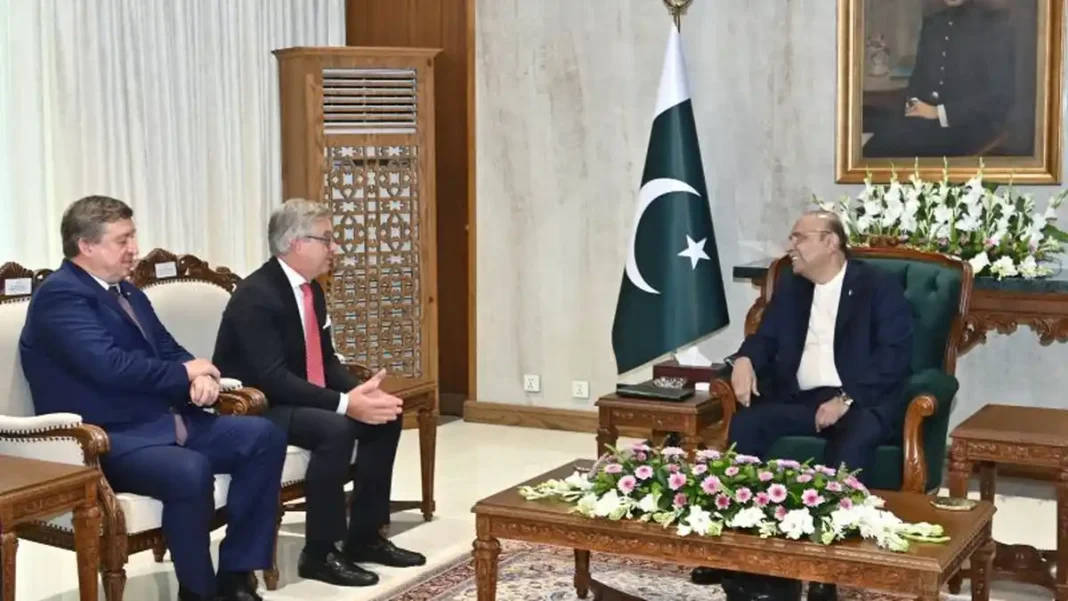
Oman’s Foreign Minister Sayyid Badr Albusaidi arrived in Pakistan on Tuesday for a two-day visit. He will head his country’s delegation at the eighth Pakistan-Oman Joint Ministerial Commission (JMC) session, the Foreign Office said.
He was received on arrival by the secretary of the Economic Affairs Division and the Foreign Office’s additional secretary for the Middle East. The Omani FM Pakistan visit puts a formal structure around a relationship both sides describe as fraternal and longstanding.
Omani FM Pakistan Visit: What’s on the Agenda
The JMC session will review the full range of Pakistan-Oman bilateral relations and look for ways to widen cooperation across sectors, the Foreign Office said. During his stay, Albusaidi will also hold a bilateral meeting with Deputy Prime Minister and Foreign Minister Ishaq Dar.
A preparatory meeting has already taken place. It reviewed the session’s agenda, the bilateral agreements on the table, and the arrangements for co-chairing the commission. Dar told officials to prepare thoroughly and follow up properly so the session produces tangible outcomes, the report added.
Joint ministerial commissions do the quiet work of diplomacy. They turn summit handshakes into signed agreements on trade, investment, labour, energy and maritime cooperation, and they create the paper trail that keeps both bureaucracies moving between high-level visits.
Why the Visit Matters
Oman occupies a special place in Pakistan’s foreign relations. The two countries share deep historical ties: Oman transferred the port city of Gwadar to Pakistan in 1958, a handover that still anchors the relationship. A large Pakistani expatriate community lives and works in Oman, and their remittances form a steady link between the two economies.
The visit also fits a wider pattern of Pakistan’s Gulf diplomacy this week. Pakistan’s petroleum minister has been building energy cooperation with Saudi Arabia at the Riyadh energy forum, and Islamabad has worked to keep its Gulf partnerships steady even as regional tensions have sharpened around Yemen. The Omani FM Pakistan visit adds another strand to that engagement.
On the economic front, both sides have reason to talk trade. Pakistan is pushing to narrow its trade data gaps with partners and to lead developing-country blocs like the G-24 in making the case for fairer global finance. Oman, with its ports and shipping lanes, is a natural partner for a Pakistan looking outward to the Gulf and beyond.
What to Watch
The real test of the session will be what gets signed. Watch for agreements on trade facilitation, investment protection, labour welfare for Pakistani workers in Oman, and maritime cooperation in the Arabian Sea. Dar’s instruction to officials to secure tangible outcomes suggests Islamabad wants this JMC to produce more than a joint statement.
FAQs
Who is visiting Pakistan from Oman?
Oman’s Foreign Minister Sayyid Badr Albusaidi arrived on October 13, 2026, for a two-day official visit.
What is the Pakistan-Oman Joint Ministerial Commission?
It is the main bilateral forum where the two countries review their entire relationship and agree on cooperation in trade, investment, labour, energy and other fields. This is its eighth session.
Who will the Omani foreign minister meet?
He will head Oman’s delegation at the JMC session and hold a bilateral meeting with Deputy Prime Minister and Foreign Minister Ishaq Dar.
Why does Oman matter to Pakistan?
The ties run deep: Oman transferred Gwadar to Pakistan in 1958, a large Pakistani community works in Oman, and the country sits on shipping lanes vital to Pakistan’s Gulf trade.