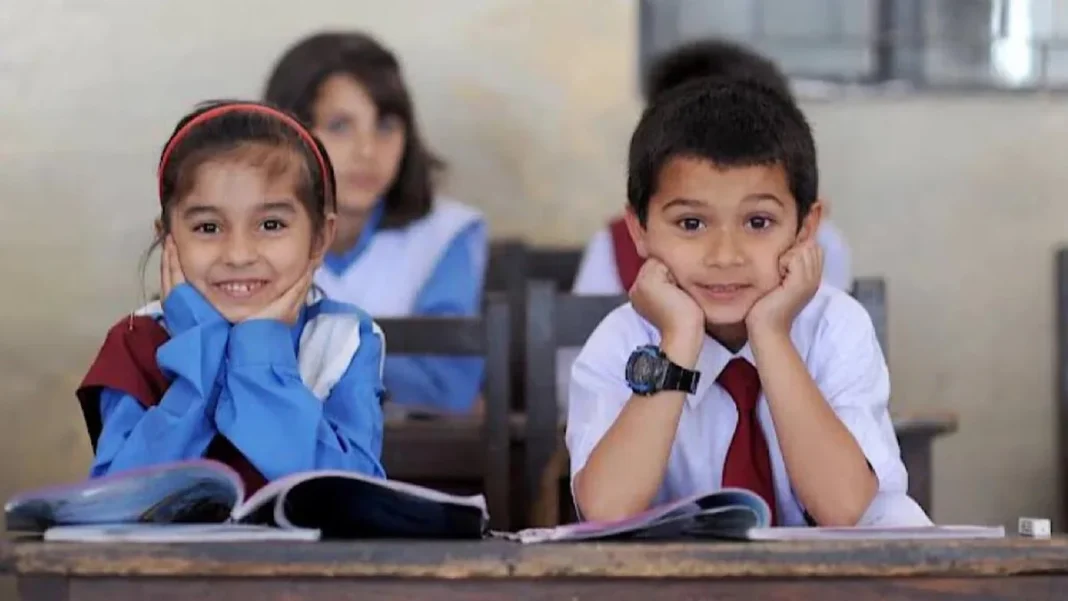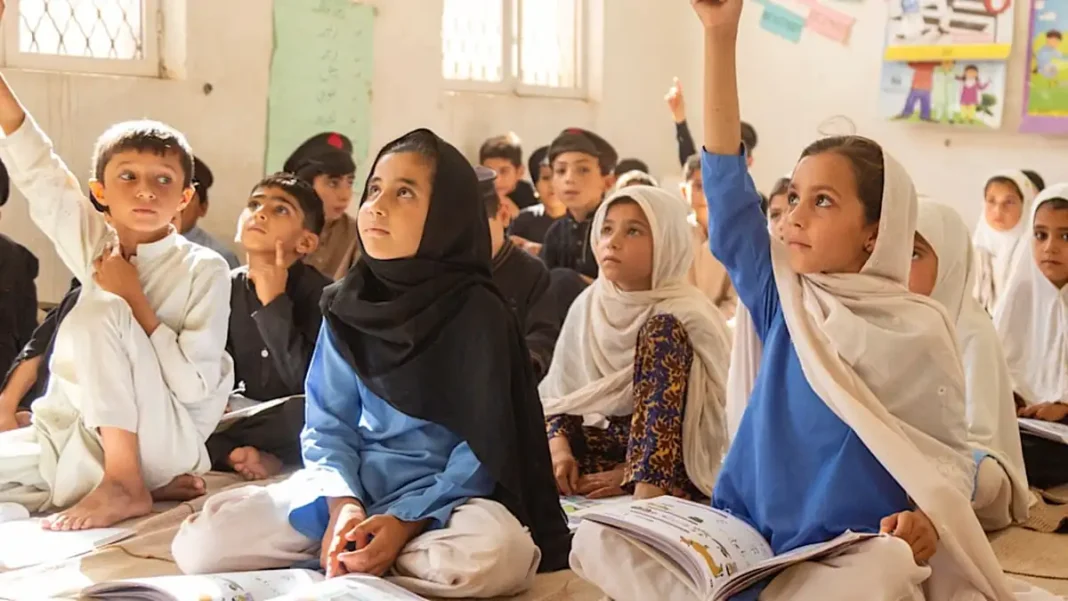
Former Punjab education minister Mian Imran Masood has urged the federal and provincial governments to agree on a common core curriculum, and to give schools until April 2028 to put it into effect.
Masood made the call at a media briefing on curriculum reforms on Wednesday. He said the lead time would let schools and publishers prepare quality textbooks, train teachers, and align teaching and assessment systems before the new curriculum lands in classrooms.
Why one curriculum matters
The federal government, Punjab and Khyber Pakhtunkhwa are each developing separate curricula. Masood warned that this would produce uneven learning standards across the country and create problems for students who move between provinces.
He pushed for a coordinated approach so that children face comparable learning standards wherever they live. A curriculum, he said, shapes the entire education system — from learning outcomes and teacher preparation to classroom planning and examinations.
Parallel reforms already in motion
The reform push comes as several curriculum processes run side by side. The National Curriculum Council is taking public feedback on the draft National Curriculum Framework 2026 and on a proposed curriculum for early childhood education through Grade 5. Punjab has approved a revised primary curriculum for the 2027 academic year, while Khyber Pakhtunkhwa has issued revised curricula for secondary and higher secondary classes.
The federal government approved a new school curriculum earlier this year, as Feature Pakistan reported at the time, and Masood’s deadline proposal now gives that process a target date to work towards.
Read more: Education Reform Pakistan as Government Approves New School Curriculum
The 18th Amendment question
Curriculum is a provincial subject under the 18th Constitutional Amendment, which moved the responsibility to the provinces. Masood noted that despite devolution, broad consistency in curricula was maintained between 2010 and 2026 — a balance he said was now at risk as each government went its own way.
The concern is not abstract. A recent Punjab assessment showed how quickly uneven preparation turns into poor results, underlining why the minister wants shared standards before divergence deepens.
Read more: 9th Class Result in Punjab Exposes a Deeper Education Crisis
Teaching days and textbook pressure
Masood also flagged Pakistan’s short school year, with roughly 140 to 145 teaching days each year compared with 192 to 220 in several other countries. With fewer days to teach, he argued, clarity on what must be taught matters even more.
Speakers at the briefing stressed that students need consistent learning standards at the foundational and primary levels. They called for enough time for pilot teaching, textbook development and teacher training — and warned that a rushed rollout would damage learning outcomes. The textbook warning is already real in parts of Khyber Pakhtunkhwa, where primary schoolchildren have been waiting months for their books.
Read more: Six months on, Bajaur schoolchildren still wait for their textbooks
Assessment systems will also need to keep pace with any curriculum change. Punjab’s examination boards are already testing online, on-screen marking of papers — a sign of how much of the machinery must move together.
Read more: Punjab Boards to Move Paper Checking Online With On-Screen Marking Pilot
Publisher backing, with conditions
Arshad Saeed, managing director of Oxford University Press Pakistan, welcomed the reforms but said their success depended on careful planning and genuine cooperation between the federal and provincial governments.
He proposed a common core for English, Urdu, mathematics and science, with provinces free to include their distinct histories, geography and local contexts in social studies. The speakers said the April 2028 timeline would allow the pilot teaching, textbook development and teacher training to be completed in an orderly way — rather than repeated through hurried fixes later.
Frequently asked questions
What did Mian Imran Masood propose?
He urged the federal and provincial governments to agree on a common core curriculum and to allow time until April 2028 for its implementation, so schools and publishers can prepare properly.
Why a common core curriculum?
Because the federal government, Punjab and Khyber Pakhtunkhwa are developing separate curricula, which risks uneven learning standards and problems for students moving between provinces.
How would the 18th Amendment affect this?
Curriculum is devolved to the provinces under the 18th Amendment, so a common core would need federal-provincial agreement rather than a top-down order. Masood noted consistency was maintained from 2010 to 2026 despite devolution.
What subjects would the common core cover?
Oxford University Press Pakistan’s Arshad Saeed proposed English, Urdu, mathematics and science, with provinces adding their own histories, geography and local context in social studies.
Source: ProPakistani