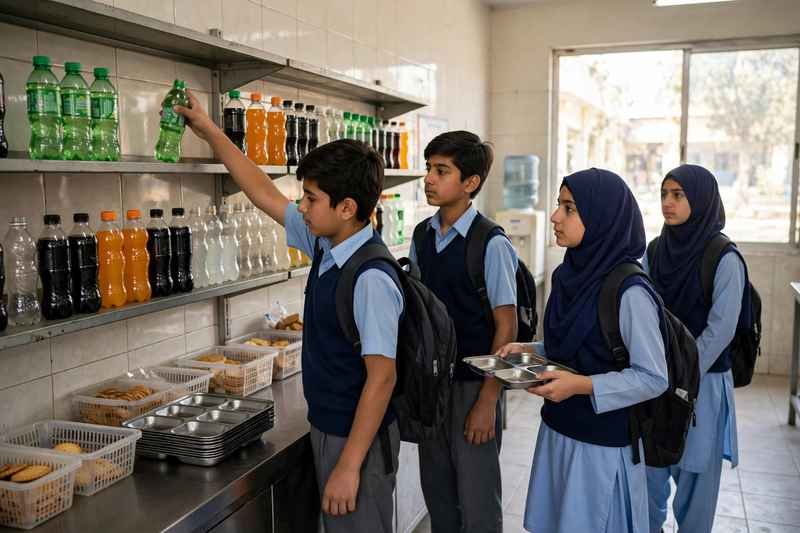
The Punjab government has prohibited the sale of carbonated drinks, energy drinks, tobacco products and vapes in educational institutions across the province, under amended food quality regulations for canteens and cafeterias that have been formally published in the Punjab Gazette. The ban forms part of a broader push to improve student health and nutrition.
The new rules apply to schools, colleges, universities and other educational institutions throughout Punjab. They lay down a detailed list of items that can no longer be sold on campuses, including carbonated drinks, energy drinks, artificial beverages, products containing monosodium glutamate (MSG) — commonly known as Chinese salt — cotton candy, gola ganda, ice lollies, tobacco products and vapes.
Under the amended regulations, food sold through on-campus canteens and cafeterias will be classified under a three-category system — green, yellow and red — based on its nutritional value. Nutritious foods fall into the green category, while products with little or no nutritional worth sit at the opposite end of the scale, giving students, parents and vendors a clear and simple guide to what belongs on the menu. Vendors will be expected to stock and display items in line with their category, steering students toward the green list.
The rules do not stop at the campus gate. Food businesses operating within a 100-meter radius of educational institutions are also required to comply with the new standards, meaning shops and outlets in the immediate vicinity of schools, colleges and universities face the same restrictions as the canteens inside them.
The provincial government says the aim of the overhaul is to promote healthier eating habits among students and to discourage the consumption of low-nutritional-value products that remain popular with children and teenagers — from fizzy drinks, cotton candy and frozen treats such as gola ganda and ice lollies, to energy drinks, tobacco and vaping products.
The classification system is designed to make healthier choices easier to identify at a glance, while items with the poorest nutritional profile are pushed out of the educational environment altogether. With the amended regulations now notified in the Punjab Gazette, educational institutions and nearby food businesses must bring their menus and shelves in line with the new requirements.
The move marks one of the most wide-ranging interventions by the province into what students eat and drink during the school and college day, placing formal regulatory weight behind the effort to curb junk food, sugary drinks and tobacco and nicotine products around places of learning.