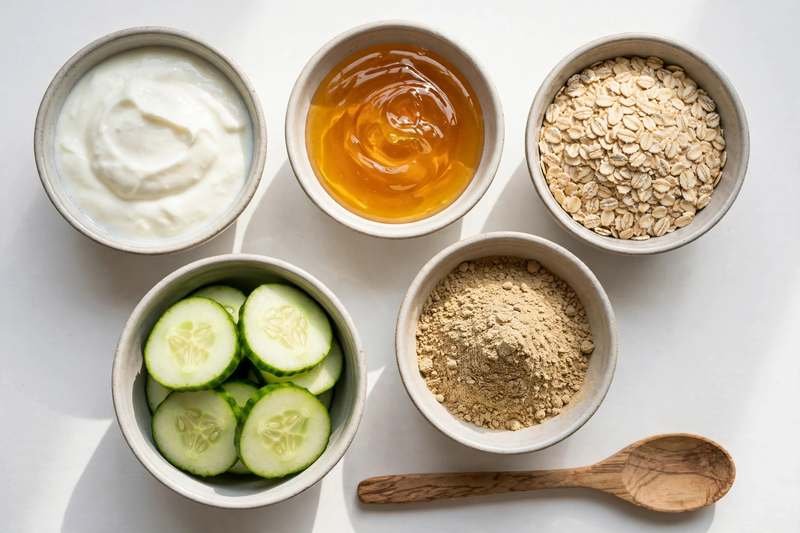
Walk through any Pakistani kitchen and you will find a full skincare shelf hiding in plain sight: honey in the cupboard, dahi in the fridge, besan in the flour tin, haldi in the spice box, and a bag of multani mitti from the local pansar. This guide brings that tradition back with 12 homemade recipes organized by skin type, so you can pick the mask your face actually needs.
Homemade masks are cheap, free of added fragrance and preservatives, and easy to adjust. But natural does not automatically mean safe for everyone. Read the safety section first, then choose your recipes.
Safety First: Patch Testing and Hygiene
Patch test every recipe before it touches your face, especially if your skin is sensitive or acne-prone. Dab a little of the finished mask inside your forearm or behind your ear, wait 20 minutes, rinse, then wait 24 hours. Any redness, itching, or bumps means that mask is not for you.
- Clean tools, clean hands: Use washed bowls and spoons, and never double-dip fingers into a batch you plan to store.
- Fresh is best: Masks with fruit, cucumber, or dairy should be made fresh each time. Refrigerated leftovers keep 3 to 5 days in a covered container; discard sooner if smell, color, or texture changes.
- Dry powders keep longer: Besan, multani mitti, oatmeal, and dried orange peel last months in an airtight jar. Mix only what you need per use.
- Broken skin is off-limits: No masks over cuts, open pimples, sunburn, or active rashes.
These recipes are for everyday maintenance, not medical treatment. See a dermatologist for persistent acne, eczema, or any reaction that does not settle within a couple of days.
For Dry Skin: Honey and Avocado, Banana and Milk
Dry skin feels tight after washing and may flake around the nose and brows. Rich, creamy ingredients like honey, avocado, banana, and milk fat soften and nourish it.
1. Honey and Avocado Rescue Mask
Avocado brings natural oils and vitamin E; honey draws moisture into the skin. A deeply comforting mask for dry, winter-stressed skin.
- Ingredients: Half a ripe avocado, 1 tablespoon pure honey.
- Method: Mash the avocado completely smooth, stir in the honey, and apply a thin layer to a clean, slightly damp face, avoiding the eyes.
- How long: 15 to 20 minutes. Rinse with lukewarm water and pat dry.
- How often: Once or twice a week.
- Storage: Make fresh every time. Avocado browns and spoils within hours.
2. Banana, Honey, and Milk Softening Mask
Overripe bananas mash into a silky, moisture-rich paste. Gentle enough for the neck and hands too.
- Ingredients: Half a ripe banana, 1 tablespoon honey, 1 teaspoon milk or malai.
- Method: Mash the banana lump-free, mix in the honey and milk, and spread over the face. Rinse with lukewarm water; pat dry instead of rubbing.
- How long: 15 minutes.
- How often: Once or twice a week.
- Storage: Fresh only. Banana paste darkens and ferments quickly.
For Oily Skin: Multani Mitti and Rose Water
Multani mitti soaks up excess oil and helps unclog pores. The classic mistake is letting clay dry until it cracks, which over-dries the skin. Rinse while it is still slightly damp.
3. Multani Mitti and Rose Water Classic
The simplest reliable oily-skin mask in the Pakistani tradition. Rose water adds mild toning while the clay deep-cleans.
- Ingredients: 2 tablespoons multani mitti powder, enough pure rose water to make a smooth paste (about 2 to 3 tablespoons).
- Method: Mix with no dry lumps and apply evenly, avoiding eyes and lips. As soon as it feels tight and the edges look dry, rinse with lukewarm water. Do not wait until it cracks.
- How long: 10 to 15 minutes, never until fully hardened.
- How often: Once or twice a week. Overuse dehydrates oily skin, which can trigger even more oil.
- Storage: Dry powder keeps months in a sealed jar. Mixed paste keeps 2 to 3 days in the fridge.
4. Multani Mitti and Lemon Clarifying Mask
Lemon juice is popular for brightening oily skin, but it demands respect: it can sting, irritate, and increase sun sensitivity. Use only on non-sensitive skin, always patch test, and apply in the evening.
- Ingredients: 2 tablespoons multani mitti, 1 teaspoon fresh lemon juice, rose water to make a paste.
- Method: Apply a thin layer, rinse thoroughly after 10 minutes, then moisturize. Use sunscreen the next day if you go out.
- How long: 10 minutes maximum.
- How often: Once a week at most.
- Warnings: Skip entirely on sensitive skin, open spots, or cuts. If it burns rather than tingles lightly, rinse off immediately.
For Combination Skin: Multi-Masking
Combination skin is oily in the T-zone and normal or dry on the cheeks, so one mask rarely suits the whole face. The practical answer is multi-masking: different recipes on different areas at the same time.
5. The Multi-Masking Pair
- Ingredients: T-zone: 1 tablespoon multani mitti mixed with rose water. Cheeks: 1 tablespoon honey mixed with 1 tablespoon plain yogurt.
- Method: Apply the clay mix to forehead, nose, and chin, and the honey-yogurt mix to the cheeks. After 12 to 15 minutes, rinse everything with lukewarm water, removing the clay before it fully hardens.
- How long: 12 to 15 minutes.
- How often: Once a week.
- Storage: Mix fresh each time; the amounts are small enough to leave no leftovers.
6. Yogurt, Honey, and Oat Balancing Mask
If multi-masking feels like too much effort, this all-rounder suits combination skin. Yogurt gently exfoliates with natural lactic acid, honey moisturizes, and oatmeal keeps things calm.
- Ingredients: 2 tablespoons plain unsweetened yogurt, 1 tablespoon honey, 1 tablespoon finely ground oatmeal.
- Method: Stir into a thick paste and apply. After 15 to 20 minutes, rinse with lukewarm water using gentle circular motions for light exfoliation.
- How long: 15 to 20 minutes.
- How often: Twice a week.
- Storage: Best fresh. A refrigerated batch lasts up to 3 days, but the oats will swell and change the texture.
For Sensitive Skin: Oatmeal, Yogurt, Cucumber, Aloe
Sensitive skin reddens easily and stings with new products. The rule: fewer ingredients, no acids, no scrubs, no essential oils.
7. Oatmeal and Yogurt Calming Mask
Finely ground oatmeal is a classic skin soother. With cool plain yogurt, it calms redness without any harsh action.
- Ingredients: 2 tablespoons finely ground oatmeal, 2 tablespoons plain yogurt, 1 teaspoon honey (optional; skip if honey has ever irritated you).
- Method: Mix into a soft paste and apply gently with fingertips. Rest 15 minutes, then rinse with cool water.
- How long: 15 minutes.
- How often: Once or twice a week, or whenever skin feels irritated.
- Storage: Make fresh each time. Avoid flavored or sweetened yogurt; the additives can irritate.
8. Cucumber and Aloe Cooling Mask
The mask to reach for after a hot day or mild sun exposure. Cucumber cools with its high water content; fresh aloe vera gel soothes heated, tight skin.
- Ingredients: A quarter cucumber, 2 tablespoons fresh aloe vera gel scooped from a leaf and blended smooth.
- Method: Grate the cucumber and squeeze out the juice (or blend and strain). Mix with the aloe gel, apply, and relax 15 minutes before rinsing with cool water.
- How long: 15 minutes.
- How often: Twice a week, or as needed in summer.
- Storage: Use immediately. Rinse the aloe leaf well before scooping, since the yellow sap near the rind can irritate skin.
For Dull or Tired Skin: The Classic Ubtan
Dullness usually comes from dead skin buildup, dehydration, or lack of sleep, and this is where the traditional ubtan shines. Besan gives gentle exfoliation, haldi adds glow, dahi softens. Masks also work best alongside eating for your skin; antioxidant-rich foods support skin health from within, which is why many people pair a mask routine with habits like drinking beetroot, cucumber, and orange juice for its skin-friendly nutrients.
9. Besan, Haldi, and Dahi Ubtan
The ubtan our grandmothers used before weddings and Eid. Regular use leaves skin looking brighter and more even.
- Ingredients: 2 tablespoons besan, half a teaspoon haldi, 2 tablespoons plain dahi. A few drops of rose water if the paste is too thick.
- Method: Mix into a smooth, thick paste. Massage onto the face in gentle upward circles, leave 15 minutes, then rinse with lukewarm water, massaging lightly as you wash it off.
- How long: 15 minutes.
- How often: Twice a week.
- Warnings: Turmeric stains. Stick to the small amount given; a faint yellow tint washes off with cleanser, but a heavy hand will tint your skin. Wear an old shirt and tie hair back.
- Storage: The dry besan-haldi mix keeps months in a sealed jar. Add dahi fresh at use time.
10. Orange Peel and Milk Glow Mask
Dried orange peel is rich in vitamin C and makes a fine brightening powder. Save peels from kinnows or oranges, dry them in the shade for a few days, and grind fine.
- Ingredients: 1 tablespoon dried orange peel powder, 1 tablespoon milk, 1 teaspoon honey.
- Method: Mix into a paste, apply evenly, and leave 15 minutes. Rinse with lukewarm water using gentle circular motions.
- How long: 15 minutes.
- How often: Twice a week.
- Storage: The peel powder keeps 2 to 3 months in an airtight jar. Mix with milk and honey fresh each time.
For Acne-Prone Skin: Neem, Used Gently
Acne-prone skin needs antibacterial and calming ingredients, plus restraint: scrubbing hard or piling on strong actives usually makes breakouts worse. Neem is the traditional Pakistani answer, long used for its antibacterial properties.
What touches your face all day matters as much as any mask. Pillowcases, phones, and unwashed hands transfer bacteria to the skin, and these rank among the everyday habits that cause acne without people realizing it. Fix those alongside your mask routine for real results.
11. Neem Leaf Anti-Blemish Mask
- Ingredients: A small handful of fresh neem leaves (15 to 20), washed well, plus 1 to 2 teaspoons rose water. Or 1 tablespoon neem powder from a pansar mixed with rose water.
- Method: Grind the leaves with rose water into a fine green paste. Apply a thin layer, avoiding eyes and any open spots. Rinse with lukewarm water.
- How long: 10 to 15 minutes.
- How often: Once or twice a week.
- Warnings: Neem can be drying, so moisturize after. Do not apply to broken skin, and patch test first.
- Storage: Fresh neem paste must be used immediately. Neem powder keeps months in a sealed jar.
12. Neem and Aloe Spot-Calming Mask
Pairs neem with soothing aloe vera gel, making it kinder than neem alone. A good option when breakouts come with redness.
- Ingredients: 1 tablespoon neem powder (or fresh neem paste), 2 tablespoons fresh aloe vera gel.
- Method: Blend into a smooth gel-paste and apply to breakout-prone areas or the whole face. Rinse with lukewarm water after 15 minutes.
- How long: 15 minutes.
- How often: Twice a week during active breakouts; once a week for maintenance.
- Storage: Mix fresh each time, using only the clear inner aloe gel.
Caution: Tea Tree Oil
Tea tree oil appears in countless DIY acne recipes, but it is one of the most misused homemade ingredients. Used undiluted, it can burn and severely redden the face. If you try it, dilute 1 to 2 drops in a full tablespoon of coconut oil or plain aloe gel, patch test the diluted mix for 24 hours first, keep it away from eyes and lips, and stop if you feel burning. If your skin reacts to most products, skip it entirely.
Building a Simple Weekly Routine
You do not need all 12 recipes. Pick one or two matching your main concern and use them consistently for a month before judging results. A workable plan: one deep-cleaning mask (clay or ubtan) mid-week, one nourishing or calming mask on the weekend. Cleanse before masking, moisturize after, even oily skin needs a light moisturizer once the mask is off.
Consistency beats complexity. Mask while the kids nap or after dinner; it fits naturally into a simple skincare routine for busy moms that keeps the steps realistic.
When to See a Dermatologist
Book a visit for painful or cystic breakouts, scarring acne, any rash that does not settle within days, a mask reaction that spreads or blisters, or eczema or rosacea that is not under control. Bring a list of everything you have been using, including homemade recipes, so the doctor can spot the culprit.
The Bottom Line
Twelve recipes, six skin types, every ingredient at your local karyana store, sabzi mandi, or pansar. Patch test, keep tools clean, make small fresh batches, and give your chosen mask a few consistent weeks. Your grandmother’s ubtan worked for a reason.