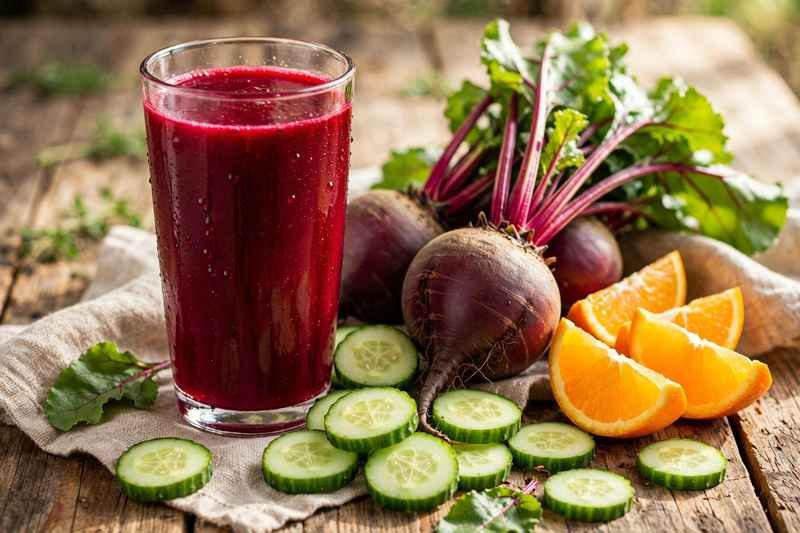
Beetroot, cucumber, and orange juice has become one of the most talked-about homemade wellness drinks — a vivid ruby-red blend that promises everything from better stamina to glowing skin. But does this trio actually deliver, and is it safe for people with diabetes? Here’s the complete guide: benefits, nutritional breakdown, pros and cons, the recipe, the best time to drink it, and every precaution you should know.
What Is Beetroot, Cucumber and Orange Juice?
This juice combines three simple ingredients, each bringing something different to the glass:
- Beetroot: the powerhouse — rich in dietary nitrates, betalains (the pigments behind its deep red color), folate, manganese, and potassium.
- Cucumber: the hydrator — over 95% water, very low in calories, with vitamin K, silica, and gentle digestive support.
- Orange: the brightener — loaded with vitamin C, folate, thiamine, and the antioxidant hesperidin, plus natural sweetness that balances beetroot’s earthy flavor.
Together they make a juice that is hydrating, nutrient-dense, and naturally sweet without any added sugar.
Nutritional Breakdown (Per 250 ml Glass)
Approximate values for a homemade blend of 1 medium beetroot, half a cucumber, and 1 large orange (juiced, lightly strained):
| Nutrient | Approximate Amount | Why It Matters |
|---|---|---|
| Calories | 90–120 | Light enough for a daily drink |
| Carbohydrates | 22–28 g | Mostly natural fruit sugars |
| Fiber | 2–4 g | Higher if you don’t over-strain |
| Vitamin C | 60–80 mg | 70–90% of daily needs (immune support) |
| Folate | 80–110 mcg | Cell repair and red blood cell formation |
| Potassium | 500–650 mg | Blood pressure and muscle function |
| Dietary nitrates | 250–400 mg | Convert to nitric oxide in the body |
| Manganese | 0.4–0.6 mg | Bone health and metabolism |
| Water | ~220 ml | Excellent hydration |
Values vary with the size and ripeness of your produce. Keeping some pulp raises the fiber content significantly.
Health Benefits of Beetroot, Cucumber and Orange Juice
1. Supports healthy blood pressure
Beetroot’s dietary nitrates convert to nitric oxide in the body, which helps blood vessels relax and widen. Multiple studies have linked regular beetroot juice intake with modest reductions in blood pressure. The potassium from all three ingredients adds further support.
2. Boosts exercise stamina
Nitric oxide also improves how efficiently muscles use oxygen. Athletes often drink beetroot juice 2–3 hours before training for this reason — and this homemade blend delivers a meaningful nitrate dose in a tastier package.
3. Strengthens immunity
A single glass can cover most of your daily vitamin C, which supports immune cell function. Orange’s hesperidin and beetroot’s betalains add antioxidant protection against everyday oxidative stress.
4. Hydrates deeply
Cucumber’s extremely high water content, combined with natural electrolytes (potassium) from beetroot and orange, makes this an excellent rehydration drink — especially in hot weather or after exercise.
5. Supports digestion
The fiber retained in lightly strained juice feeds beneficial gut bacteria, while cucumber’s gentle, watery nature is easy on the stomach. Regular, moderate intake can support comfortable digestion.
6. Promotes skin health
Vitamin C is essential for collagen production, and the blend’s antioxidants help defend skin against oxidative damage. Hydration from the inside shows on the outside — many regular drinkers report clearer-looking skin.
7. Supports liver function
Beetroot contains betaine, a compound that supports the liver’s natural detoxification pathways. This is “support,” not a cleanse — your liver detoxifies itself, and these nutrients simply help it do its job.
Is It Good for Diabetics? Pros and Cons
This is the question that matters most, so let’s be precise and honest.
Potential pros for diabetics
- Relatively low glycemic load per serving: a 150–200 ml serving has a moderate, manageable carbohydrate content — especially compared to packaged juices.
- Nitrates may help blood pressure: high blood pressure is common alongside diabetes, and beetroot’s blood-pressure-supporting effect is a genuine plus.
- Nutrient density: diabetics benefit from the folate, potassium, vitamin C, and antioxidants without needing large volumes.
- No added sugar: homemade means you control exactly what goes in — unlike commercial juices with added sweeteners.
Cons and cautions for diabetics
- Juicing removes fiber: whole fruit slows sugar absorption; juice — especially well-strained juice — delivers sugars faster, which can raise blood glucose more quickly.
- Beetroot contains natural sugars: roughly 7–9 g of sugar per 100 g of beetroot. It’s natural, but it still counts toward carbohydrate intake.
- Orange juice spikes faster than whole orange: eating an orange is gentler on blood sugar than drinking its juice.
- Portion creep: because it tastes good and feels healthy, it’s easy to drink 400–500 ml — doubling the sugar load without noticing.
The verdict for diabetics
Diabetics can drink this juice with smart modifications: keep servings to 150–200 ml, strain lightly (keep the pulp), drink it with or just after a meal rather than on an empty stomach, count the carbohydrates in your meal plan, and check your blood sugar afterward the first few times to see your personal response. Anyone on glucose-lowering medication should discuss regular intake with their doctor first.
Pros and Cons at a Glance
| Pros | Cons |
|---|---|
| Rich in nitrates, vitamin C, folate, potassium | Lower fiber than eating the whole produce |
| Supports blood pressure and exercise stamina | Natural sugars add up in large servings |
| Excellent hydration with natural electrolytes | Beetroot can turn urine/stool red (harmless but alarming) |
| No added sugar when homemade | High oxalate content — caution with kidney stones |
| Cheap, simple, 5-minute recipe | Earthy taste isn’t for everyone |
| Antioxidants for skin, immunity, and heart | May interact with blood pressure medication |
How to Make Beetroot, Cucumber and Orange Juice
Prep time: 5 minutes | Makes: 2 glasses (about 500 ml)
Ingredients
- 1 medium beetroot (about 150 g), peeled and quartered
- 1 medium cucumber (about 200 g), roughly chopped (leave the skin on if unwaxed)
- 2 large oranges, peeled
- 1 small piece of fresh ginger, about 1 cm (optional, for warmth and digestion)
- A squeeze of lemon (optional, preserves color and adds vitamin C)
- 100 ml cold water (optional, to thin)
- 4–5 mint leaves (optional garnish)
Method
- Wash everything thoroughly. Peel the beetroot and oranges; cucumber skin can stay on if it’s unwaxed and well scrubbed.
- Juicer method: feed the beetroot, cucumber, oranges, and ginger through the juicer. Stir in the lemon squeeze.
- Blender method (higher fiber): chop everything, add 100 ml cold water, and blend until smooth. Strain lightly through a coarse sieve — keep some pulp for fiber. This version is better for diabetics.
- Serve immediately over ice, garnished with mint. Fresh juice oxidizes quickly — drink within 15–20 minutes for maximum nutrient value.
Tips
- Start with half a beetroot if you’re new to it — the earthy flavor is strong.
- Chill your produce beforehand so the juice is refreshing without dilution from ice.
- Don’t add sugar, honey, or salt — the orange provides enough sweetness.
Best Time to Drink It
- Morning (best overall): on an empty or light stomach, 30 minutes before breakfast — nutrients absorb efficiently and it kick-starts hydration.
- Pre-workout: 2–3 hours before exercise to let the nitrates convert to nitric oxide for stamina benefits.
- Mid-morning: a good second choice if mornings are rushed.
- With lunch (for diabetics): pairing it with a balanced meal blunts the blood sugar response.
- Avoid late at night: the natural sugars and fluid volume can disturb sleep and cause nighttime bathroom trips.
How often: 3–5 times per week is a sensible rhythm. Daily is fine for most healthy adults in 150–250 ml servings, but variety across different fruits and vegetables matters more than any single juice.
Precautions You Should Not Skip
- Beeturia (red urine/stool): beetroot pigments can turn urine pink-red and stool reddish for up to 48 hours. It’s harmless — but know about it so you don’t panic.
- Kidney stones: beetroot is high in oxalates, which can contribute to calcium-oxalate stones. If you have a history of kidney stones, limit intake and talk to your doctor.
- Blood pressure medication: because beetroot can lower blood pressure, combining large amounts with antihypertensive drugs may push it too low. Monitor and consult your doctor.
- Diabetes medication: if you take insulin or glucose-lowering drugs, introduce the juice gradually, keep servings small, and watch your readings.
- Kidney disease: the potassium load matters if your kidneys don’t filter well — get medical advice first.
- Pregnancy and breastfeeding: the juice is generally considered safe in normal food amounts, but keep servings moderate and mention it to your doctor if you drink it daily.
- Allergies: rare, but anyone with a known allergy to any of the three ingredients should avoid it.
- Stomach sensitivity: large amounts of raw beetroot can cause nausea or stomach upset in some people — start small.
- Tooth enamel: like all fruit juices, the natural acids and sugars can affect teeth — drink in one sitting rather than sipping all day, and rinse with water after.
Frequently Asked Questions
Can diabetics drink beetroot juice daily?
In small servings (150–200 ml), lightly strained, and taken with a meal — many diabetics can. But individual responses vary, so check your blood sugar the first few times and discuss regular use with your doctor, especially if you take glucose-lowering medication.
Does this juice help with weight loss?
It’s low in calories and filling when the pulp is kept, which can support a weight-loss diet — but no juice burns fat by itself. It works as part of an overall balanced diet.
Why is my urine red after drinking it?
That’s beeturia — beetroot’s betalain pigments passing through harmlessly. It affects roughly 10–15% of people and fades within a day or two.
Is it better than store-bought juice?
Yes, in most cases: no added sugars, no preservatives, and fresher nutrients. Commercial “beetroot blends” often contain mostly apple juice with flavoring.
Can I store it for later?
Fresh is best. If you must store it, refrigerate in an airtight glass bottle filled to the brim (less air = less oxidation) and drink within 24 hours. Nutrient content declines with time.
The Bottom Line
Beetroot, cucumber, and orange juice earns its reputation: it’s a genuinely nutrient-dense drink with real benefits for blood pressure, stamina, immunity, and hydration — made from three affordable ingredients in five minutes. For diabetics, it’s not off-limits, but it demands respect: small servings, kept pulp, taken with meals, and blood sugar monitoring until you know your response. Like any wellness habit, it works best as one piece of a balanced diet, not a magic potion.
This article is for informational purposes only and is not medical advice. If you have diabetes, kidney disease, or take blood pressure medication, consult your doctor before making this juice a regular habit.