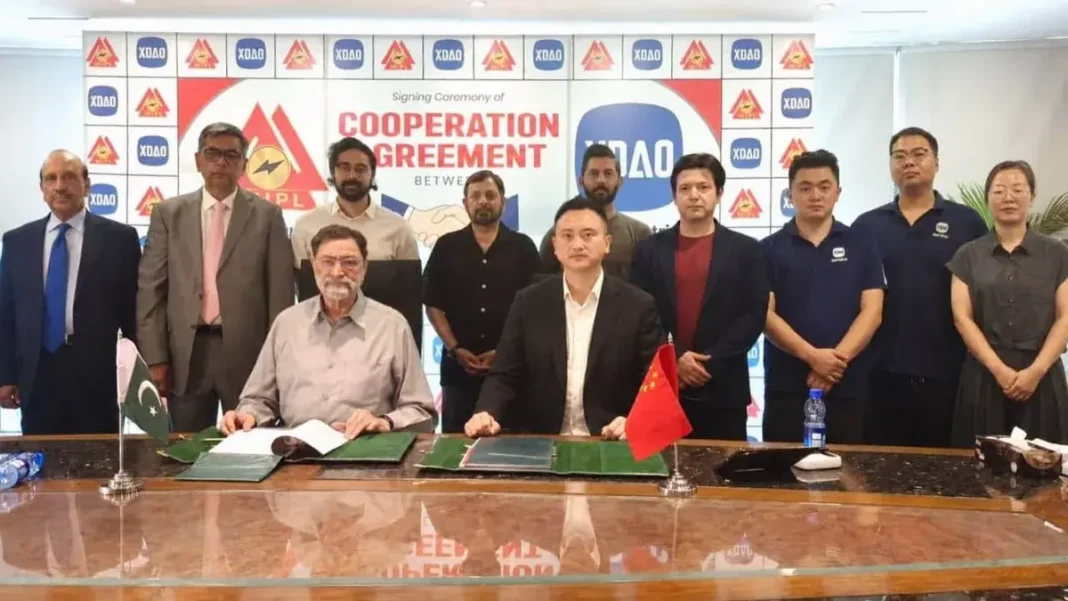
Millat Industrial Products Limited (MIPL), a subsidiary of Millat Tractors Limited, has signed a cooperation agreement with China’s Xiao Dao (XDAO) to promote electric mobility and speed up the localisation of electric motorcycles in Pakistan.
The agreement includes technology transfer, particularly in lithium iron phosphate (LFP) battery technology, and the localisation of major components and parts used in electric motorcycles, according to Millat Group chairman Sikander Mustafa Khan.
The move is positioned as part of Pakistan’s broader push towards electrification and is expected to help reduce the country’s import bill by replacing imported parts with locally made ones and conserving foreign exchange.
Why Localisation Matters
Electric motorcycles assembled in Pakistan still rely heavily on imported components, especially batteries, motors and controllers. Every imported part costs foreign exchange and keeps prices out of reach for many of the buyers who need affordable two-wheelers the most.
Local manufacturing changes that equation. When batteries and key parts are made at home, the cost of each bike falls, jobs are created in the supply chain, and the money stays inside the economy instead of flowing out to suppliers abroad.
Millat plans to accelerate this localisation drive and then move a step further: exporting locally made products to international markets. That would turn Pakistan from an importer of electric two-wheeler parts into a small-scale exporter, contributing to industrial development and export growth.
Support from the Engineering Development Board
The Engineering Development Board (EDB) has played a facilitating role throughout the process, providing support as the project moved from concept to agreement. The EDB has been central to Pakistan’s automotive policy in recent years, administering the incentives that make local manufacturing viable.
Industry observers note that foreign partnerships like this one tend to work best when the policy environment is stable. The agreement’s backers describe it as aligned with the prime minister’s electrification policy, which aims to expand electric vehicle adoption and cut the country’s dependence on imported fuel.
A Growing EV Pipeline
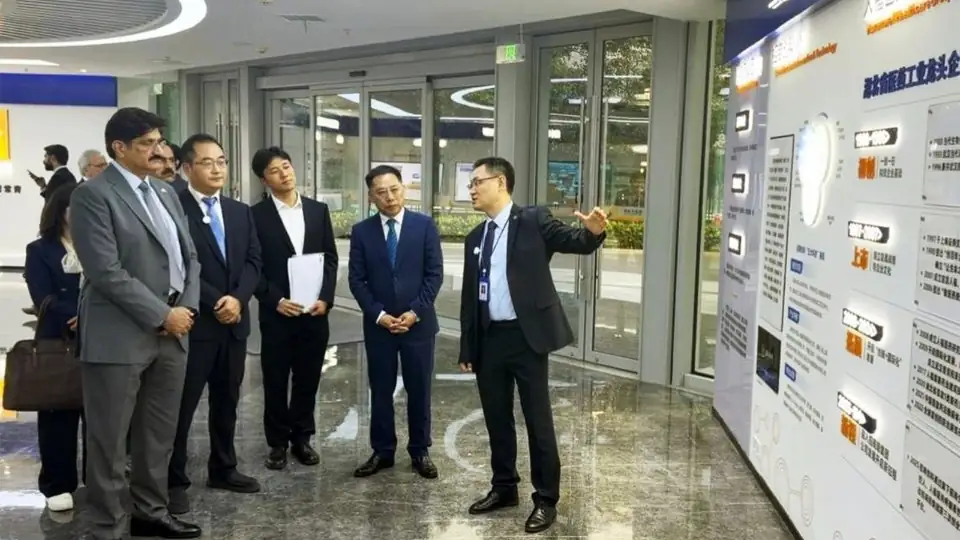
The Millat-XDAO deal lands in the middle of a busy period for electric mobility in Pakistan. Punjab’s Green Credit Programme has drawn 164,000 registrations, showing how quickly interest in electric vehicles is rising among the public. Sindh signed 34 memoranda of understanding with Chinese firms at its investment conference in Shanghai this week, covering electric vehicles, batteries, solar power and digital technology.
Together, these moves point to a pattern: Chinese technology and capital flowing into Pakistan’s energy and mobility sectors, paired with a government push to localise as much of the value chain as possible.
For Millat, the strategy is to combine international technology with Pakistan’s manufacturing base to build a sustainable electric mobility ecosystem and strengthen the engineering and automotive industry. The company is one of the country’s established industrial names, and its entry into electric motorcycles gives the segment a domestic heavyweight behind it.
Frequently Asked Questions
What did Millat and XDAO agree to?
The two companies agreed to cooperate on electric mobility, with technology transfer in LFP battery technology and the localisation of major electric motorcycle parts in Pakistan.
Why is this important for Pakistan?
Localising parts cuts the import bill, saves foreign exchange, creates manufacturing jobs and should make electric motorcycles cheaper for Pakistani buyers.
What is LFP battery technology?
Lithium iron phosphate batteries are valued for their long life, thermal stability and lower cost compared with some other lithium chemistries, making them a popular choice for electric vehicles.
Will Pakistan export these motorcycles?
That is the plan. Millat says it intends to export locally made products to international markets after accelerating localisation.
Internal links: 164,000 register for Punjab’s Green Credit Programme as EVs surge | Sindh signs 34 MoUs with Chinese firms at Shanghai investment conference | Pakistan shifting from aid to trade and investment, Aurangzeb says
Outbound: Source: ProPakistani