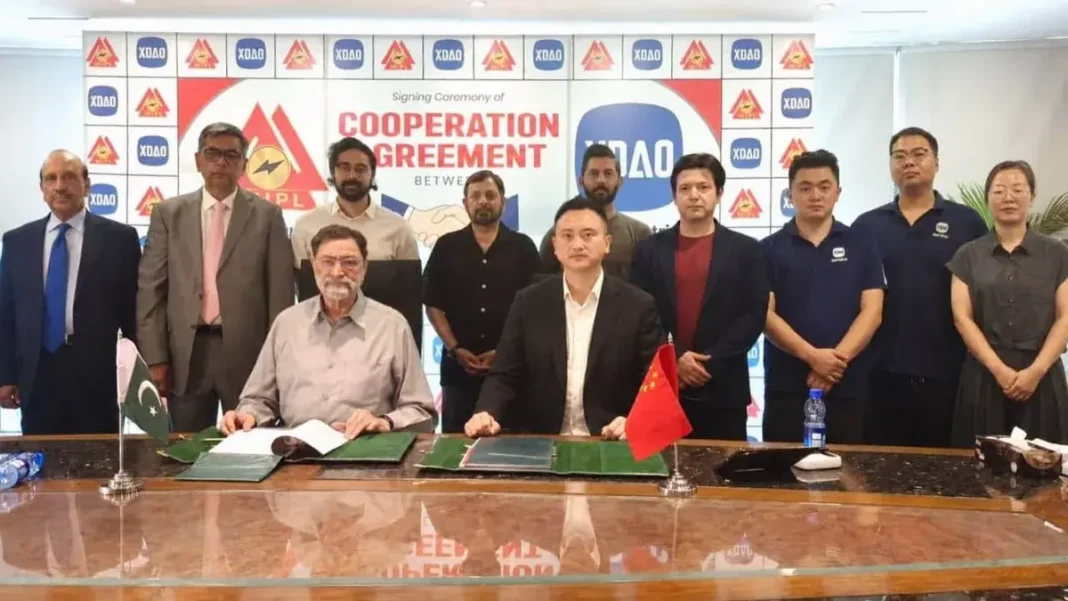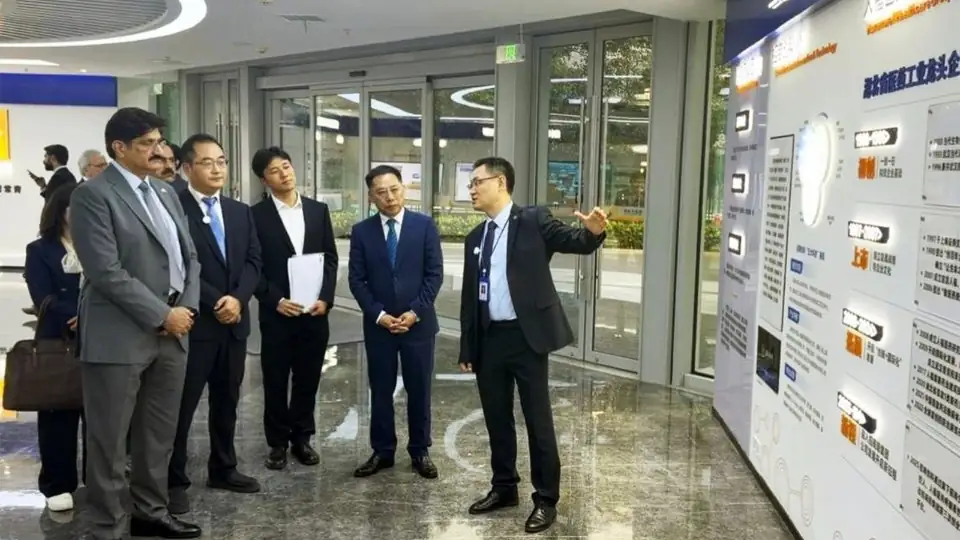
Sindh has signed 34 memorandums of understanding with Chinese enterprises at the second Sindh Investment Conference in Shanghai, capping a trip aimed at pulling fresh Chinese capital into the province.
Chief Minister Syed Murad Ali Shah announced the agreements on Thursday after the conference concluded in Shanghai. The event was held after a 12-year hiatus, and the chief minister said the long gap had been used to prepare Sindh’s infrastructure, policy framework and workforce for high-value foreign investment.
Alongside the 34 government-to-business MoUs, private-sector companies from both sides signed a string of their own agreements, the chief minister said.
Which sectors the Sindh Shanghai investment MoUs cover
The agreements span Thar coal utilisation, electric vehicle manufacturing and charging stations, renewable energy including wind and solar, modern agriculture and digital transformation.
The chief minister also flagged newer frontiers: artificial intelligence, large-scale data processing and state-of-the-art data centres. Under the People’s Information Technology Program, the province is already training about 1,500 young people a year to feed the digital economy, he said.
Murad Ali Shah stressed that the MoUs were backed by detailed groundwork and would move quickly into operational projects rather than remaining ceremonial. A special facilitation desk for investors, offering 10-year tax exemptions, forms part of the pitch.
“Karachi will replicate Shanghai’s economic success model,” the chief minister said, setting out the province’s ambition in plain terms.
According to the Tribune’s reporting, the chief minister also assured Chinese investors of security, a pledge that carries weight given past attacks on Chinese nationals working in Pakistan.
Why the agreements matter for Pakistan
For readers in Pakistan, the concrete stakes sit in three places. First, Thar coal already feeds the national grid, so deeper Chinese involvement in its utilisation touches electricity supply far beyond Sindh. Second, EV manufacturing and charging infrastructure would build a local industry around vehicles rather than leaving Pakistan dependent on imported fuel and imported cars, a shift already visible in debates over EV taxation. Third, data centres and AI cooperation would anchor part of the digital economy physically inside the country.
The conference outcome also converts months of build-up into signed paper. The province had been preparing the investment conference for weeks, and the chief minister’s wider China visit included pitches for Chinese investment across manufacturing and trade.
The test now is conversion: MoUs in Pakistan have a long history of outnumbering finished projects. The chief minister’s claim that prior groundwork will speed up execution is the promise investors, and voters, will measure.
How many MoUs did Sindh sign in Shanghai?
Thirty-four between Sindh government entities and Chinese enterprises, plus additional agreements between private-sector firms from both sides.
Which sectors are covered?
Thar coal, EV manufacturing and charging stations, wind and solar energy, modern agriculture, digital transformation, AI, large data processing and data centres.
When was the last Sindh investment conference in Shanghai?
This was the second edition, held after a 12-year gap.
What incentives is Sindh offering investors?
A special facilitation desk for investors with 10-year tax exemptions, alongside special economic zone incentives at Dhabeji, Bin Qasim and Khairpur.