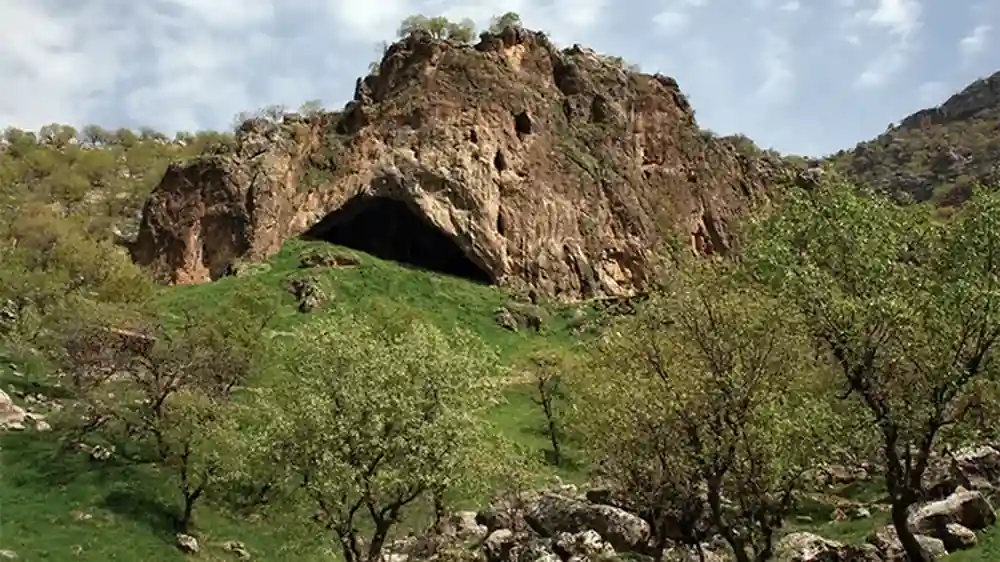
75,000-year-old bones in Iraq show Neanderthals knew violence and care
The bones of a Shanidar Cave Neanderthal found in Iraq’s Kurdistan region are telling a two-sided story about our closest evolutionary cousins. The remains carry signs of both brutality and kindness: a wound from what appears to be a fatal spear attack, alongside an older nonfatal injury that seems to have drawn care from others.
Researchers call the individual Shanidar A. The partial skeleton, found in Shanidar Cave in the Zagros Mountains of northern Iraq, included a left shoulder blade with a circular hole about six-tenths of an inch wide, pointing to a deeply penetrating stab.
The bones were unearthed from under about 25 feet of rocks and sediment inside the cave. They date to roughly 75,000 years ago. The researchers could not determine Shanidar A’s sex. The individual was in the mid-40s at death.
Shanidar Cave Neanderthal: how the wound was made
The shape of the injury suggests it was caused by a forceful thrust with a sharpened wooden spear, the researchers said. Neanderthals are known to have used such spears for hunting large mammals, an important food source. A spear with a stone tip, by contrast, would have left a different mark.
“The spear would have gone through the skin and major muscles, especially the pectoralis, as well as the ribcage and muscles between the ribs, and the lung,” said biological anthropologist Emma Pomeroy of the University of Cambridge, the lead author of the study published on Thursday in the journal Scientific Reports.
She added that the wound’s location resembled the kind of “heart shot” hunters use to kill animals quickly, though she called that comparison speculative.
The older injury that hints at compassion
Beyond the fatal wound, the skeleton shows signs of an earlier injury that healed. Surviving such damage would have been difficult without help, which suggests that others in the group looked after the injured individual during recovery.
That detail cuts against the old image of Neanderthals as purely brutish. The bones point instead to a social group where violence was present but where injured members could also receive care.
Why Shanidar Cave matters
Shanidar Cave is one of the most famous Neanderthal sites in the world. Excavations there since the last century have produced a series of remarkable Neanderthal finds, including individuals whose remains reshaped how scientists view the species.
The new study, led by researchers at the University of Cambridge and published in Scientific Reports, adds a personal dimension to that record. Shanidar A lived through injury and care, then died violently, possibly at the hands of another human wielding a hunting spear as a weapon.
The discovery offers a rare window into Neanderthal life 75,000 years ago: hunters who pursued large game, groups that clashed, and communities that apparently did not abandon their wounded.
FAQs
Who was Shanidar A?
Shanidar A is the name researchers gave to a Neanderthal, aged in the mid-40s, whose partial skeleton was found in Shanidar Cave in Iraq’s Kurdistan region. The remains date to about 75,000 years ago.
How did Shanidar A die?
The shoulder blade shows a circular wound about six-tenths of an inch wide, consistent with a fatal thrust from a sharpened wooden spear, the kind Neanderthals used for hunting large mammals.
What suggests Neanderthals showed compassion?
The skeleton also carries an older, nonfatal injury that healed. Surviving it would likely have required care from others, pointing to social support within the group.
Where was the study published?
The research was led by biological anthropologist Emma Pomeroy of the University of Cambridge and published on Thursday in the journal Scientific Reports.