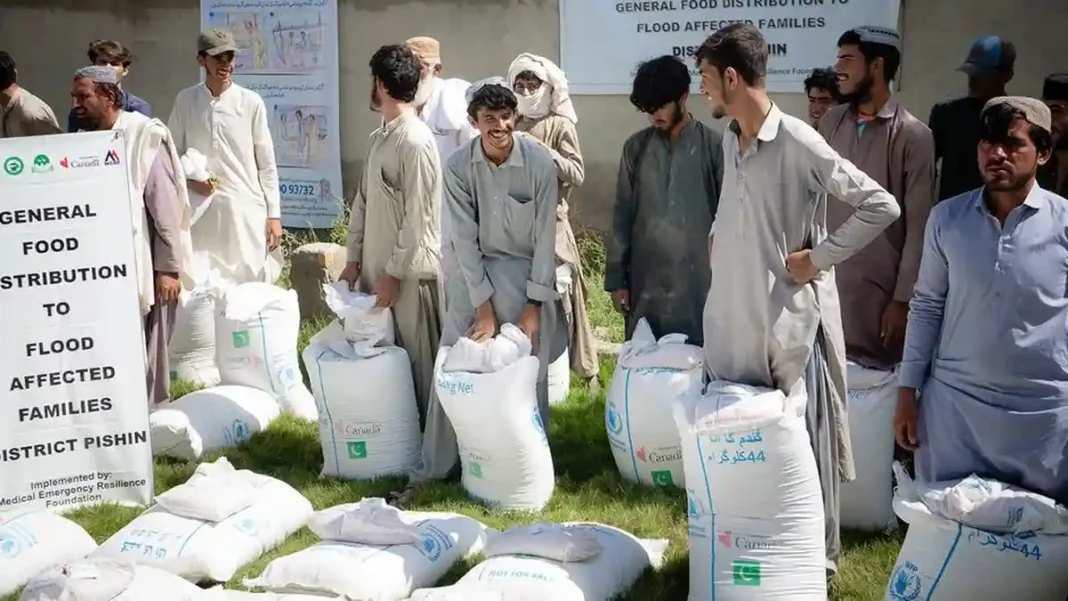
Pakistan among 10 countries hit hardest by hunger crisis
Pakistan is among the 10 countries bearing the brunt of the global hunger crisis, according to a new report by the international humanitarian organisation Action Against Hunger. The report, Ten Largest Global Food Crises, was released on Friday to mark World Food Day.
The Pakistan hunger crisis could leave an estimated 10.6 million people in need of humanitarian assistance in 2026, the report warns, as climate disasters, economic hardship and shrinking aid funding push vulnerable communities deeper into food insecurity.
The global picture
The figures are stark. Around 177 million people live in the 10 countries where hunger is most concentrated. Acute hunger has doubled over the past decade and now affects 266 million people across 47 countries, the report says.
The 10 countries facing the largest food crises are Nigeria, Congo, Sudan, Yemen, Afghanistan, Myanmar, Bangladesh, Pakistan, South Sudan and Syria.
What is driving the Pakistan hunger crisis
In Pakistan, persistent poverty, high food inflation, rising living costs, limited employment opportunities and declining household incomes continue to erode families’ purchasing power, according to the report. Unfavourable agricultural prices and broader economic instability have further weakened livelihoods, leaving millions struggling to afford adequate food.
The pressure is visible in weekly price data at home. Short-term inflation recently surged to 11.38 per cent, driven largely by food prices, while food inflation remains a defining strain on household budgets. When staple prices climb faster than incomes, families eat less or eat worse.
As humanitarian needs outstrip available resources, vulnerable households are resorting to damaging coping strategies: cutting food consumption, selling productive assets and withdrawing children from school to cope with financial pressures. The report cautions that these measures may bring temporary relief but deepen poverty, harm children’s education and nutrition, and weaken families’ ability to recover from future shocks.
Climate and conflict pile on the pressure
Limited access to healthcare, nutrition services, clean water, sanitation and hygiene, and social protection is compounding the crisis, particularly in rural and disaster-affected areas.
Pakistan’s exposure to climate-related disasters remains a major source of food insecurity. Recurrent floods, droughts, heatwaves, glacial lake outburst floods and increasingly erratic monsoon rainfall have damaged infrastructure, reduced farm output and weakened livestock-dependent livelihoods.
Crop losses and prolonged dry spells have forced more households to rely on markets for food at a time when many have limited purchasing power. Several districts are facing prolonged drought, adding to worries about farm output and rural incomes.
The report also flags the lean season from December 2025 to March 2026, when extended winter conditions and heavy snowfall in some areas are likely to worsen food insecurity by restricting access to markets and essential resources.
Insecurity adds another layer. Localised insecurity in Khyber Pakhtunkhwa and Balochistan continues to disrupt livelihoods, restrict market access and hamper humanitarian operations, the report says.
What the response looks like
The findings land as Pakistan’s own government moves on poverty. Prime Minister Shehbaz Sharif has just announced a special initiative to lift extremely poor and flood-affected households out of poverty, and Punjab is spending Rs10 billion on a flour subsidy to cushion wheat prices. Floods remain a recurring driver of displacement and crop loss, which is why the report ties climate resilience to food security.
For readers, the takeaway is direct: the crisis is not only about harvests. It is about prices, incomes, services and safety nets holding together at the same time.
How many Pakistanis will need humanitarian aid in 2026?
An estimated 10.6 million people, according to Action Against Hunger’s Ten Largest Global Food Crises report.
Which countries face the largest food crises?
Nigeria, Congo, Sudan, Yemen, Afghanistan, Myanmar, Bangladesh, Pakistan, South Sudan and Syria.
What is driving hunger in Pakistan?
The report points to climate disasters, high food inflation, rising living costs, low incomes, displacement, shrinking aid funding and insecurity in parts of KP and Balochistan.