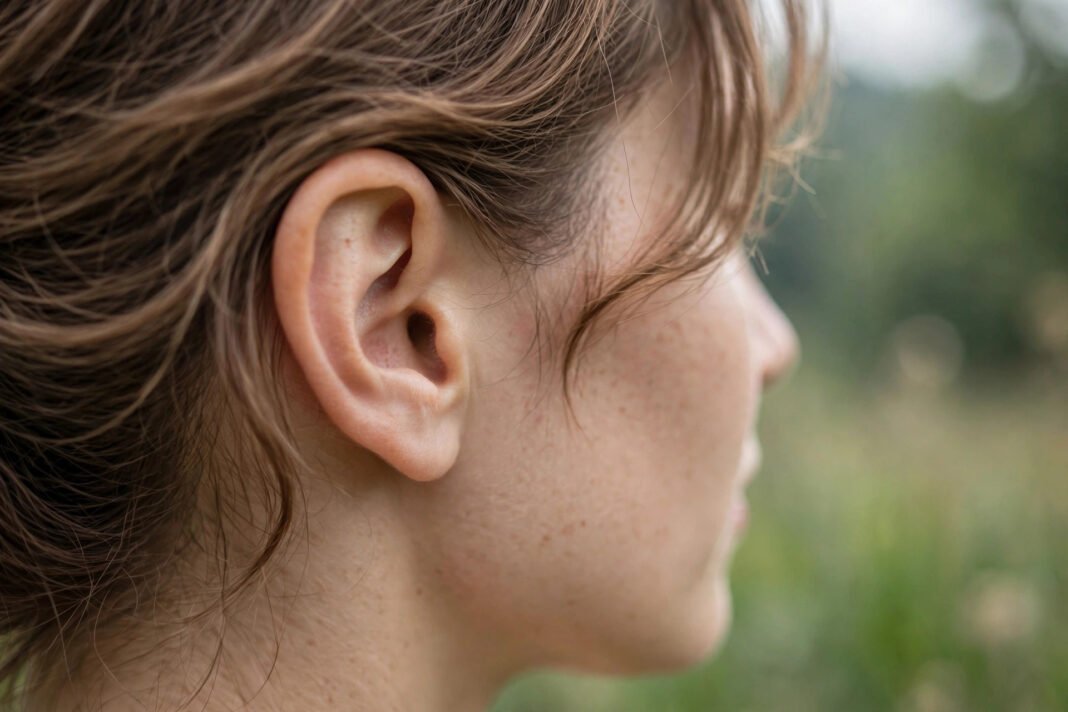
Many people lie awake at night asking, “Why Are My Ears Ringing?” That ringing, buzzing, hissing, or clicking sound — audible to you alone — is called tinnitus. Tinnitus is remarkably widespread. While it can feel distressing, it usually reflects a hearing system under strain rather than dangerous disease.
Some patterns of ear ringing still deserve prompt medical attention. Watch especially for sudden hearing loss, ringing in only one ear, or a pulsing sound matched to your heartbeat. This guide explains what tinnitus actually is, the common and less common causes, the red flags, and what helps.
What Tinnitus Actually Is
Tinnitus is the perception of sound without an external source. In most cases, it begins when the tiny hair cells of the inner ear are damaged.
Age, loud noise, or other insults weaken those cells, so they send less signal to the brain. The brain’s auditory system then compensates by turning up its own sensitivity. That extra gain becomes audible as phantom sound: ringing, buzzing, hissing, roaring, or clicking.
Tinnitus can also be constant or intermittent. It may affect one ear or both. Its loudness often fluctuates with stress, tiredness, and background noise. Quiet rooms make it more noticeable, so bedtime is the hardest part of the day for many people.
It is a symptom with many possible sources, not a single disease. The pattern and any accompanying symptoms therefore guide the evaluation.
Why Are My Ears Ringing? Age-Related Hearing Loss
Gradual, age-related hearing loss is the most common backdrop to persistent tinnitus in adults. Over decades the inner ear’s hair cells wear down, so high-frequency hearing usually fades first. This decline often happens so slowly that it goes unnoticed.
As the brain compensates for the fading signal, it produces ringing. Many people discover their hearing loss only when they are evaluated for the tinnitus. Because the two travel together, a hearing test is a standard part of any tinnitus workup. Treating the hearing loss — often with hearing aids — frequently softens the ringing too.
Why Are My Ears Ringing? Loud Noise Exposure
A single very loud event can injure hair cells directly. Concerts, fireworks, and heavy machinery are common culprits. Years of moderately loud exposure can also damage them, more gradually.
Ringing after a loud night out is familiar to many people. When it fades within a day or two, the ears have recovered. Repeated episodes, however, accumulate into permanent damage. Once noise damage is permanent it cannot be reversed, so protection is the real treatment.
Prevention is straightforward and effective. Wear earplugs at concerts and around machinery. Keep personal audio at moderate levels. Give your ears quiet recovery time after loud exposure.
Occupational exposure deserves the same respect as concerts. Construction, factory work, farming machinery, and military service are classic routes to lasting tinnitus. Well-fitted earplugs or earmuffs, worn consistently rather than occasionally, make the difference between a career and a chronic condition. For more detail, the Mayo Clinic explains tinnitus causes and risk factors authoritatively.
Why Are My Ears Ringing? Earwax Buildup
A plug of earwax pressing against the eardrum is a common cause of ringing ears. Better still, it is one of the most easily fixed.
It often brings a feeling of fullness or muffled hearing. The problem is more likely in people who use cotton buds. Those buds tend to pack wax deeper instead of removing it. Hearing-aid users face the same risk, because the device traps wax inside the canal.
Resist the urge to dig, because ears are largely self-cleaning. Cotton buds, hairpins, and ear candles risk impaction or injury. A doctor or pharmacist can advise on softening drops. Clinics can remove stubborn buildup safely, and the relief is often immediate.
Some people simply produce more wax, or they have narrower ear canals where wax compacts easily. If ringing returns every few months with the same fullness, scheduled professional cleaning may be the long-term answer.
Ear Infections, Fluid, and Pressure Changes
Infections of the outer or middle ear can cause temporary ringing. So can fluid lingering behind the eardrum after a cold. Both usually bring pain, fullness, or reduced hearing along with the ringing. In children especially, middle-ear fluid is a frequent and short-lived cause.
This type of tinnitus usually resolves as the infection or fluid clears. Ear pain with fever, discharge, or sudden hearing changes should be seen promptly rather than waited out. Do not assume it will simply fade on its own.
Rapid pressure changes can also leave ears blocked and ringing. Flights, mountain drives, and diving are the usual triggers. The eustachian tube, which equalizes pressure behind the eardrum, can lag behind the change, especially during a cold.
Swallowing, yawning, or chewing during descent helps. Flying or diving with a heavy cold raises the risk, so postponing when congested is the wiser choice.
Seasonal allergies and chronic nasal congestion swell the lining of the eustachian tube. The swelling traps pressure and fluid behind the eardrum. As a result, that combination brings temporary ringing, fullness, and muffled hearing.
If your tinnitus reliably worsens during pollen season or dusty conditions, congestion is the likely mechanism. Treating the underlying congestion often quiets the ears as a side benefit. Saline rinses, allergy management, or medicines discussed with a pharmacist can all help. Persistent one-sided blockage, however, should be examined rather than assumed allergic.
Why Are My Ears Ringing? Medicines, Blood Pressure, and Jaw Problems
Some medicines are ototoxic, which means they can affect the inner ear. The risk rises at high doses or with long use. High doses of aspirin and related anti-inflammatory drugs are the best-known everyday examples. Certain antibiotics, some diuretics, and a few cancer and malaria medicines can also cause ringing ears.
Medicine-related tinnitus is often reversible when the drug is stopped or the dose is adjusted. That decision, however, belongs to your doctor, not to you alone. Always mention new ringing when a medicine is started. Bring a full medicine list to any tinnitus appointment.
High blood pressure does not always cause tinnitus, but vascular changes near the ear can produce a distinctive kind. Pulsatile tinnitus is a whooshing or pulsing sound in time with the heartbeat. Narrowed neck arteries, turbulent blood flow, or benign vascular quirks can all create it.
This type deserves its own medical assessment, because its causes differ from ordinary ringing and are sometimes directly treatable. That is genuinely good news for this subgroup.
The jaw joint sits just in front of the ear and shares nerves and muscles with the middle ear. Teeth grinding, jaw clenching, arthritis of the jaw, or a misaligned bite can produce or worsen ringing. These problems often arrive with jaw pain, clicking, or morning headaches.
If your tinnitus fluctuates with chewing or jaw tension, mention it. Dentists and doctors can assess the jaw, and addressing grinding or clenching sometimes quiets the ears too.
Stress, Sleep, and Headphone Habits
Stress does not usually create tinnitus from nothing, but it reliably turns up the volume. Anxiety and exhaustion heighten the brain’s monitoring of internal signals, including phantom sound. Poor sleep both worsens tinnitus and is worsened by it. The result is a frustrating loop familiar to many sufferers.
Breaking the loop helps more than chasing silence. Regular sleep, daytime background sound, and stress management measurably reduce how intrusive the ringing feels. The sound itself may stay unchanged, yet daily life gets easier.
Structured counseling-based programs teach the brain to recategorize the ringing as neutral background rather than a threat. Many people report the greatest improvement in how they feel about the tinnitus, not in its loudness. If ringing is affecting your mood or sleep, ask your doctor about referral options.
Hours of close-range listening at high volume are the modern version of industrial noise exposure. Earbuds deliver sound directly to the eardrum, with no distance to soften it. Ringing that appears after long listening sessions is an early warning.
The volume, the duration, or both need to come down. At night, “Why Are My Ears Ringing?” feels loudest, because stress and poor sleep turn up the volume.
A commonly cited rule of thumb is moderate volume for limited stretches. Try roughly three-fifths of maximum volume for an hour at a time, with breaks in between. Noise-cancelling headphones help indirectly. By blocking background noise, they remove the temptation to crank the volume up.
Less Common Causes Worth Ruling Out
Several less common conditions can also cause ringing ears. Meniere’s disease, an inner-ear disorder, causes vertigo episodes with fluctuating hearing loss and roaring tinnitus, usually in one ear. Otosclerosis, abnormal bone growth in the middle ear, can cause progressive hearing loss with ringing. Head and neck injuries can trigger tinnitus through damage to hearing structures or nerves.
A benign tumor of the hearing nerve is rare but recognizable. Called an acoustic neuroma, it classically causes one-sided ringing with gradual hearing loss on that side.
Rare autoimmune conditions can attack the inner ear directly. They cause rapidly progressing hearing loss with tinnitus in both ears, so early treatment matters for preserving hearing. Sudden, severe tinnitus with fast hearing decline over days is never a wait-and-see situation.
These conditions are uncommon, yet one-sided, pulsatile, or vertigo-associated ringing is exactly what doctors listen for. Those patterns change the investigation. If dizziness troubles you more than ringing, see our guide on why you get dizzy when you stand up.
When to See a Doctor About Ringing Ears
Book an appointment if “Why Are My Ears Ringing” has become a daily question for you. Seek urgent or same-day care for the following:
- Sudden hearing loss in one or both ears, with or without ringing. This is an emergency, and treatment works best when started quickly.
- Ringing in only one ear, especially with gradual hearing loss on that side.
- Pulsing or whooshing in time with your heartbeat.
- Tinnitus with vertigo, severe dizziness, or balance problems.
- Ringing after a head injury.
- Ear pain, discharge, or fever alongside the ringing.
- Tinnitus that is severely affecting sleep, concentration, or mood. Help exists even when the sound cannot be removed.
What Helps When Ears Keep Ringing
Protect the hearing you still have, because lost hearing rarely comes back. Use earplugs in loud environments. Keep personal audio at moderate levels. Also avoid long sessions at high volume.
Keep plugs where you will actually use them. A pair on your keychain, for instance, beats a box in a drawer.
Many people find relief in sound enrichment. Background music, nature sounds, or a bedside sound machine gives the brain something real to hear, especially at night. Managing stress and protecting sleep also reduce the perceived loudness for most sufferers.
Avoid unproven cures sold online. No supplement or device has been shown to reliably eliminate tinnitus. Some, however, are expensive placebos at best. Stay equally skeptical of anyone promising a quick fix in exchange for payment.
Legitimate tinnitus care focuses on management and coping, and it says so honestly. Do not use cotton buds or attempt to syringe your own ears. If you wear hearing aids, wear them consistently. Consistent auditory input often quiets the phantom sound.
It also helps to stop monitoring the ringing. The more attention you pay it, the louder the brain renders it. Deliberately fill quiet time with soft background sound rather than silence.
Choose absorbing activities rather than idle listening. In fact, most long-term sufferers say habituation, not silence, was the real turning point.
A typical evaluation includes an ear examination and a hearing test (audiometry). It also covers blood pressure measurement and a review of medicines and noise history. Imaging such as MRI is not routine.
It is reserved for one-sided, pulsatile, or otherwise atypical tinnitus. Depending on the findings, referral may go to an audiologist, an ENT specialist, or a tinnitus management program. Those programs offer sound therapy and counseling techniques.
The Bottom Line
Ringing ears are usually the audible trace of a hearing system under strain. If you are asking “Why Are My Ears Ringing,” age, noise, wax, or a medicine is the likely answer. Many cases improve once the underlying cause is addressed.
Protect your hearing going forward. Use background sound and good sleep to take the edge off. Get checked promptly for the red-flag patterns: sudden loss, one-sided ringing, or a pulse you can hear. An audiologist or ENT doctor can map out what is happening and what will help.