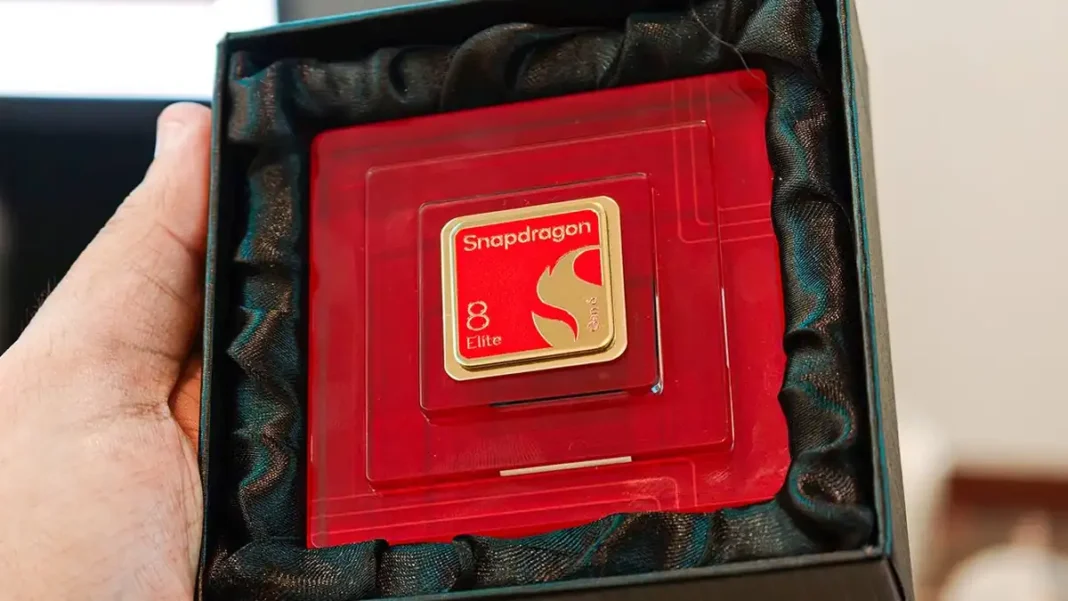
Samsung Flags Snapdragon 8 Elite Extreme Gen 6 Heating Issues; Qualcomm Denies
Samsung has reportedly found overheating and sustained-performance problems with Qualcomm’s Snapdragon 8 Elite Extreme Gen 6 during internal testing, according to South Korea’s *Seoul Economic Daily* — and Qualcomm is pushing back hard against the claims in a Snapdragon 8 Elite Extreme Gen 6 overheating dispute that could decide next year’s flagship phones.
The Snapdragon 8 Elite Extreme Gen 6 is Qualcomm’s first 2nm chipset. Despite the move to a more advanced manufacturing process and new packaging, the report says Samsung is still seeing thermal issues, and has shared its findings with Qualcomm while asking the company to address the problems this month, ProPakistani reported. The Snapdragon 8 Elite Extreme Gen 6 overheating claims remain unverified, because Samsung’s internal test data has not been made public.
Snapdragon 8 Elite Extreme Gen 6 overheating: throttling under heavy loads
According to the report, the chip throttles during demanding workloads, with clock speeds falling when high performance is sustained for extended periods. The report did not provide figures or detailed results, making it difficult to assess the claims independently.
Qualcomm has already adopted Offset PoP packaging for the chipset to improve thermal performance. Instead of placing the DRAM directly above the main silicon, the design shifts it slightly so a heatsink can sit above it. An earlier test showed a Snapdragon 8 Elite Extreme Gen 6 reference device taking around 15 minutes to reach its maximum temperature threshold — more than twice as long as devices powered by the Snapdragon 8 Elite Gen 5.
Qualcomm’s two denials
Qualcomm chief marketing officer Don McGuire responded on X, calling the overheating claims “100% NOT accurate” and saying phone makers constantly tune their platforms as products move toward launch. That could mean Samsung’s internal testing ran the chip at its maximum power limit, triggering thermal throttling.
But McGuire’s post named the standard Snapdragon 8 Elite Gen 6, not the Extreme variant — leaving uncertainty over its scope.
A clearer denial came separately. A Qualcomm spokesperson told *9to5Google* on the record: “Recent reporting about thermal issues related to Snapdragon 8 Elite Extreme Gen 6 is inaccurate. We are proud of the innovation and strong momentum behind our next-generation flagship platform and continue to work closely with global OEMs to deliver premium user experiences.” That statement names the Extreme variant directly.
Why it matters: the Galaxy S27 Ultra
The stakes are high because the chip is expected to power Samsung’s next flagship. The Extreme version can be tuned to reach its advertised 5.00GHz clock speed by operating at a higher power limit — but higher power limits also raise heat output, so extra performance comes with a thermal trade-off.
Samsung has another option. The company is developing the Exynos 2700, expected to use Samsung’s improved SF2P 2nm process, which could appear in the Galaxy S27 Ultra. Continued problems could give Samsung more reason to use its own processor — though the lack of detailed test data has raised questions about whether the reports are building expectations around the Exynos 2700.
There is history here. The last time Samsung skipped a Snapdragon flagship over heating concerns was the Galaxy S6, more than a decade ago — a decision also blamed on an overheating Snapdragon chip.
For Pakistani buyers, the outcome decides what powers next year’s most expensive Android phones — and whether Samsung’s own chip finally gets its flagship moment. The AI chip race is moving fast on all fronts: the country’s national AI programme is seeking World Bank financing, Anthropic has drafted its own AI safety law for US lawmakers, and Google is pulling Pro models from its AI Plus tier. The Tecno Spark 50s and 50c launch shows how fast the mid-range is moving; the flagship fight is now about thermals as much as speed.
Frequently asked questions
What did Samsung reportedly find?
South Korea’s *Seoul Economic Daily* reported that Samsung’s internal testing of the Snapdragon 8 Elite Extreme Gen 6 found overheating and throttling under sustained heavy workloads. No test figures were published.
What did Qualcomm say?
CMO Don McGuire called the claims “100% NOT accurate” on X, and a spokesperson told *9to5Google* on the record that “recent reporting about thermal issues related to Snapdragon 8 Elite Extreme Gen 6 is inaccurate.”
Could Samsung use its own chip instead?
Yes — the Exynos 2700 on Samsung’s improved SF2P 2nm process could power the Galaxy S27 Ultra instead.
Is this the first Samsung-Qualcomm heating row?
No. Samsung last skipped a Snapdragon flagship over heating concerns with the Galaxy S6 more than a decade ago.