Trump Urges Saudi Arabia to Accept Israel’s Help Against Houthis
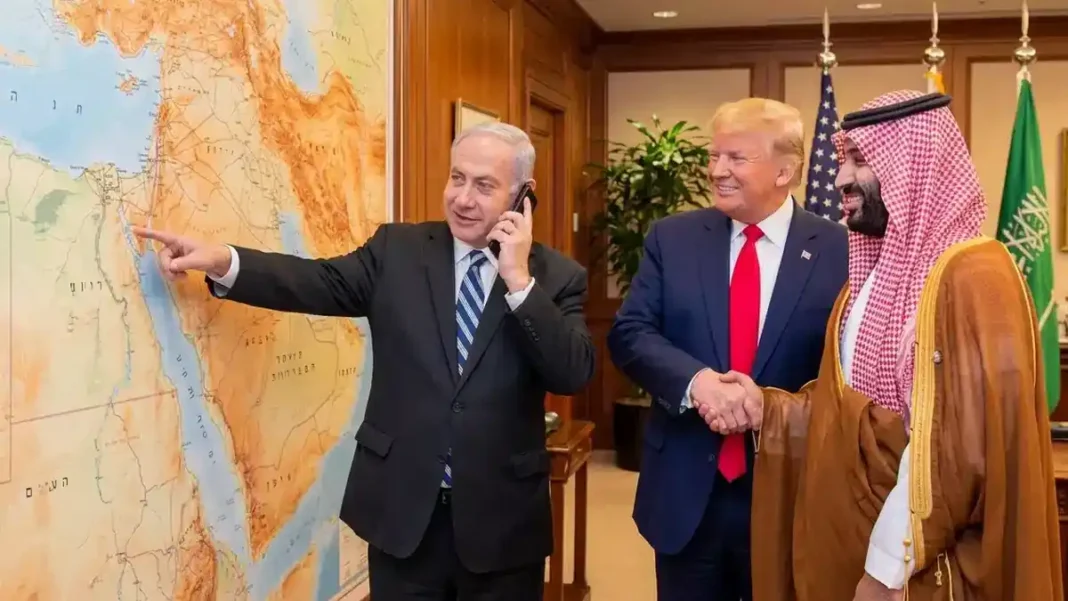
US President Donald Trump has said Saudi Arabia should accept Israel’s offer to help fight Yemen’s Ansar Allah (Houthis), and that he believes Riyadh will eventually normalise ties with Israel, reviving the question of Saudi Arabia Israel normalisation.
Speaking to reporters at the White House on Friday, October 16, Trump was asked whether Saudi Arabia should accept the help Israel is offering against the Houthis.
“Yeah, I do, sure. Israel has been very helpful to Saudi Arabia,” he replied, according to The Times of Israel. He added that he thinks the Saudis “will” accept it.
Saudi Arabia Israel normalisation back on the table
Trump was also asked whether Saudi Arabia joining the Abraham Accords was back on the table. “Yeah, I think so. Maybe more than ever,” he said, calling the accords one of his administration’s greatest achievements. He said Saudi Arabia is “very happy” to have the support of Israel and the United States.
The Abraham Accords are the 2020 agreements under which several Arab countries normalised relations with Israel. Saudi Arabia has no diplomatic ties with Israel and has long said normalisation depends on the creation of a Palestinian state.
Riyadh reportedly turned down the offer
Trump’s remarks contrast with earlier reports from Israel. On October 12, Israeli newspaper Haaretz said Crown Prince Mohammed bin Salman had turned down Netanyahu’s help made through US mediation against the Houthis. The report said the crown prince feared a backlash from the Saudi public. Saudi authorities have not commented publicly on the report or on Trump’s latest remarks.
Israeli Prime Minister Benjamin Netanyahu, asked in an interview this week whether the Saudis had sought help, said that “there are barely any Middle Eastern states that aren’t asking us for help.”
What the Trump Saudi Arabia Israel Houthis push means
The pressure comes as Houthi attacks on Saudi Arabia have escalated into the kingdom’s worst security crisis in over a decade. An attack on Riyadh’s King Khalid International Airport on October 10 killed 13 people and injured more than 300. A second strike the next day reportedly killed a Pakistani national and injured 11 others. The airport was then closed until October 17, forcing airlines across Europe and Asia to cancel flights.
The Pakistani angle is personal for Islamabad. The kingdom hosts one of the largest Pakistani expatriate communities in the world, and every escalation puts Pakistani workers and travellers in the line of fire. Pakistan has already condemned the attacks and suspended PIA flights to Riyadh, while coordinating with regional partners under the R-4 framework.
Analysts had already warned that Houthi pressure could push Riyadh closer to Israel — and Trump’s public push now makes that calculation explicit. Whether the kingdom accepts help that its public may oppose, and what that means for the long-stalled normalisation question, is now one of the region’s most watched decisions.
FAQ
What did Trump say about Saudi Arabia and Israel?
Trump said Saudi Arabia should accept Israel’s offer to help fight the Houthis, claimed Israel has been “very helpful” to the kingdom, and said he believes Riyadh will eventually normalise ties with Israel.
Did Saudi Arabia reject Israel’s help?
Israel’s Haaretz reported on October 12 that Crown Prince Mohammed bin Salman turned down Netanyahu’s offer, made through US mediation, fearing public backlash. Saudi authorities have not commented.
What are the Abraham Accords?
The 2020 agreements under which several Arab countries normalised relations with Israel. Saudi Arabia has no ties with Israel and has tied normalisation to the creation of a Palestinian state.
How have Houthi attacks affected Pakistanis?
A strike on October 11 reportedly killed a Pakistani national and injured 11 others. Pakistan has condemned the attacks and PIA suspended Riyadh flights after the strikes.