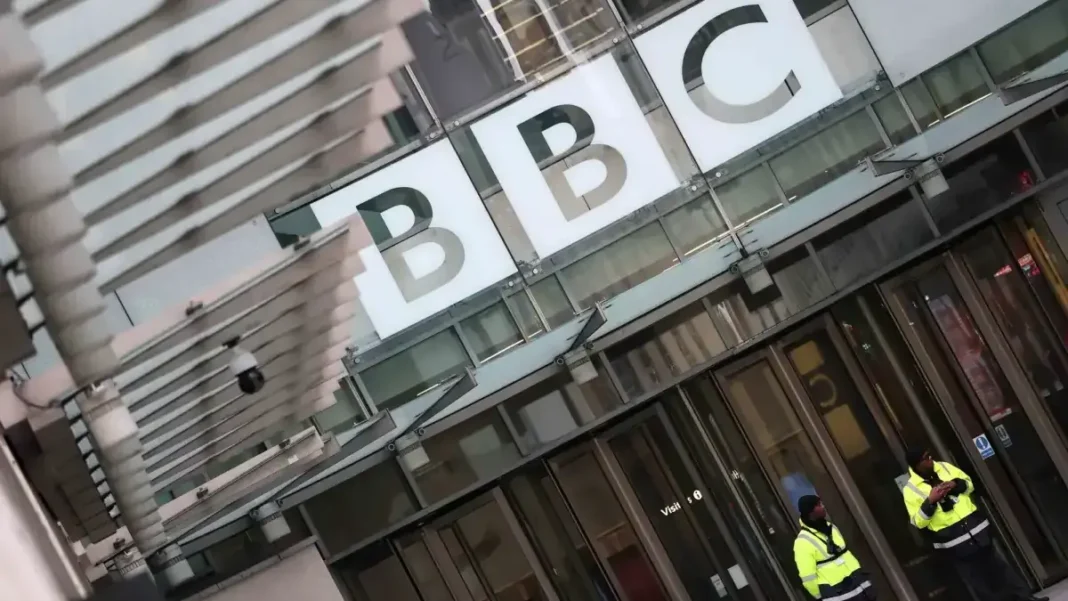
Afghanistan Suspends BBC Radio Broadcasts Over ‘Repeated Violations’
LONDON: Afghan authorities have suspended the BBC’s FM radio broadcasts across Afghanistan, the British broadcaster said on Tuesday, adding that it was working with the authorities to resolve the situation.
“Millions of people across Afghanistan rely on the BBC for accurate news and information and we are working with the authorities to address the situation,” a BBC spokesperson said in a statement.
Khubib Ghufran, spokesperson for the Afghan Taliban government’s information and culture ministry, said the BBC’s activities had been suspended “for the time being due to repeated violations committed” by it. He did not elaborate on what the violations were.
Afghanistan’s BBC services continue on shortwave and satellite
Despite losing its local FM frequencies, the BBC World Service said it would continue broadcasting its Pashto, Dari and English programming to the Afghan public through shortwave radio, mediumwave radio, satellite television and online digital platforms.
The sudden suspension of the BBC’s FM transmissions marks a significant escalation in the Taliban government’s tightening of media censorship since returning to power. FM radio remains one of the most widely accessed news sources in Afghanistan, particularly outside the cities, where television and internet access are limited.
For Pakistan, the development matters beyond the border. Afghanistan’s media environment directly affects the information space in the region, and the BBC’s Pashto and Dari services have long been among the few independent news sources reaching audiences on both sides of the Durand Line.
A pattern of tightening controls
The Taliban have progressively restricted independent media, from barring women presenters from appearing on television to raiding newsrooms and detaining journalists. International broadcasters operating in the country have faced repeated pressure over their coverage.
The BBC, which has broadcast to Afghanistan for decades, is among the most trusted news sources in the country. Its suspension leaves millions with fewer reliable options at a time when the country faces economic crisis and isolation. Radio has particular importance in Afghanistan: with television and internet coverage patchy outside the cities, FM broadcasts have long been the primary way most Afghans receive news.
The broadcaster has not said how long it expects the suspension to last, only that it is engaging with the authorities. Similar suspensions of international media in the past have sometimes been resolved through negotiation, and sometimes hardened into long-term bans.
Why did Afghanistan suspend the BBC?
The Taliban government’s information ministry said the BBC’s activities were suspended “for the time being due to repeated violations”, without specifying what those violations were. The BBC said it is working with the authorities to resolve the situation.
Can Afghans still access BBC programming?
Yes, in part. The BBC World Service continues its Pashto, Dari and English programming via shortwave and mediumwave radio, satellite television and online platforms, though it has lost its FM frequencies inside the country.
Why does this matter for the region?
FM radio is one of the most widely used news sources in Afghanistan, especially outside major cities. The BBC’s services have been a key independent news source for audiences on both sides of the Pakistan-Afghanistan border.