Balochistan Shutter-Down Strike Shuts Quetta Markets
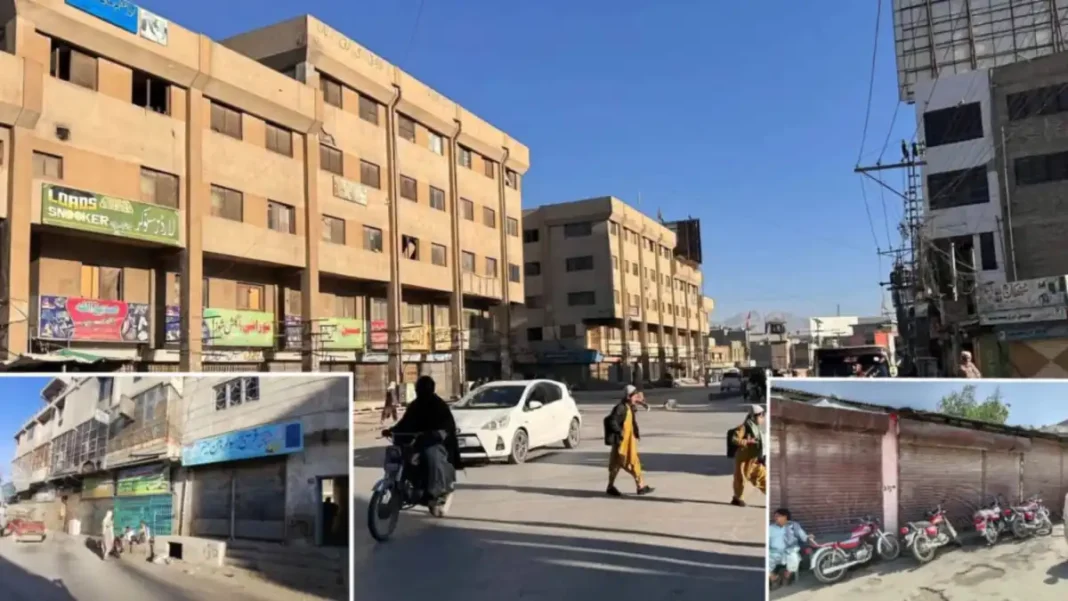
A Balochistan shutter-down strike brought business to a halt across the province on Thursday, as shops and markets stayed closed in Quetta and most districts. The All Parties Alliance called the strike to protest against deteriorating law and order, rising inflation, unemployment and prolonged power and gas outages.
Markets, shops and business centres remained closed in several parts of the province. In Quetta, major commercial areas stayed shut through the day, including Jinnah Road, Qandhari Bazaar, Suraj Ganj Bazaar, Masjid Road, Liaquat Bazaar, Abdul Sattar Road, Prince Road, Mekangi Road, Mission Road, Alamdar Road and Toghi Road. Dawn reported that the strike was observed across the province on the alliance’s call.
Arab News reported that pharmacies and grocery shops selling essential food items remained open. Police took strict security measures to maintain law and order during the strike. Armed personnel patrolled different parts of the city, and extra police contingents were deployed in major markets and commercial areas.
Balochistan shutter-down strike: what the protesters demanded
The strike was called to protest against growing security concerns, issues linked to the province’s natural resources and mineral wealth, the closure of trade routes and the presence of armed elements on highways. Protesters also raised the torching of vehicles carrying traders’ goods, alleged undemocratic measures against political leaders and workers, arrests and long hours of electricity and gas loadshedding.
Abdul Rahim Kakar, president of the traders’ association, said worsening insecurity on provincial highways had disrupted the movement of goods and passengers. He said the disruption had dealt a blow to businesses already struggling with restrictions on cross-border trade.
Militant attacks and military operations against militants in North Waziristan have kept security at the top of the public agenda across the country. In Balochistan, traders say the highway threat is now a daily cost of doing business, with goods at risk every time a truck leaves Quetta.
Rally at Manan Chowk
Leaders of the All Parties Alliance and traders’ organisations led rallies from different parts of Quetta and converged at Manan Chowk, where they staged a demonstration. Those who addressed the gathering included JUI-F Quetta chief Maulana Abdul Rahman Rafiq, Balochistan National Party’s Musa Baloch, National Party’s Ali Ahmed Langove, Pashtunkhwa Milli Awami Party’s Ahmed Jan and traders’ association president Abdul Rahim Kakar.
The speakers said the government had failed to provide basic facilities, including electricity and gas, forcing people from different walks of life to take to the streets. They said residents had repeatedly approached the authorities over gas shortages and electricity outages during the cold weather, but their complaints had gone unaddressed. Political parties and traders’ organisations had joined hands, they said, to draw attention to growing insecurity, inflation, unemployment and lawlessness.
Strike follows weeks of planning
Thursday’s shutdown was the outcome of weeks of planning by opposition parties. Feature Pakistan reported on November 16 that the National Party had backed the strike, after leaders of several parties announced it on November 6 at a multi-party conference at the Quetta Press Club. A second multi-party conference on November 13 issued a joint declaration in support of the protest.
The strike came on the same day that Field Marshal Asim Munir visited Turbat to review security operations and development work in Balochistan. The coincidence underlined the gap between the government’s security assurances and the opposition’s account of conditions on the ground.
The protest also reflected wider pressure on household budgets, at a time when Pakistan’s economy leans heavily on remittances from overseas workers. Inflation, power cuts and the cost of moving goods all featured in the list of grievances the alliance took to the streets.
What happens next
The protest plan runs beyond the shutdown. A provincial leadership meeting is set for November 26 to decide the next course of action, and an all-parties conference will follow in the first week of December to place the province’s problems before the national leadership.
For now, traders and opposition parties have shown they can bring the province’s markets to a standstill. Whether the protest moves the government on power, gas and highway security remains to be seen.
Frequently asked questions
What was the Balochistan shutter-down strike?
It was a province-wide shutdown observed on Thursday, November 19, on the call of the All Parties Alliance. Shops, markets and business centres stayed closed in Quetta and most districts of Balochistan to protest against law and order, inflation, unemployment and power and gas outages.
Why did opposition parties call the strike?
They protested against deteriorating law and order, rising inflation, unemployment and prolonged power and gas outages. They also raised the province’s natural resources and mineral wealth, the closure of trade routes, armed elements on highways, the torching of traders’ vehicles and arrests of political workers.
Which areas of Quetta stayed closed?
Major commercial areas stayed shut through the day, including Jinnah Road, Qandhari Bazaar, Suraj Ganj Bazaar, Masjid Road, Liaquat Bazaar, Abdul Sattar Road, Prince Road, Mekangi Road, Mission Road, Alamdar Road and Toghi Road.
Did the strike affect essential services?
Pharmacies and grocery shops selling essential food items remained open. Police patrolled the city and deployed extra contingents in major markets and commercial areas to maintain law and order.
What happens after the strike?
A provincial leadership meeting is set for November 26 to decide the next course of action. An all-parties conference will follow in the first week of December to place the province’s problems before the national leadership.