Quick Facts
- Location: Noorpur Shahan, at the foothills of the Margalla Hills, Islamabad
- Famous For: Resting place of Shah Abdul Latif Kazmi (1617–1705), known as Bari Imam, the patron saint of Islamabad
- Nearest City: Islamabad — around 7 km from Blue Area, roughly 12 km from the city centre
- Accessibility: Easily reached by car, ride-hailing or public transport via Bhara Kahu
- Known Landmarks: The silver-mirrored shrine complex, the Loi Dandi cave (Chilla Gah), the prayer place of Hazrat Sb, the langar (free-food) house
- Best For: Spiritual pilgrims, history lovers, families, photographers, hikers combining a shrine visit with Margalla trails
Why Visit Bari Imam Shrine
The shrine of Bari Imam sits at the foot of the Margalla Hills in the village of Noorpur Shahan, and it is one of the oldest and most respected spiritual sites in the Islamabad region. Long before the modern capital was planned, devotees were already travelling here to pay their respects at the tomb of Shah Abdul Latif Kazmi, a 17th-century Sufi of the Qadiri order who is venerated today as the patron saint of Islamabad. For anyone following a bari imam shrine travel guide, this is the heart of the capital’s spiritual heritage.
What makes the shrine worth visiting is not just its history but the living culture around it. Devotees arrive from all over Punjab, Khyber Pakhtunkhwa and beyond, many of them walking long distances to offer prayers. The air carries the sound of qawwali and devotional drums, especially around the annual Urs, and the shrine complex offers a window into the Sufi traditions that shaped this region centuries before Islamabad existed. It is a place of colour, devotion and rural Pothwari character right at the edge of the modern city.
The location adds a second reason to visit. The shrine lies in a scenic valley with the green Margalla Hills rising behind it, and a hiking trail leads uphill from the shrine to the Loi Dandi cave where the saint is said to have spent time in seclusion. A short drive further up the road takes you toward the Bruti waterfall, which draws crowds in the monsoon season. You can easily combine a spiritual visit with a nature walk in a single half-day trip.
Finally, the shrine is free to enter, open every day, and requires no special planning or permits, which makes it one of the simplest cultural stops in Islamabad. Whether you are a pilgrim, a student of Sufi history, or a traveler looking for an authentic slice of local life, the shrine delivers something meaningful without demanding much of your time or budget.
History of Bari Imam Shrine
The saint buried here was born Syed Shah Abdul Latif Kazmi in 1617, in the Jhelum area of Punjab. He belonged to a family of modest means, and according to the oral tradition that preserves his story, he travelled widely in his youth — through Iran, Iraq, Central Asia, and the holy cities of Mecca and Madinah — studying the disciplines of Islamic theology. He eventually settled in the Nur Pur Shahan area at the foot of the Margalla Hills, a region that in his day was known for bandits and danger rather than pilgrims. There he taught love, peace and harmony, and over time he came to be known as “Bari Imam,” often translated as the Leader of the Earth. The title is said to have been given by his spiritual guide after a long period of ascetic training, signifying freedom from worldly attachment.
Bari Imam never wrote down his teachings, so his life and message survive entirely through oral tradition, devotional songs and the qawwali sung in his honour. His reputation as an ascetic was legendary: regional lore describes him living among the poor and deliberately subjecting himself to public disdain as a spiritual discipline. Several miracles are attributed to him in local legend, the most famous being that he caused water to gush from rocks and restored to life the dead buffaloes of a poor farmer who had given him milk during his years of seclusion. These stories, told and retold for three centuries, are as much a part of the shrine as the stones it is built from.
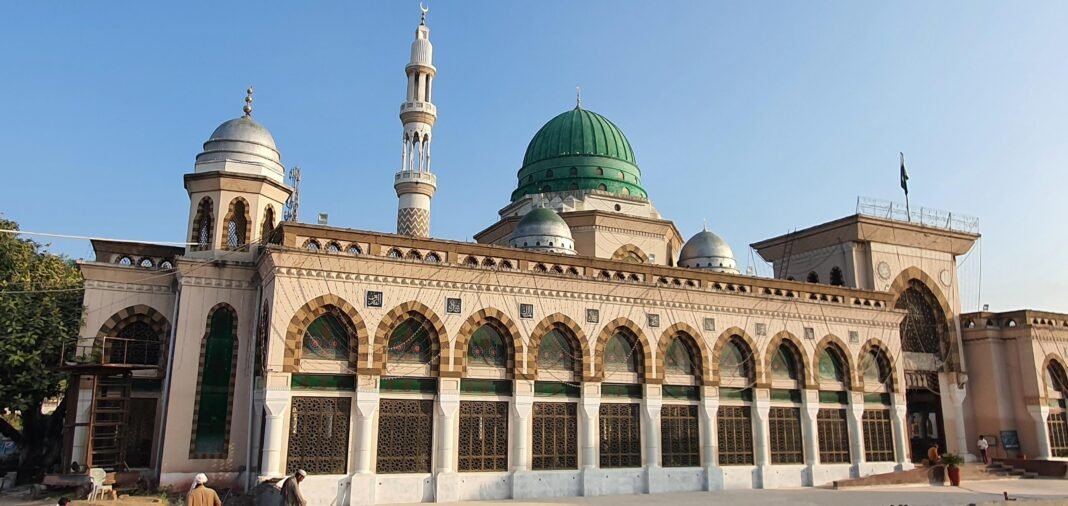
Bari Imam died in 1705. His mausoleum was first constructed by the Mughal emperor Aurangzeb (reigned 1658–1707), who revered the saint, sometime in the 17th century. The shrine was renovated again during British rule and has been refurbished many times since; today it is maintained by the Government of Pakistan, which carried out major restoration and redecoration work in recent years, expanding the complex and creating separate entrances for male and female devotees. The present structure is a silver-mirrored complex with courtyards, gardens and buildings decorated with Islamic calligraphy and tile work.
Until the 1960s, the shrine was famous across the region for its annual Urs, which drew hundreds of thousands of pilgrims each year — in one recorded year the attendance was said to have reached 1.2 million. A darker chapter came on 27 May 2005, when a suicide attack at the shrine killed 20 people and injured around 70. Security has been tightened since, and the Urs celebrations, once held on a grand scale, have been conducted more quietly in recent years. Despite this, daily devotion continues uninterrupted, and thousands still visit every week, especially on Friday afternoons.
Top Things to Do in Bari Imam Shrine
Pay respects at the tomb
The centrepiece of any visit is the shrine chamber itself, where the tomb of Shah Abdul Latif Kazmi rests. Devotees remove their shoes, offer flowers and chadars, and spend time in prayer. Even for non-religious visitors, the atmosphere of devotion — the quiet murmuring of prayers, the scent of incense — is worth experiencing respectfully. Modest dress is expected, and women generally cover their heads.
Witness qawwali and devotional music
Devotional music is woven into the life of the shrine. Qawwals sing in praise of the saint, and during the Urs the rhythm of drums and cries of “Allah Hoo” fill the grounds for hours. Malangas — the wandering mystics — join in ecstatic devotional dancing, and the sight is one of the most colourful expressions of Sufi culture in the region.
Visit the Loi Dandi cave (Chilla Gah)
About 3.5 km uphill from the shrine lies the Loi Dandi cave, known as the Chilla Gah, where Bari Imam is said to have retreated for seclusion and meditation. A hiking trail leads up from the shrine, and devotees often make the climb to sit inside the cave and recite scripture. The cave sits in the valley between two mountains and carries a distinctive, peaceful character.
Eat at the langar
Near the shrine there is a langar, an almshouse where devotees who have had their prayers answered distribute free food — typically rice cooked in large daigs, the traditional giant cooking pots — to the poor and to visitors alike. Sitting down to share a langar meal is one of the most grounding experiences of a shrine visit.
Walk to the Bruti waterfall
From the shrine chowk, a road leads 2–3 km to the Bruti waterfall in the Margalla Hills, where clear freshwater ponds attract swimmers and picnickers, especially in the monsoon. The 15–20 minute walk from the parking area follows a stream through pleasant scenery and pairs naturally with a shrine visit.
Famous Places In and Around Bari Imam Shrine
- Shah Allah Ditta Caves: Ancient Buddhist meditation caves a few kilometres away, an important archaeological site of the Gandhara period.
- Golra Sharif Shrine: Another famous Sufi shrine of the region, reachable via the GT Road.
- Quaid-e-Azam University: The campus sits close to the shrine and is surrounded by Margalla trails.
- Margalla Hills Trails: Several marked hiking trails begin within easy reach of Noorpur Shahan.
- Blue Area, Islamabad: The capital’s main commercial area, around 7 km away — the easiest base for food and lodging.
How to Reach Bari Imam Shrine
The shrine is in Noorpur Shahan, a village at the foot of the Margalla Hills in northeast Islamabad, close to the Diplomatic Enclave and Quaid-e-Azam University. It is about 7 km (roughly a 15–20 minute drive) from Blue Area and around 12 km from the city centre.
From Islamabad: The shortest route is via Murree Road to Bhara Kahu, then the turnoff for Noorpur Shahan — roughly 25–30 minutes by car. Ride-hailing services like Uber and Careem operate to the shrine. From Lahore: Take the M2 motorway to Islamabad (about 4 hours), then follow the Islamabad route above — total travel time around 5 hours. From Karachi: Fly to Islamabad International Airport (under 2 hours), then drive to the shrine in about an hour; alternatively take the M9 and N5 north by road. Nearest airport: Islamabad International Airport. Public transport: The metro bus network connects to Bhara Kahu, from where local vans and suzukis run to Noorpur Shahan.
Route Details
Step by step from the centre of Islamabad: (1) Take Murree Road north-east toward Bhara Kahu. (2) Continue through Bhara Kahu toward the Margalla Hills foothills. (3) Follow the signs for Noorpur Shahan — the road winds down into the village valley. (4) Park near the shrine chowk; parking is available a short walk from the main entrance. The final approach is through the village lanes, where you will see food stalls and shops selling flowers, chadars and prayer items. If you are planning the broader trip, our Explore Pakistan section has more Islamabad itineraries, and the capital’s other sights are covered in places to visit in Islamabad.
Where to Stay in Bari Imam Shrine
The shrine is inside the capital city, so there is no shortage of accommodation nearby — but the options are in Islamabad itself rather than at the shrine. Budget travellers can find simple guesthouses and hostels in Bhara Kahu, the bazaar town just outside the Margalla foothills. Mid-range hotels cluster along Murree Road and in the Blue Area, roughly 7 km from the shrine, and luxury options such as the big five-star hotels sit in the Blue Area and F-sectors. Many visitors treat the shrine as a morning or evening excursion and sleep in their regular Islamabad hotel. Because the shrine is a same-day visit for almost everyone, camping or shrine-side lodging is not needed; a few local families in Noorpur Shahan occasionally host pilgrims during the Urs, but these are informal arrangements, not formal guesthouses.
Where to Eat: Local Foods of Bari Imam Shrine
Food around the shrine is simple, hearty and affordable. The langar near the complex serves free rice meals to visitors and the poor — the most authentic bite of the visit and a genuine tradition of the shrine’s culture. The lanes approaching the shrine are lined with small food stalls and dhabas selling chai, pakoras, samosas, and sweet milk-based drinks, all at very low prices. The wider Pothwari cuisine of the region includes dal, saag, makhan (desi ghee dishes) and tandoori roti, served in the dhabas of Bhara Kahu. For a wider choice, the restaurants of Blue Area and F-7, around 15 minutes away, cover everything from Pakistani barbecue to international food. A meal at a dhaba near the shrine is budget-friendly; in Blue Area restaurants expect mid-range prices. Carry water and snacks if you plan to hike up to the Loi Dandi cave, since there is nothing to buy on the trail.
Weather in Bari Imam Shrine
The shrine sits at the foot of the Margalla Hills at a low altitude, so its weather follows Islamabad’s pattern — hot summers, cool winters and a lively monsoon. The green hills behind the shrine look their best after the monsoon rains, but the shrine itself is visitable year-round. Here is a rough seasonal guide for anyone planning how to reach Bari Imam and when:
| Season | Temperature Range | Conditions |
|---|---|---|
| Winter (Dec–Feb) | 5–18°C | Cool, often foggy mornings; pleasant afternoons; warm clothing needed |
| Spring (Mar–Apr) | 15–30°C | Comfortable and green; the best season for hiking the cave trail |
| Summer (May–Jul) | 28–40°C | Hot; the Urs crowds arrive; visit early morning or evening |
| Autumn (Aug–Nov) | 15–35°C | Monsoon rain July–August, then clear and mild; hills turn lush |
Language and Culture of Bari Imam Shrine
Urdu is the common language at the shrine, and most signage and announcements are in Urdu; Punjabi and Pothwari are widely spoken by the local devotees, since the shrine’s traditional pilgrim base comes from the Pothwar region. English works fine for communicating with the guides and shopkeepers in Islamabad generally. The culture of the shrine is rural Sufi: devotees in traditional shalwar kameez, malangs in distinctive dress, the offering of chadars and flowers, and the distribution of food through the langar. Visitors should dress modestly — women are advised to carry a headscarf, and everyone should remove shoes before entering the shrine chamber. Ask before photographing people at prayer, and avoid entering the inner sanctum areas restricted to devotees. Photography is generally permitted in the courtyard but is best done discreetly and respectfully.
Shopping in Bari Imam Shrine
The lanes leading to the shrine are lined with small shops selling religious and devotional items: tasbihs (prayer beads), chadars to offer at the tomb, flowers, incense and amulets. Sweet shops sell the local mithai that devotees buy as offerings and to take home. There is no shopping mall at the shrine itself — for serious shopping, the markets of Blue Area, Jinnah Super and Centaurus Mall in Islamabad, all within 7–10 km, cover everything from handicrafts to brands. Pick up dried fruit, Pothwari honey or a tasbih from the shrine lanes as a small souvenir; these little purchases also support the local vendors whose families have served pilgrims for generations.
Local Events and Festivals
The one great festival of the shrine is the Urs of Bari Imam, held every year in May–June (the month of Jeth in the local calendar; reports place the main gathering in the first week of May). It commemorates the death anniversary of the saint and was, until the 1960s, one of the largest religious gatherings in the region — attended in one recorded year by as many as 1.2 million people. The Urs fills the grounds with qawwali, drumming, devotional dancing, food stalls and crowds of pilgrims from as far as Lahore, Multan and Peshawar. In recent years, because of security concerns, the celebrations have been quieter than in their heyday, but they remain the most spiritually charged time to visit. If you go during the Urs, arrive early in the day, expect very large crowds, and plan your parking and transport in advance.
Travel Tips for Bari Imam Shrine
Packing Essentials
Carry a headscarf or shawl, comfortable walking shoes (the lanes and cave trail are uneven), sunscreen and a hat for the hot months, and a light jacket in winter. Bring a reusable water bottle — there are shops near the shrine but none on the cave trail.
Safety Tips
The shrine is inside Islamabad and is generally safe, with security checks at the entrance. Friday afternoons are the most crowded; keep valuables secure in the crush. On the Loi Dandi trail, go with a companion, stay on the path, and return before dark. Avoid hiking the Margalla trails during heavy monsoon rain.
Money & Connectivity
Entry to the shrine is free; carry cash for donations, langar contributions and the lane shops, since small vendors do not take cards. ATMs are plentiful in Blue Area and Bhara Kahu. Mobile signals from all major networks (Jazz, Telenor, Zong, Ufone) work well in Noorpur Shahan.
Best Time to Visit Bari Imam Shrine
Spring (March–April) — Best overall
Mild weather, green hills and comfortable hiking conditions make spring the sweet spot. The cave trail is at its best and crowds are moderate.
Summer / Urs season (May–June) — Most spiritual
The Urs is the cultural high point of the year, but expect heat and very large crowds. Visit early morning or late evening to beat the sun.
Autumn (September–November) — Pleasant
After the monsoon the hills are lush and the air is clear; comfortable for a combined shrine-and-waterfall day.
Winter (December–February) — Quietest
Cool and calm; the smallest crowds of the year. Mornings can be foggy, so plan a midday visit.
Final Thoughts
The Bari Imam Shrine is one of those places that rewards unhurried attention. It is easy to spend an hour walking the complex, listening to the qawwali, watching the devotees and sharing a langar meal — and harder to leave without feeling you have touched something real about this country’s spiritual life. The fact that the saint’s teachings were never written down, only sung and remembered, makes the living tradition around the shrine feel all the more precious.
Pair the visit with the short hike to the Loi Dandi cave or a stop at the Bruti waterfall, and you have a complete half-day that mixes devotion, history and the green Margalla landscape. Few places in Islamabad offer that combination so close to the city centre, which is exactly why the shrine has drawn pilgrims for more than three centuries — and why it deserves a place on any serious travel guide to the capital.
FAQs
Where is the Bari Imam Shrine located?
In Noorpur Shahan, a village at the foothills of the Margalla Hills in northeast Islamabad, near Quaid-e-Azam University and the Diplomatic Enclave.
What is the best time to visit Bari Imam Shrine?
Spring (March–April) for the best weather; May–June for the annual Urs if you want the full spiritual atmosphere. The shrine is open year-round.
How do I reach Bari Imam Shrine from Blue Area?
About 7 km — a 15–20 minute drive via Murree Road and Bhara Kahu toward Noorpur Shahan. Uber/Careem and local vans also serve the route.
Is the Bari Imam Shrine safe to visit?
Yes. It is inside Islamabad with security checks at the entrance. Be prepared for large crowds on Fridays and during the Urs.
Is the shrine suitable for families?
Yes. Families visit regularly; the visit takes 1–2 hours and the langar and lane stalls make it easy with children.
Where can I stay near the shrine?
In Islamabad — Bhara Kahu for budget guesthouses, Blue Area and the F-sectors for mid-range and luxury hotels, all within 7–12 km.
What food is available at the shrine?
Free langar meals near the complex, plus dhaba stalls selling chai, pakoras and samosas in the approach lanes. Full restaurant choice is in Blue Area.
Who was Bari Imam?
Shah Abdul Latif Kazmi (1617–1705), a 17th-century Qadiri Sufi saint venerated as the patron saint of Islamabad; his tomb’s first shrine was built by the Mughal emperor Aurangzeb.