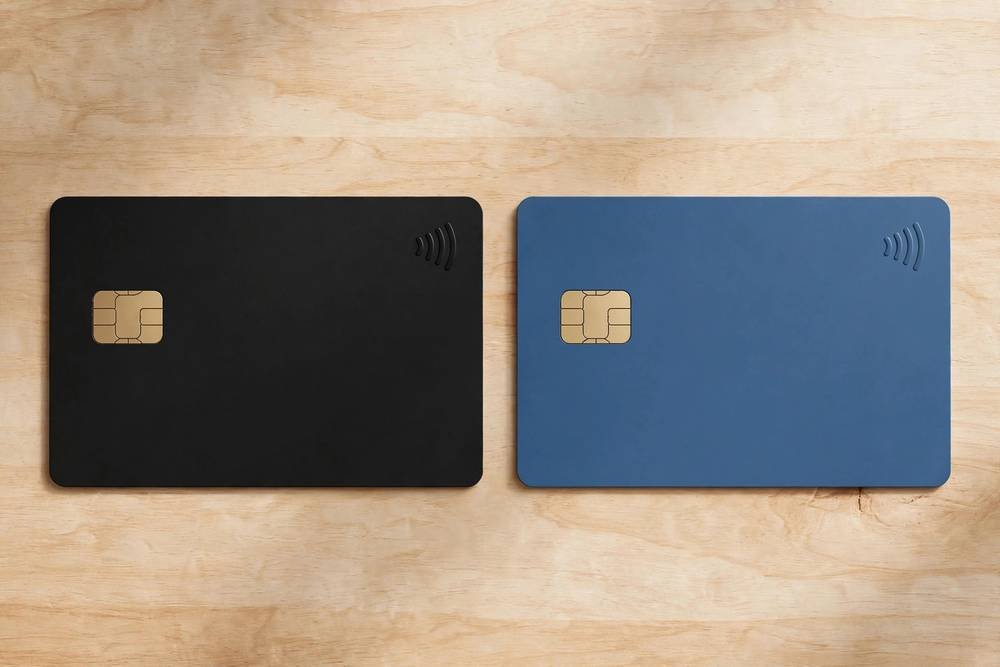
They look identical — same size, same chip, same 16 digits. But a credit card and a debit card are opposites wearing the same uniform. A debit card spends money you already have. A credit card spends the bank’s money and bills you later. That single difference ripples through everything: fraud protection, your rights when a purchase goes wrong, whether you build a credit history, and — most dangerously — whether you can slide into debt without noticing.
This guide explains how each card really works, where each one wins, the interest mechanics banks hope you never calculate, and the golden rules that let you use credit cards safely — or decide you are better off without one.
How Each Card Actually Works
- Debit card: linked directly to your bank account. When you pay, the money leaves your account — usually instantly. If the account is empty, the payment is declined (or, worse, the bank lets it through and charges an overdraft fee). You cannot spend what you do not have, which makes the debit card a natural budgeting tool.
- Credit card: linked to a credit limit set by the bank — say $5,000, £3,000, or Rs. 500,000. Each purchase borrows against that limit. Once a month you get a statement; you may pay the full balance (no interest), the minimum payment (a small fraction, typically 2–5% — the trap), or anything in between. Whatever you do not pay accrues interest at the card’s APR, usually calculated daily.
The Interest Mechanics Banks Hope You Never Calculate
Credit card interest is brutally expensive because it is unsecured lending — there is no asset for the bank to seize, so the rate prices in that risk. As of mid-2026, the average US credit card APR sat around 21% (Federal Reserve data), near all-time highs, with total US card balances at a record $1.263 trillion. New card offers averaged nearly 24%, and store cards approached 29%.
What 21% means in practice: carry a $6,000 balance and pay only the minimum, and you will pay roughly $1,260 in interest per year while the principal barely moves. At minimum payments, a $6,735 balance at ~22% takes over two decades to clear and costs nearly double the original debt in interest alone. Minimum payments are engineered to keep you in debt — the bank profits most from customers who never quite pay off.
Two mechanics to understand:
- The grace period: if you pay your statement balance in full every month, most cards charge zero interest — you get an interest-free loan of up to ~55 days. But the moment you carry any balance, the grace period typically vanishes, and new purchases start accruing interest immediately.
- Daily compounding: interest is usually calculated on your average daily balance and added monthly — then next month you pay interest on the interest. This is why balances feel like they grow on their own: they do.
In Pakistan and the UK the numbers differ but the maths is identical: credit card mark-up/profit rates are among the most expensive borrowing available anywhere. If you would not take a personal loan at that rate, do not carry a card balance at it either.
Where Credit Cards Win
- Fraud protection. This is the biggest structural advantage. With a credit card, fraudulent charges are the bank’s money at stake, not yours — your account balance is untouched while the dispute is resolved. In the US, federal law caps your liability for credit card fraud at $50 no matter when you report it, and most issuers reduce that to $0. Debit fraud is harsher: report within 2 days and liability is capped at $50; wait 2–60 days and it rises to $500; after 60 days you can be liable for everything. Worse, the stolen money is your money — gone from your account, potentially bouncing your rent payment while you wait weeks for it back.
- Purchase protection and chargebacks. Credit cards give you formal dispute rights when goods never arrive or a merchant collapses. In the UK, Section 75 of the Consumer Credit Act makes the card provider jointly liable with the retailer for purchases between £100 and £30,000 — a legal right far stronger than voluntary chargeback schemes, and a genuine reason to put big purchases on credit. (Paying through some intermediaries like a logged-in PayPal account can break Section 75 cover — another detail worth knowing.)
- Building a credit history. In the US and UK, responsible credit card use — small balances, paid in full, on time — is the primary way to build the credit score that later determines mortgage and loan rates. Debit cards build no history at all. (Pakistan’s credit bureau system, eCIB, similarly records credit behaviour; a well-managed card helps, a defaulted one haunts.)
- Rewards and perks — cashback, points, travel insurance — if and only if you pay in full monthly. Rewards worth 1–2% are meaningless against 21% interest. Never chase rewards while carrying a balance.
- Deposits, rentals, and travel. Hotels and car-rental firms routinely prefer or require credit cards for holds, and a hold on a credit card does not freeze your actual cash the way a debit hold does.
Where Debit Cards Win
- Budget control. You cannot spend money you do not have. For anyone who has ever carried a balance — or suspects they might — the debit card is the safer default. Behavioural research consistently shows people spend more freely on credit; the pain of payment is dulled when the bill comes later.
- No interest, no fees, no debt spiral. A debit card has no APR, no annual fee, and no minimum-payment trap. It is structurally incapable of putting you in debt (overdraft facilities aside — decline overdraft “protection” if your bank offers it; the fees are punitive).
- Simplicity. One account, one balance, no statements to reconcile, no due dates to miss. For teenagers, first-time earners, and anyone rebuilding finances, simplicity beats optimisation.
- Everyday small spending. Groceries, fuel, transit — transactions where fraud protection matters less and the credit-building benefit is negligible.
The Golden Rules: Using Credit Without the Trap
If you choose a credit card, these five rules separate the people who profit from cards from the people cards profit from:
- 1. Pay the statement balance in full, every month, automatically. Set up autopay for the full amount on the due date. This single habit captures every benefit of credit cards and dodges every cost.
- 2. Never spend more on credit than you have in the bank. Treat the credit card as a delayed debit card: if the money is not in your account today, do not swipe.
- 3. Keep utilisation low. Using more than about 30% of your limit — even if you pay in full — can dent your credit score. A $10,000 limit with a $2,000 monthly balance looks better than a $2,500 limit maxed out.
- 4. Never take cash advances. Withdrawing cash on a credit card typically attracts immediate interest (no grace period) plus a fee — the most expensive way to get your own money.
- 5. Have an exit plan for balances. If you already carry one: stop using the card, pay more than the minimum, and consider a 0% balance-transfer offer (typically 12–21 months interest-free with a 3–5% one-time fee — still far cheaper than 21% APR). Then cut up the old card’s use, not the account — closing old accounts can shorten your credit history.
Which Should You Use, and When?
- Online shopping and big purchases: credit card — stronger fraud protection, chargeback rights, and (UK) Section 75 cover.
- Daily spending within budget: either — debit for simplicity, credit if you autopay in full and want the rewards and history.
- If you have ever carried a balance: debit card until the debt is gone. The interest saved dwarfs any cashback.
- Building credit from scratch: a credit card used lightly and paid in full monthly — or a secured card if you cannot qualify.
- When money is tight: debit. Credit feels like help and behaves like quicksand.
Common Mistakes
- Paying only the minimum. The single most expensive habit in personal finance.
- Chasing rewards while carrying a balance. 2% cashback against 21% interest is not a strategy; it is a donation to the bank.
- Using a debit card for everything “to be safe” while ignoring fraud risk. For online and travel purchases, the credit card is genuinely the safer instrument — use the right tool per situation.
- Closing your oldest card after paying it off. It shortens your credit history and can lower your score. Keep it open, use it rarely, autopay in full.
- Believing “0% interest” means “free money.” Deferred-interest offers can retroactively charge interest on the whole balance if you miss the payoff deadline by a day. Read the terms.
The Bottom Line
The debit card protects you from yourself; the credit card protects you from everyone else. Used with autopay-in-full discipline, a credit card is the superior instrument for most purchases — better fraud protection, stronger dispute rights, and a credit history that pays off for decades. Used without that discipline, it is the most expensive debt most people will ever carry. The card is not the problem. The balance is.