Democracy in Pakistan: A Complete Article with History and Analysis
Pakistan’s democratic journey — from the Objectives Resolution of 1949 to the coalition government of 2024 — is one of the most contested political stories in South Asia. This article traces it fully: the constitutional foundations, the military interruptions, the democratic consolidations, and where the system stands today.
Quick answer: Democracy in Pakistan has moved through three phases — founding instability (1947–58), alternation with military rule (1958–2008), and continuous democracy since 2008. The 1973 Constitution (amended most importantly by the 18th Amendment in 2010) is its anchor; the 2013 transfer of power its proof of maturity; the 2024 elections its latest test.
In this article
Constitutional foundations
Pakistan’s democratic identity was written early: the Objectives Resolution (1949) declared sovereignty belongs to Allah but is exercised by the people’s chosen representatives — a formula carried into every constitution. The 1956 constitution made Pakistan an Islamic republic but survived barely two years. The settlement that endured came in 1973, when Zulfikar Ali Bhutto’s parliament passed a consensus constitution: federal, parliamentary, with Islam as the state religion and fundamental rights guaranteed. It remains the governing document — amended 27 times, most transformatively by the 18th Amendment (April 2010), which stripped the presidency of dismissal powers, restored a parliamentary republic, devolved the concurrent list to provinces and renamed NWFP as Khyber Pakhtunkhwa.
The military interruptions
Four military interventions punctuate the story: Ayub Khan (1958), Yahya Khan (1969), Zia-ul-Haq (1977) and Pervez Musharraf (1999). Each suspended or bent the constitution; each left institutional scars — Zia’s 8th Amendment (Article 58(2)(b)) gave presidents the power to dismiss elected governments, and it was used to remove four governments in the 1990s. The deepest wound came in 1971: the refusal to honour the 1970 election results — Pakistan’s first genuinely free vote — led to civil war and the secession of Bangladesh. The lesson was written into Article 6, making subversion of the constitution high treason.
Consolidation since 2008
The 2008 elections ended Musharraf’s era and began the longest democratic run in Pakistan’s history. The PPP government (2008–13) passed the 18th, 19th and 20th Amendments by consensus. In 2013, Pakistan crossed its Rubicon: an elected government completed its term and power transferred peacefully to PML-N. The 2018 elections brought PTI’s Imran Khan to power — another peaceful transfer. In April 2022, Khan became the first prime minister removed through a constitutional vote of no-confidence — a democratic mechanism doing what coups once did. The 8 February 2024 elections produced a hung parliament; PML-N formed a coalition government under Shehbaz Sharif with PPP’s backing, and Asif Ali Zardari returned as president.
Democracy today
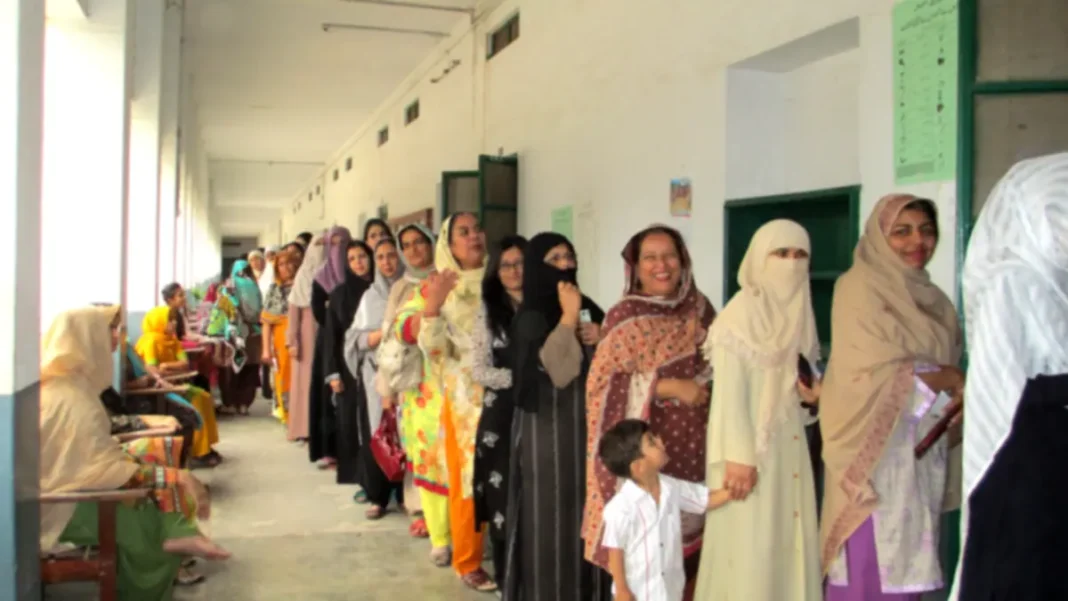
Today’s system: a 336-seat National Assembly (266 general, 60 women, 10 minorities) and a 96-seat Senate; four empowered provincial assemblies; an Election Commission running the polls; an activist judiciary; and a free-wheeling media. The current coalition (PML-N plus MQM-P, IPP and others, with PPP’s confidence-and-supply) governs a parliament where no single party holds a majority — coalition politics, for better or worse, is now the norm. See the complete guide and the plain-words explainer.
Assessment
Pakistan’s democracy is best understood as consolidating but contested. The achievements are concrete: 17+ unbroken years, three completed terms, two peaceful transfers, a defanged presidency, empowered provinces. The vulnerabilities are equally concrete: the military’s enduring political weight, judicial interventions in politics, and recurring disputes over electoral fairness. The trajectory, however, points one way — each crisis since 2008 has been resolved within the constitutional order rather than by suspending it. That is the difference between Pakistan’s past and its present.
FAQs
What are the phases of democracy in Pakistan?
Founding instability (1947–58), alternation with military rule (1958–2008), and continuous democracy since 2008.
What was the most important amendment for democracy?
The 18th Amendment (April 2010) — it made Pakistan a parliamentary republic and devolved power to the provinces.
Has Pakistan ever had a peaceful transfer of power?
Yes — first in 2013 (PPP to PML-N), then 2018 (PML-N to PTI). Both were historic firsts.