Eisenkot Unity Government Talks Fail, No More Meetings
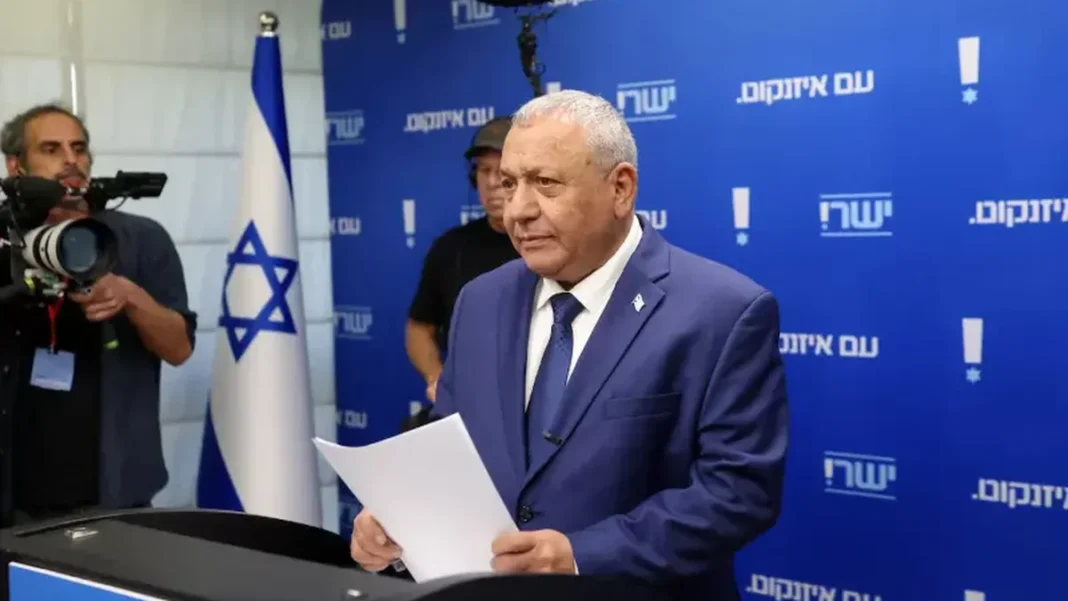
Gadi Eisenkot has turned away from a unity government with Benjamin Netanyahu after two hours of talks in Tel Aviv on Sunday. The Eisenkot unity government talks ended without a deal, and Israeli media report that no further meetings are planned.
Eisenkot, the former military chief who leads the centre-right Yashar party, told Netanyahu he would stay loyal to his own bloc partners. Netanyahu and Likud could join a government led by Eisenkot after it is formed, but only on that bloc’s terms.
The meeting took place at the Kirya military headquarters in Tel Aviv. It began with a security briefing before the two men turned to a national unity government. A joint statement called the discussion businesslike and said both sides were seeking to bridge the substantial differences between them.
The Eisenkot unity government talks collapse
Channel 12 later reported that no further meetings were planned. It quoted Eisenkot as telling Netanyahu: “I’m committed to my partners in the bloc. You’re welcome to join after the government is formed.” A spokesperson for Eisenkot confirmed the report.
The Times of Israel reported that the talks had collapsed. Eisenkot later met Naftali Bennett, the B’Yachad leader who had pushed for the unity talks.
A source close to Netanyahu told Channel 12: “Today it has become clear that Eisenkot is not interested in a national unity government.” Senior Likud figures also warned his prospective partners against joining a coalition led by him.
The talks were the main hope for a broad government after the inconclusive election on October 27, which left neither man with a clear path to power in the 120-seat Knesset.
Netanyahu’s rotation offer
Netanyahu raised the stakes on Saturday evening. He said he would temporarily give up power in a unity government led by Eisenkot, taking the second turn in a rotation deal, with Eisenkot serving as prime minister first. Netanyahu also wanted to remain prime minister for an unspecified period before the rotation took effect, to oversee what he described as a sensitive security operation involving Iran. Eisenkot rejected that condition outright.
Sunday’s meeting was the second between the two men this month. The first had been described as a security briefing. Dawn reported that Eisenkot now seemed more likely to build a coalition with parties seeking to oust Netanyahu, and Ynet reported that no further meetings were expected.
What Eisenkot does next
Eisenkot now turns back to the coalition he has been building since the election. The president tasked him with forming a government by December 6, with a possible extension of up to 14 days.
Last week Eisenkot signed coalition deals with the left-wing Democrats and the right-wing Yisrael Beiteinu party. With his own Yashar party and Bennett’s B’Yachad, his bloc won 48 seats, well short of the 61 needed for a majority.
Netanyahu’s Likud and its alliance of far-right and ultra-Orthodox parties won a combined 53 seats. Neither side can govern alone. Reports say Eisenkot aims for a narrow coalition of his four-party bloc’s 48 members, possibly backed by the ultra-Orthodox United Torah Judaism party and the Arab party Ra’am. His party has now held its first formal talks with United Torah Judaism.
Yair Golan, head of the Democrats, said after the Eisenkot-Netanyahu meeting that the Israeli public was behind Eisenkot. “Now is the time to form a government that will bring real change,” he said in a post on X.
Why the failure matters
Feature Pakistan reported on Saturday that Netanyahu had offered Eisenkot a unity government deal, and on Sunday that the unity talks had begun. Their collapse within a day shows how far apart the two sides remain.
The numbers explain the deadlock. A unity deal would have given Israel a broad government with room to spare. Without it, Eisenkot must stitch together a narrow coalition from parties that disagree on religion, the role of Arab parties, and the future of the war in Gaza.
Eisenkot has already moved in that direction. He signed his first coalition agreement last week, and he received the mandate to form a government soon after the final election results were declared. None of those steps has yet given him the 61 seats he needs.
What happens next
Eisenkot will continue coalition talks with his bloc and the parties outside it. His meeting with Bennett suggests the bloc is now working as one team.
Netanyahu stays on as caretaker prime minister while the talks continue. If Eisenkot cannot form a government by December 6, he can seek a 14-day extension from the president. For now, the unity option looks closed.
Frequently asked questions
Did Eisenkot agree to a unity government with Netanyahu?
No. The two men met for about two hours in Tel Aviv on Sunday, but the talks ended without an agreement. Israeli media report that no further meetings are planned between them or their negotiating teams.
What did Eisenkot tell Netanyahu?
Channel 12 reported that Eisenkot told Netanyahu he was committed to his partners in the bloc. He added that Netanyahu was welcome to join after the government is formed. A spokesperson for Eisenkot confirmed the report.
What did Netanyahu offer Eisenkot?
On Saturday, Netanyahu said he would be willing to form a unity government in which Eisenkot would serve as prime minister first. Netanyahu would take the second turn in a rotation agreement as alternate prime minister.
How long does Eisenkot have to form a government?
Eisenkot has until December 6 to form a government. He can ask the president for an extension of up to 14 days if he needs more time.
How many seats does Eisenkot’s bloc hold?
Eisenkot and his potential partners won 48 seats in the October 27 election. Netanyahu’s Likud and its alliance of far-right and ultra-Orthodox parties won a combined 53 seats. A majority in the 120-seat Knesset needs 61 seats.