Elon Musk unveils Tesla ‘flying’ car with thrusters, targets 2028 production
Tesla chief executive Elon Musk has unveiled what he described as a Tesla flying car, fitted with thrusters, at a livestreamed event at his SpaceX rocket company’s facility in Texas.
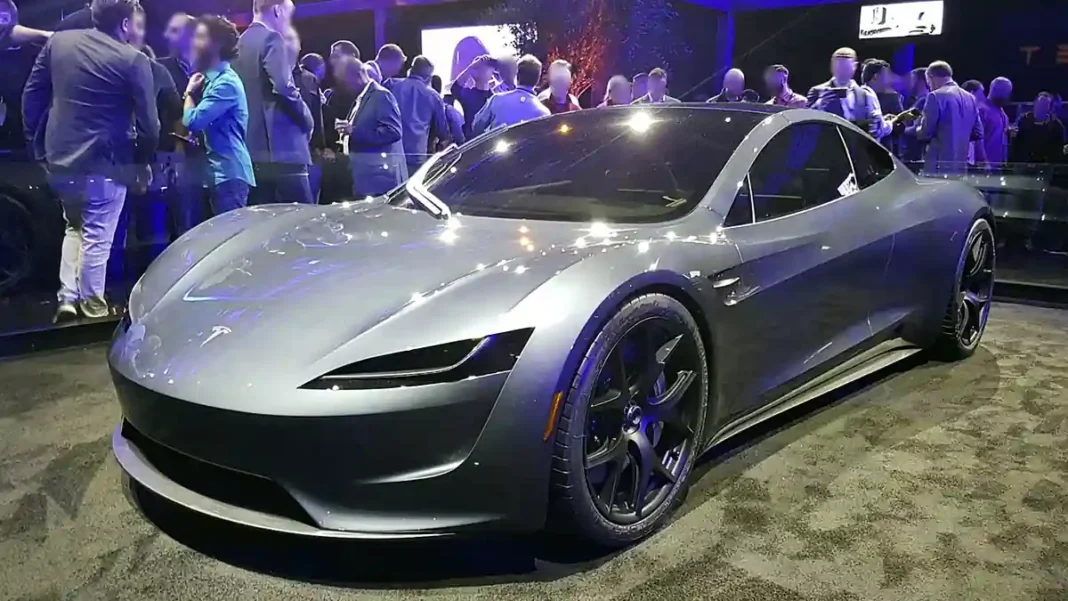
Musk revealed the new Roadster sports car during the launch event at a SpaceX test facility on Thursday. The car is equipped with “ultra high-pressure air tanks” to propel itself into the air, he said.
During the demo, which was livestreamed on Tesla’s X account, the car launched from a steep ramp and landed on its wheels. “Flying cars are real,” Musk said during the event.
He added that the vehicle’s “success is not guaranteed” but that “it will probably work”. The vehicle would go into production in 2028, he said.
The Tesla flying car: a Tesla and SpaceX collaboration
Musk described the development as “what happens when you have a collaboration with the world’s best car company and the world’s best rocket company”, referring to Tesla and SpaceX.
The thruster concept is not entirely new. Musk first showed a next-generation Roadster concept back in 2017 and later promised a “SpaceX package” with cold-gas thrusters. That car has faced repeated delays since, which makes the 2028 production target worth treating with caution.
Why flying cars have stayed grounded
Technical and regulatory challenges have so far prevented the much-hyped flying car sector from getting off the ground. Aviation pioneer Glenn Curtiss debuted the first flying car prototype in 1917, yet successful designs have only become seriously contemplated in recent years, as electric motors and high-performance batteries have advanced.
The hurdles are steep. Any road-going vehicle that leaves the ground must satisfy aviation regulators on safety, noise and air-traffic control, while also meeting road-safety standards. Battery weight remains a problem: lifting a car demands far more energy than driving it, which cuts range sharply.
Musk’s demo showed a short hop off a ramp rather than sustained flight. That distinction matters. Several electric air-taxi firms have flown proper vertical take-off prototypes, but none has yet won full certification for passenger service. A thruster-assisted Roadster would face the same certification maze, on top of the engineering challenge of packaging rocket-grade air tanks into a sports car.
What it means for the EV race
The reveal keeps Tesla in the headlines at a time when the electric vehicle market is getting crowded. Chinese manufacturers and legacy carmakers are closing the technology gap, and Tesla’s own launches have slowed.
A flying Roadster would be a halo product rather than a volume seller. Even if it reaches production in 2028, as Musk claims, it would likely carry a supercar price and sell in small numbers. Its real value to Tesla would be brand heat: proof, in Musk’s words, that the company still builds things nobody else attempts.
For buyers in Pakistan, the car is a distant prospect. Tesla has no official presence in the country, and a limited-run thruster Roadster would be an import fantasy long before it ever reached local roads. The more immediate tech story is the new wave of AI-powered gadgets reshaping everyday devices.
Frequently asked questions
What is the Tesla flying car?
It is a new Tesla Roadster fitted with thrusters and “ultra high-pressure air tanks” that Elon Musk says can propel the car into the air. Musk unveiled it at a SpaceX facility in Texas in a demo livestreamed on X.
When will the Tesla flying car go into production?
Musk said the vehicle would go into production in 2028. He cautioned that its “success is not guaranteed”, and the previous Roadster concept from 2017 has faced repeated delays.
Did the car actually fly?
The demo showed the car launching from a steep ramp and landing on its wheels, a short hop rather than sustained flight. Real flying-car designs still face major technical and regulatory hurdles before certification.