DRAFT — for review (not published)
- Suggested slug: fcc-minor-offences-government-jobs-ruling
- Category: National
- Focus keyphrase: FCC minor offences government jobs ruling
- SEO title: Minor Offences Can’t Bar Government Jobs, Rules FCC
- Meta description: The Federal Constitutional Court has ruled that a trivial offence cannot permanently disqualify a candidate from government service.
- Tags: Federal Constitutional Court, Justice Ali Baqar Najafi, police recruitment, Peshawar High Court, Article 10-A, Khyber Pakhtunkhwa, constable
- Original element: explainer context — the piece explains the proportionality principle behind the ruling and what it means in practice for job aspirants with old, minor convictions on their record
- Source: Tribune (“Minor offences cannot bar government jobs, says FCC”, published 17 Oct 2026)
Minor Offences Can’t Bar Government Jobs, Rules FCC
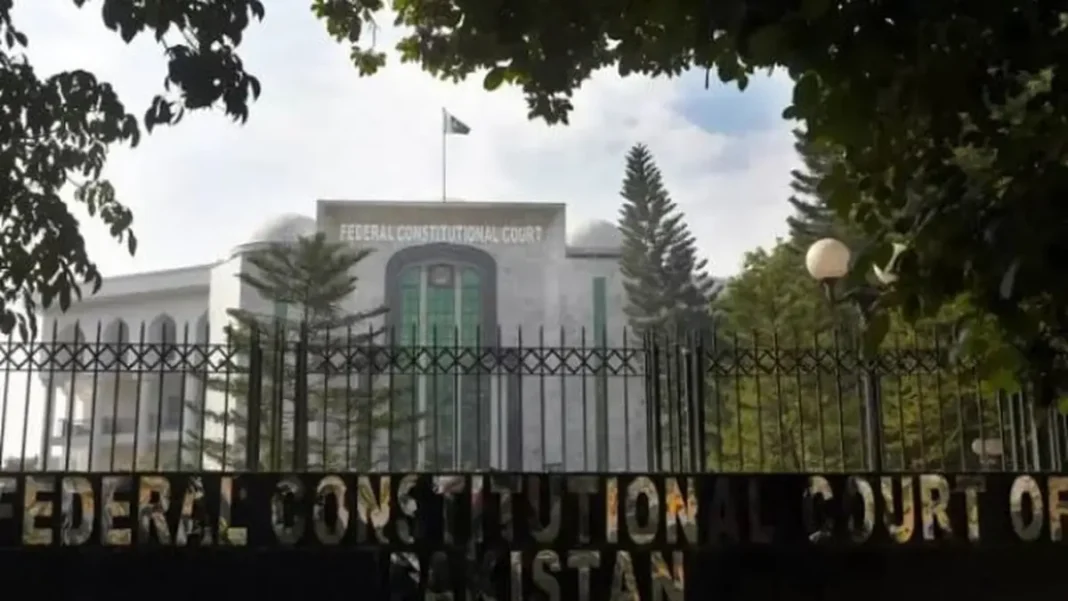
The Federal Constitutional Court has ruled that a minor or less harmful offence should not carry consequences so severe that they permanently deprive a person of the chance to enter government service.
“A trivial or less harmful offence cannot have a severe consequence so as to rule out the possibility of induction into a government service,” the court observed in a four-page judgement authored by Justice Ali Baqar Najafi. Justice Najafi sat on a division bench led by Chief Justice Amin-ud-Din Khan.
Through the verdict, the court upheld a Peshawar High Court decision directing the Khyber Pakhtunkhwa government to consider a candidate for appointment as a police constable.
A Rs500 fine that nearly ended a career
The case concerned a candidate convicted under Sections 285 and 286 of the Pakistan Penal Code, which deal with negligent conduct involving fire, combustible matter or explosive substances. He had been fined Rs500 after making a confessional statement.
The court observed that although a crime remained a crime, the nature of the offence, the offender’s attitude towards criminal conduct and the likelihood of reoffending had to be weighed before imposing lasting consequences.
“Without educating such convict about the result of making a confessional statement, he cannot be bound for a life-long prohibition,” the judgement stated. The record did not show that the candidate had been told what his confession would cost him before he agreed to it under Section 243 of the Code of Criminal Procedure, 1898.
“Obviously, the punishment must commensurate with the crime and it cannot damage the entire life of such criminal,” the judgement added, noting that nothing on record suggested the man was a habitual offender.
What the ruling means for aspirants
The judgement draws a line that will matter to thousands of young Pakistanis who apply for government posts each year with some old brush with the law on their record. A petty conviction or a small fine will no longer automatically end a candidacy. Recruiting authorities must weigh the gravity of the offence and the person’s conduct since, rather than treating any conviction as a lifetime ban.
At the same time, the court acknowledged that police recruitment demanded particular care. Rule 12.14 of the Police Rules, 1934 requires recruits to be of good character, and the court said careful assessment remained essential when choosing who wears the uniform.
The judgement also referred to paragraph 23 of Standing Order 6/2015 of the Punjab Police Department, which bars candidates with criminal records or links to proscribed organisations, and to a 2018 amendment requiring candidates to declare any criminal cases when applying.
The court stressed that these provisions aimed to keep hardened criminals out of the police, but an allegation in an FIR, without indictment or conviction, remained only an allegation. FIRs could be filed out of personal enmity or ulterior motives, it observed, which made the investigation and the investigating officer’s findings relevant to any assessment.
Due process under the Constitution
The judgement underscored that the candidate was entitled to due process and a fair trial under Article 10-A of the Constitution. It added that an accused who admitted guilt became, in a sense, a friend of the court and could deserve reasonable leniency depending on the circumstances.
The ruling is likely to be cited in recruitment disputes across the provinces, where candidates are routinely rejected over decades-old minor convictions. For recruiting departments, the message is that rejection must now be reasoned and proportionate, not automatic.
Frequently asked questions
What did the Federal Constitutional Court rule?
It held that a trivial or less harmful offence cannot permanently disqualify a person from government service, and that punishment must remain proportionate to the crime.
What was the case about?
A candidate for police constable in Khyber Pakhtunkhwa was rejected over a conviction for negligent conduct involving fire or combustible material, for which he had been fined Rs500 after a confessional statement. The court upheld the Peshawar High Court’s order to consider him for appointment.