Islamabad’s population figures confuse even careful readers — 1.1 million here, 2.36 million there, 5.7 million somewhere else. This guide untangles the numbers: what the 2023 census actually found, how the capital grew twenty-fold in sixty years, and what it all means.
Quick answer: Islamabad’s population is 2,363,863 (Islamabad Capital Territory, 2023 census) — up 18% since 2017. The city proper holds 1,108,872 people (10th in Pakistan), and the twin-cities area with Rawalpindi exceeds 5.7 million. Growth has run at 2.8% a year, driven by internal migration.
In this guide
The Numbers That Matter
The Pakistan Bureau of Statistics’ 2023 census recorded 2,363,863 people in the Islamabad Capital Territory — the definitive figure, published in the PBS District Census Report for Islamabad. That is 360,000 more than the 2,003,368 counted in 2017, an 18% increase in six years and an annual growth rate of 2.8%.
Within the territory, the Islamabad Metropolitan Corporation (the city proper) counted 1,108,872 residents. The rest live in the territory’s rural areas, villages and the housing societies spreading beyond the old sector grid. Our complete Islamabad population landing guide lays out the full census table, and the totals guide puts every definition side by side.
Why Islamabad Keeps Growing
- Government employment — as the federal capital, Islamabad concentrates ministries, the Pakistan Secretariat, courts, regulators and the military headquarters, all drawing staff from across the country.
- Education — Quaid-i-Azam University, NUST, COMSATS and dozens of other institutions pull students who often stay.
- Security and services — reliable utilities, planned infrastructure and relative safety attract families from conflict-affected and underserved regions.
- The housing economy — societies like DHA, Bahria Town and Gulberg Greens have turned population growth into a construction boom on the territory’s edges.
How the Capital Compares
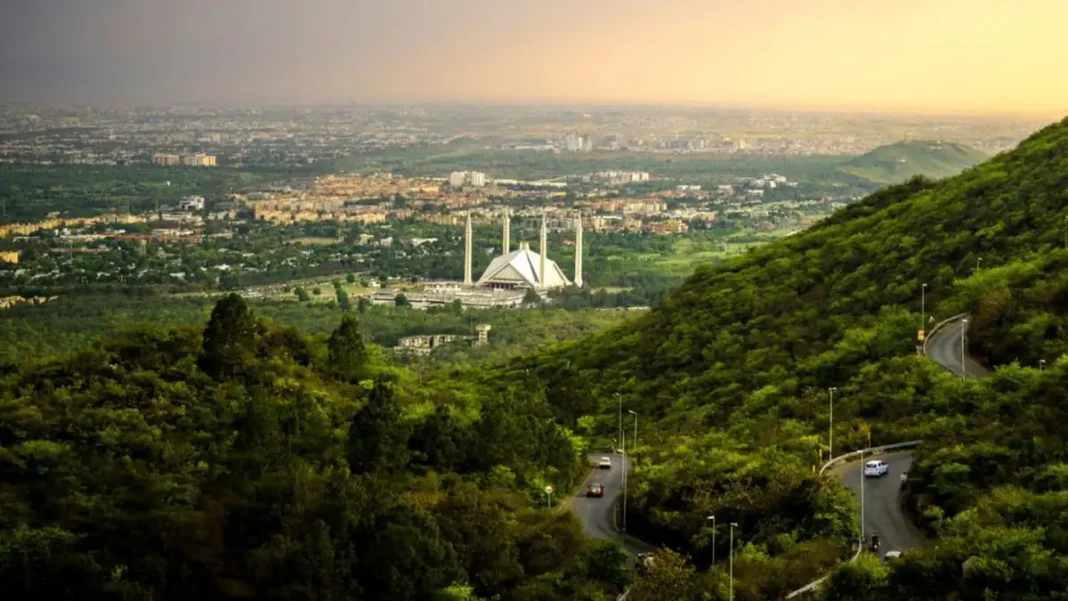
At 1.11 million city residents, Islamabad is Pakistan’s 10th most populous city — far behind Karachi (~17 million) and Lahore (~13 million), and smaller than its twin, Rawalpindi. But the territory’s 2.36 million and the twin-cities metro’s 5.7 million tell the real story: Islamabad functions as a much bigger urban area than its city limits suggest. Its density — 5,037 people per km² in the city — is modest by Pakistani standards, a legacy of the planned sector grid.
What Comes Next
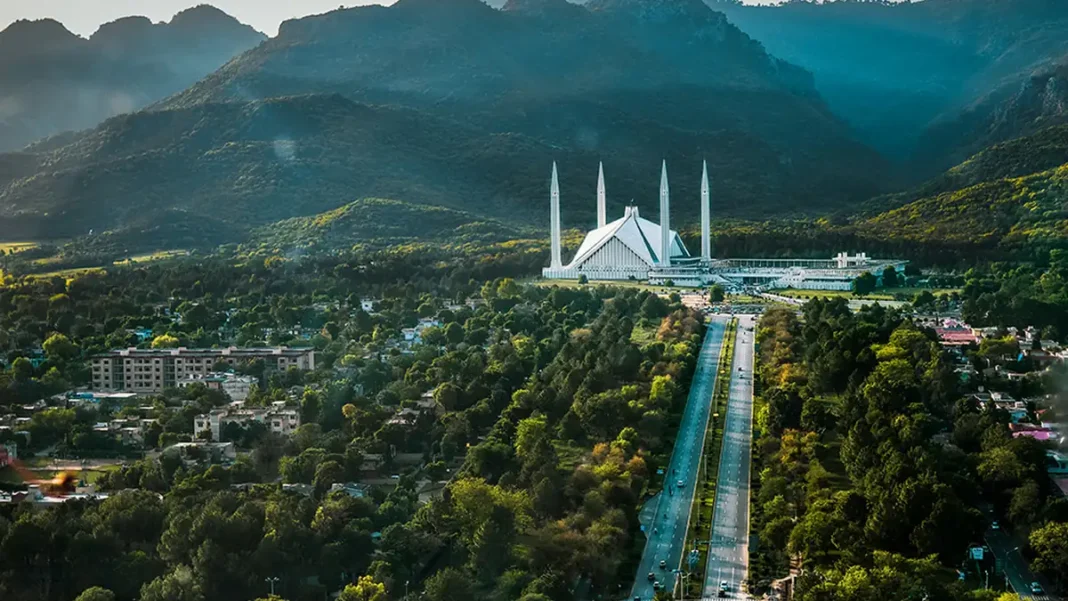
If the 2.8% growth rate holds, the territory passes 3 million before 2030. The questions are familiar to every fast-growing capital: water supply, traffic on the sector grid, and whether the Margalla Hills and green belts survive the sprawl. The “Green City” nickname is increasingly an aspiration to defend rather than a description.
Frequently Asked Questions
What is the current population of Islamabad?
2,363,863 in the Islamabad Capital Territory per the 2023 census (2.36 million). The city proper has 1,108,872 residents.
Why are there different figures for Islamabad’s population?
Because three geographies share the name: the city (1.11M), the Capital Territory (2.36M), and the twin-cities metropolitan area with Rawalpindi (5.7M+).
How fast is Islamabad growing?
At 2.8% per year between 2017 and 2023 — about 360,000 new residents in six years, mostly from internal migration.
Is Islamabad bigger than Rawalpindi?
No. Rawalpindi’s city population exceeds Islamabad’s; together they form a twin-cities metro of over 5.7 million.