PACKAGE — ready for publishing
- Suggested slug: k2-airways-black-box-deep-sea-search-foreign-experts
- Category: National News
- Focus keyphrase: K2 Airways black box
- SEO title: Pakistan Seeks Foreign Help to Find K2 Airways Black Box
- Meta description: Pakistan is turning to foreign experts to find the K2 Airways black box off Ormara, believed to lie 3,000 metres deep four months after the crash.
- Tags: K2 Airways black box, Ormara, black box recovery, Pakistan Navy, deep-sea search, air crash investigation, cargo aircraft, Balochistan
- Original element: explainer context on deep-sea black-box recovery technology and a verified crash timeline (July 7 crash off Ormara → beacon fell silent ~August → Navy side-scan sonar identified possible site → new international phase), all built from Tribune’s verified reporting
- Source: Tribune Pakistan (“Govt turns to foreign experts to find K2 Airways’ black box”, published 18 Oct 2026, 22:35 PKT)
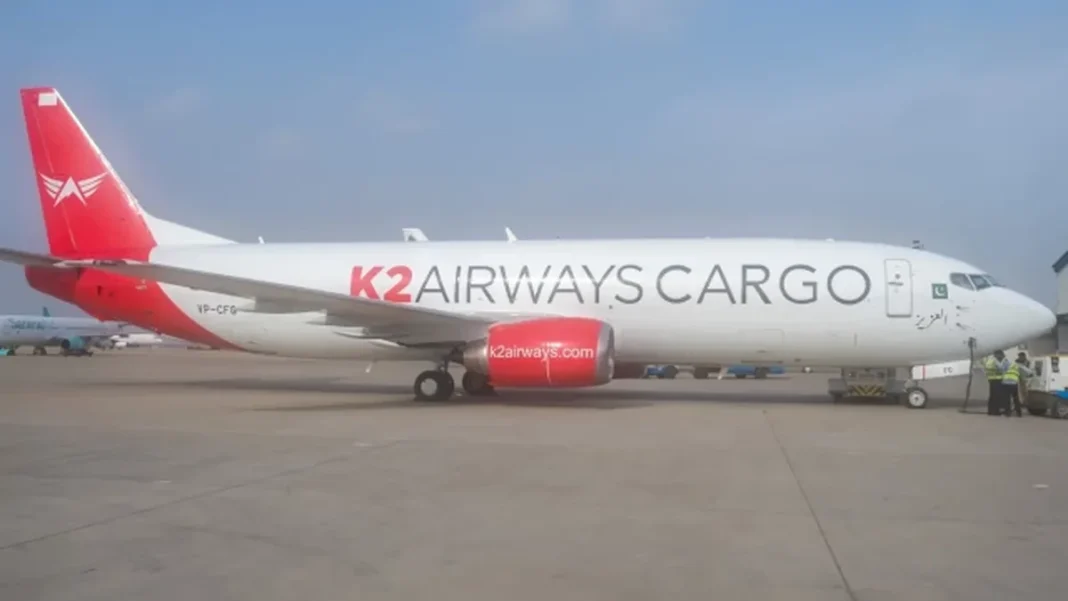
- Image: hourly-2335-k2-airways-black-box.webp (1200×675 WebP, 21KB) — K2 Airways cargo aircraft; image_title “k2 airways cargo aircraft”, image_alt “K2 Airways black box – K2 Airways cargo aircraft on the tarmac”, image_caption “A K2 Airways cargo aircraft. The airline’s plane went down off Ormara on July 7. Image: Facebook”, image_credit “Image: Facebook”
Pakistan Turns to Foreign Experts to Find K2 Airways Black Box Off Ormara
Nearly four months after a K2 Airways aircraft plunged into the sea off Ormara, Pakistan is turning to foreign experts for a deep-sea operation to recover the K2 Airways black box, the wreckage and the crew.
The aircraft is believed to lie around 3,000 metres below the surface, and the government has intensified contacts with international specialists to work out the best way to reach it, sources told The Express Tribune.
Why the K2 Airways black box hunt is so difficult
Depth is the central problem. At 3,000 metres, the pressure, darkness and terrain of the seabed put the wreckage beyond the reach of ordinary search equipment. The black box’s underwater transmitter beacon, which emits acoustic signals to help search teams home in on it, reportedly stopped working about a month after the accident, removing the simplest method of locating it.
The Pakistan Navy had earlier used specialised equipment and side-scan sonar to scan the area and identified a possible location of the black box on the seabed. Acoustic signals were used to sweep the seabed at a depth of around 3,000 metres. But further progress now depends on more advanced underwater technology and specialised deep-sea salvage expertise that Pakistan is seeking from abroad.
The recovery is considered essential: flight data and cockpit voice recordings could let investigators reconstruct the final moments, examine cockpit activity and determine the cause.
Technology that could find the wreckage
According to sources cited by the Tribune, the next phase of the search could draw on several advanced systems:
A multibeam echo sounder would build a detailed three-dimensional map of the seabed, measuring depths and flagging obstructions so search teams can narrow down where the wreckage may rest. Autonomous underwater vehicles could then survey the seabed with sonar, cameras and sensors, with the data helping to identify suspicious objects and pinpoint areas for closer inspection.
Remotely operated vehicles, controlled from a support vessel on the surface, could play an equally important role. Fitted with high-definition cameras, powerful lights and robotic arms, they can examine wreckage at close range and, where possible, retrieve smaller objects or position specialised equipment around the debris.
Search teams may also use a towed pinger locator for the beacon’s acoustic signals, though with the transmitter reportedly dead its value is limited, and a magnetometer to detect the magnetic footprint of large metal objects. Combined with sonar readings and underwater imagery, these could confirm the suspected location.
Specialised deep-sea salvage vessels may also be needed, carrying heavy-duty winches, cranes and remotely operated systems built for extreme depth.
Crash timeline: what happened off Ormara
The aircraft, operated by the privately owned domestic cargo carrier, crashed into the sea on July 7 this year after encountering adverse conditions near Ormara, on the Balochistan coast.
The Pakistan Navy then deployed specialised equipment and side-scan sonar. About a month after the accident the beacon fell silent, though acoustic scanning identified a possible location at around 3,000 metres. Since then, progress has stalled while the government weighed a full deep-sea recovery.
The new phase is expected to depend on assessments by international specialists, the availability of suitable equipment and the identification of the most promising spots on the seabed.
Who pays for the deep-sea search
Sources said the company that owns the cargo aircraft would bear 50 per cent of the search costs. Raja Tariq, who holds up to 60 per cent of the company’s shares, has been informed.
Families of the crew have been pressing for a thorough deep-sea search, and the government’s latest move signals that the effort is entering its most serious phase yet.
FAQ
What happened to the K2 Airways aircraft?
A K2 Airways cargo aircraft crashed into the sea off Ormara, Balochistan, on July 7, 2026, after encountering adverse conditions. The aircraft and its crew have not yet been recovered.
Why is the K2 Airways black box so hard to find?
The wreckage is believed to lie about 3,000 metres deep, and the black box’s acoustic beacon stopped emitting signals about a month after the crash, so search teams cannot simply home in on it.
What technology will the deep-sea search use?
Planned tools include multibeam echo sounders for 3D seabed mapping, autonomous and remotely operated underwater vehicles with sonar and cameras, towed pinger locators, magnetometers and specialised deep-sea salvage vessels.
Who is paying for the search?
The company that owns the cargo aircraft will bear 50 per cent of the search costs, according to sources. Raja Tariq, who holds up to 60 per cent of the company’s shares, has been informed.