Exams, quizzes and curious minds all need the same thing: reliable knowledge about Pakistan in one place. This is the essential GK sheet — capitals, symbols, dates and records — companion to our definitive Pakistan facts guide.
Quick answer: Pakistan essentials: capital Islamabad; population 240M+ (5th in the world); four provinces (Punjab, Sindh, KP, Balochistan); independence 14 August 1947; currency the rupee; national language Urdu; K2 (8,611 m) the highest peak; Indus the longest river; six UNESCO World Heritage Sites.
The basics
- Official name: Islamic Republic of Pakistan — “Land of the Pure”.
- Capital: Islamabad (Karachi was the first capital, 1947–1967).
- Population: over 240 million — 5th largest in the world.
- Provinces: Punjab (capital Lahore), Sindh (Karachi), Khyber Pakhtunkhwa (Peshawar), Balochistan (Quetta).
- Currency: Pakistani rupee (PKR). Languages: Urdu (national), English (official).
- Highest peak: K2, 8,611 m. Longest river: the Indus (~3,180 km). Coastline: ~1,046 km on the Arabian Sea.
- Time zone: PKT (UTC+5). Independence Day: 14 August.
National symbols
- Flag: dark green (Muslim majority), white stripe (minorities), crescent (progress), star (light and knowledge) — designed by Amiruddin Kidwai.
- Anthem: Qaumi Tarana — music by Ahmad G. Chagla, lyrics by Hafeez Jalandhari.
- Animal: Markhor. Bird: Chukar partridge. Tree: Deodar cedar. Flower: Jasmine. Sport: field hockey (official), cricket (popular).
- Founder: Muhammad Ali Jinnah, the Quaid-e-Azam (“Great Leader”).
Key history dates
- 1933: Choudhry Rahmat Ali coins the name “Pakstan” in Now or Never.
- 1940: The Lahore Resolution demands separate Muslim homelands.
- 1947: Independence on 14 August; the Radcliffe Line divides Punjab and Bengal.
- 1956 / 1962 / 1973: Pakistan’s three constitutions — the 1973 Constitution endures.
- 1998: Nuclear tests at Chagai make Pakistan the first Muslim-majority nuclear power.
- 2010: The 18th Amendment devolves power to the provinces.
Government quick facts
- System: federal parliamentary Islamic republic under the 1973 Constitution.
- President: Asif Ali Zardari (head of state). Prime Minister: Shehbaz Sharif (head of government).
- Parliament: bicameral — 96-member Senate and 336-member National Assembly.
- Judiciary: headed by the Supreme Court of Pakistan.
Records for GK
- Tarbela Dam — world’s largest earth-filled dam. Khewra — world’s second-largest salt mine.
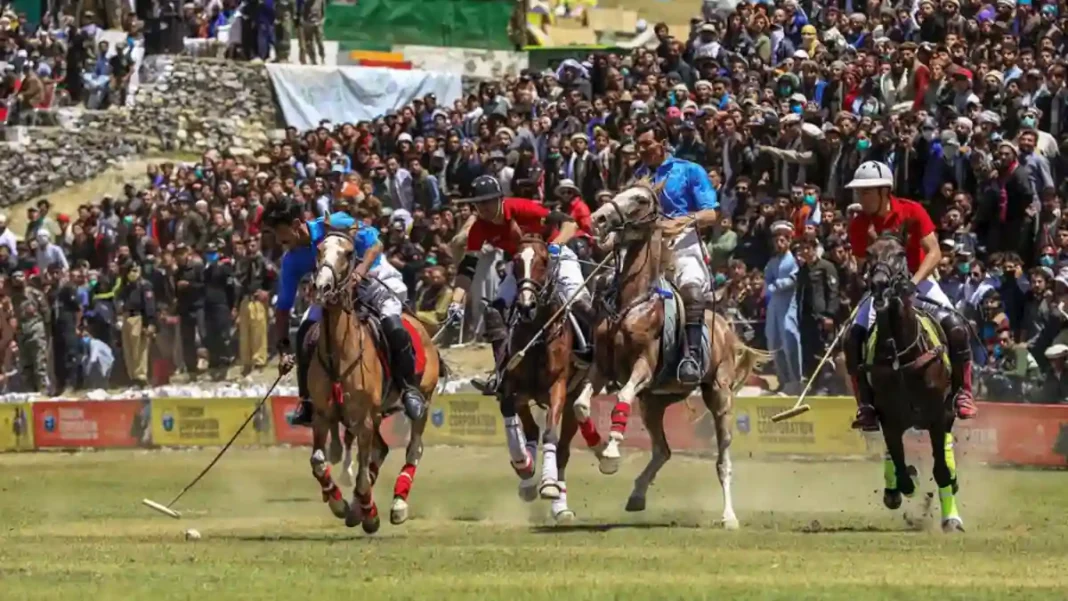
- Shandur — world’s highest polo ground. Khunjerab ATM — world’s highest.
- Sialkot — ~70% of the world’s hand-stitched footballs. Indus Basin — one of the world’s largest irrigation systems.
- Malala Yousafzai — youngest Nobel laureate (17, Peace 2014). Dr Abdus Salam — Pakistan’s only science Nobel (Physics 1979).
- Sharmeen Obaid-Chinoy — the first Pakistani to win an Academy Award, twice (documentary short, 2012 and 2016).
For the stories behind these facts, explore our five amazing facts, verified in depth.
Exam tip: pair each date with its story — 1947 with independence, 1973 with the Constitution, 1998 with the nuclear tests, 2010 with the 18th Amendment. Stories stick; bare dates slip away.
Frequently asked questions
What is the capital of Pakistan?
Islamabad — purpose-built in the 1960s, replacing Karachi as the federal capital in 1967.
How many provinces are in Pakistan?
Four: Punjab, Sindh, Khyber Pakhtunkhwa and Balochistan — plus the Islamabad Capital Territory, Gilgit-Baltistan and Azad Jammu and Kashmir.
What does Pakistan mean?
‘Land of the Pure’ — from ‘Pak’ (pure) and ‘Stan’ (land), coined by Choudhry Rahmat Ali in 1933.
When did Pakistan become a nuclear power?
May 1998, when tests at Chagai in Balochistan made Pakistan the first — and so far only — Muslim-majority country with nuclear weapons.