


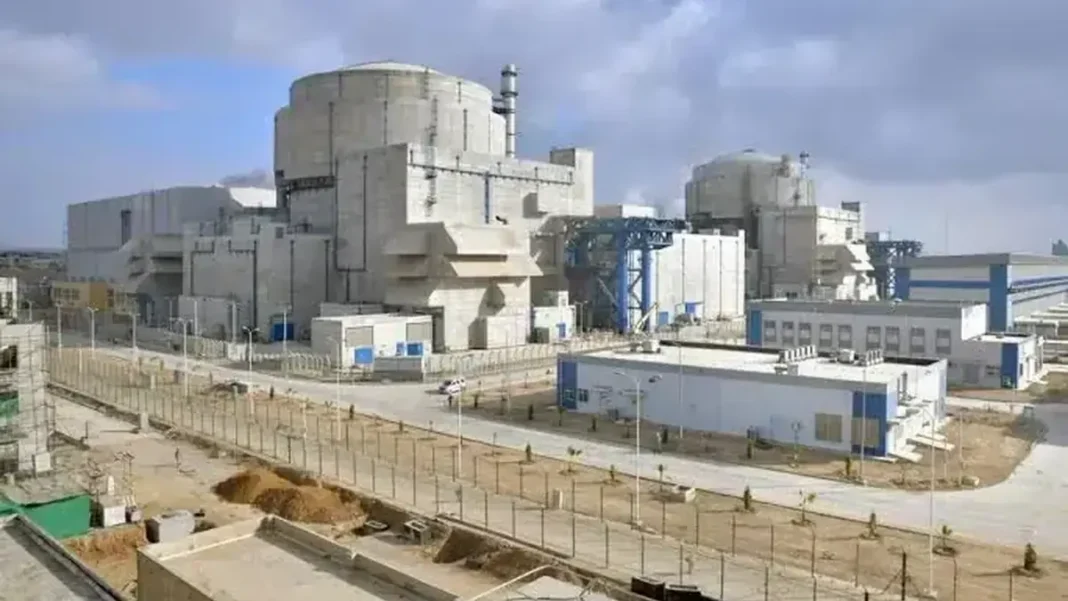
IAEA nuclear security review Pakistan: robust regime, says team
An International Atomic Energy Agency (IAEA) team of experts has concluded a 12-day review of Pakistan’s nuclear security framework, finding that the country has built a robust regime for protecting its nuclear materials and facilities.
The IAEA nuclear security review Pakistan mission, the first of its kind ever conducted in the country, ran from September 28 to October 9, 2026. It was carried out at the request of the Government of Pakistan and hosted by the Pakistan Nuclear Regulatory Authority (PNRA).
The IAEA said Pakistan’s security framework was appropriately implemented at the facility the team visited, and that the regime keeps improving through periodic reviews and a strong capacity-building system.
Who carried out the review
The seven-member mission was led by Khammar Mrabit, the former director general of Morocco’s Agency for Nuclear and Radiological Safety and Security. The team included experts from China, Romania, Russia and Slovakia, alongside two IAEA staff members.
During the mission, the team met officials from the PNRA, the Pakistan Atomic Energy Commission and other national bodies. They also visited the KANUPP Decommissioning Project in Karachi, part of Pakistan’s first nuclear power plant. The Canadian Deuterium Uranium (CANDU) reactor there began operating in 1971 and was permanently shut down in 2021.
At the Karachi site, the experts observed ongoing decommissioning work and the storage of spent nuclear fuel in dry storage facilities.
Key points of the IAEA mission
- 12-day review from September 28 to October 9, 2026
- First-ever International Physical Protection Advisory Service mission to Pakistan
- Seven-member team led by Khammar Mrabit of Morocco
- Framework found robust and properly implemented at the visited facility
- Recommendations issued, plus good practices identified at regulatory and facility levels
What the IAEA said
Speaking at the mission’s closing ceremony, Karine Herviou, the IAEA’s deputy director general and head of its nuclear safety and security department, said the successful completion of the review reflected Pakistan’s commitment to strengthening the regulatory and operational side of its nuclear security regime. She also praised Pakistan’s contribution to building nuclear security skills, calling its impact far-reaching.
Zia Hussain Shah, chairman of the PNRA, said hosting the mission showed Pakistan’s firm commitment to keeping a strong nuclear security regime across its facilities and activities. He added that the experts’ findings validated Pakistan’s physical protection measures and gave the country a solid baseline for further improvements.
The team gave Pakistan recommendations to tighten its security procedures and rules, and also flagged several good practices it observed at both the regulatory and facility levels.
Why this review matters
IPPAS missions are peer reviews in which international experts measure a country’s physical protection system against global standards and best practice. They identify where rules, procedures and security measures can be strengthened. Since the programme began in 1995, the IAEA has conducted 112 such missions worldwide. Pakistan’s was the 112th.
The review matters for Pakistan’s international standing. Pakistan is a party to the Convention on the Physical Protection of Nuclear Material and ratified its 2005 amendment in 2016, which obliges states to protect nuclear facilities and materials used for peaceful purposes.
The Foreign Office welcomed the mission’s conclusion, noting that the team had reviewed Pakistan’s legal and regulatory framework as well as the practical security arrangements on the ground. It said the IAEA experts had acknowledged Pakistan’s transparency and professionalism throughout the process.
For further context on Pakistan’s engagement with international bodies, see Pakistan’s recent position at the UN Security Council (read the full story), and the country’s ongoing counterterrorism operations at home (read the full story). The full official statement is available on the IAEA website.
Frequently asked questions
What is an IPPAS mission?
The International Physical Protection Advisory Service (IPPAS) is an IAEA programme in which international experts review a country’s system for protecting nuclear materials and facilities against international standards. Pakistan’s mission was the 112th since the programme began in 1995.
When did the IAEA review Pakistan’s nuclear security?
The 12-day mission ran from September 28 to October 9, 2026, at the request of the Government of Pakistan. It was hosted by the Pakistan Nuclear Regulatory Authority.
What did the IAEA find in Pakistan?
The team concluded that Pakistan has a robust nuclear security regime, appropriately implemented at the facility it visited. It also gave recommendations for further strengthening procedures and identified good practices at regulatory and facility levels.
Which facility did the IAEA team visit?
The team visited the KANUPP Decommissioning Project in Karachi, Pakistan’s first nuclear power plant, observing decommissioning activities and spent nuclear fuel storage.