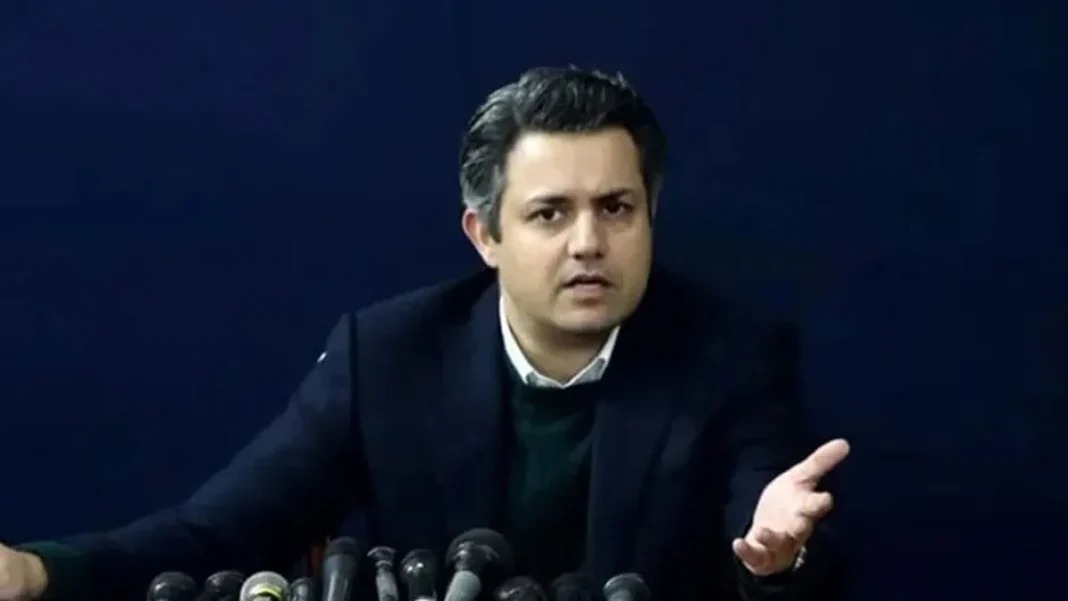
An anti-terrorism court in Lahore has extended the physical remand of Pakistan Tehreek-i-Insaf leader Hammad Azhar, accepting the police request for more time to carry out a polygraph test in connection with the attack on Jinnah House.
The investigating officer told the court on Thursday that investigators needed further custody because they want Azhar to undergo the lie-detection test as part of the investigation into the May 9, 2023 violence, according to a report published by Dawn on October 15, 2026.
The order is the latest in a series of remand extensions for the former federal minister, who was arrested in Multan in early September after remaining in hiding for nearly three years.
What the Court Decided
The prosecution argued that physical remand was required for further investigation, and that the polygraph test was an important part of the process. The court accepted the plea and extended Azhar’s custody, handing him back to police for continued investigation.
Azhar’s legal team opposed the extension, maintaining that he had no role in the attack and that the tests being demanded of him were an attempt to prolong his custody rather than gather evidence that the prosecution could already present.
The defence has consistently held that the former minister was not present at the scene on May 9 and that his location can be verified through geofencing of his mobile phone.
A Case That Goes Back to May 9
The case arises from the events of May 9, 2023, when the residence of the Lahore corps commander on Sarwar Road, historically known as Jinnah House, was stormed and set on fire by protesters demonstrating against the arrest of PTI founder Imran Khan from the premises of the Islamabad High Court.
The burning of Jinnah House became the most widely circulated image of that day’s violence. Dozens of cases were registered across Punjab in the aftermath, many under the Anti-Terrorism Act 1997 along with provisions of the Pakistan Penal Code covering rioting, arson and attacks on state installations.
Azhar, who served as finance, energy and industries minister during PTI’s time in government, was named in many of these cases. Lahore police said he was wanted in 18 cases and had remained absconding since 2023.
From Arrest to Remand Extensions
Azhar was taken into custody in Multan in the first week of September 2026, days after his mother approached the Lahore High Court seeking his recovery and asking that his detention be formally disclosed.
He was handed over to Lahore police, which recorded his arrest in the May 9 cases. Shortly afterwards, the anti-terrorism court granted police an initial physical remand of about three weeks in the Jinnah House case.
During those earlier proceedings, the investigating officer had sought permission for a photogrammetric test, asked to recover the mobile phone allegedly used to spread messages that incited unrest, and requested forensic examination of social media accounts said to have been used to run the campaign.
The defence opposed each of these steps, arguing that Azhar was in Gujranwala on May 9, that he had expressed willingness to cooperate with tests and social-media checks, and that remand could not be granted on the basis of evidence the prosecution hoped to find in the future.
The judge hearing the case had directed that Azhar be treated properly in custody, observing that no one should be handled in a manner that could become a source of embarrassment later.
Why the Polygraph Test Matters
A polygraph test measures physiological responses such as heart rate, blood pressure and perspiration while a person answers questions. In Pakistan’s legal system, the results of such tests are generally treated as investigative tools rather than conclusive evidence, and courts give them limited weight at trial.
The prosecution believes the test could help investigators assess the truth of Azhar’s account of his whereabouts and contacts on May 9. The defence is expected to challenge both the need for the test and any conclusions drawn from it.
Thursday’s extension means investigators have more time before they must either seek yet another extension or move the case towards a charge sheet. The proceedings continue to draw attention as one of the most high-profile cases arising from the May 9 riots.
Frequently Asked Questions
Who is Hammad Azhar?
Hammad Azhar is a senior PTI leader and former federal minister for finance, energy and industries. He resigned as president of PTI’s Punjab chapter in August 2024.
What is the Jinnah House case about?
It concerns the attack on the Lahore corps commander’s residence, known as Jinnah House, during the May 9, 2023 protests that followed the arrest of PTI founder Imran Khan.
Why has his remand been extended?
The investigating officer told the court that more time was needed to conduct a polygraph test as part of the investigation.
Was Azhar arrested earlier?
Yes. He was taken into custody in Multan in early September 2026 after remaining in hiding for nearly three years, and Lahore police recorded his arrest in multiple May 9 cases.
Internal links: Joint session of parliament endorses governor’s rule in KP | Sohail Afridi, four others charged in 2023 Radio Pakistan attack case | Federal Constitutional Court rejects Bushra Bibi’s plea to suspend sentence | Law ministry notifies jail trial for Imaan Mazari, Hadi Ali
Outbound: The News: Police given 20-day custody of PTI’s Hammad Azhar