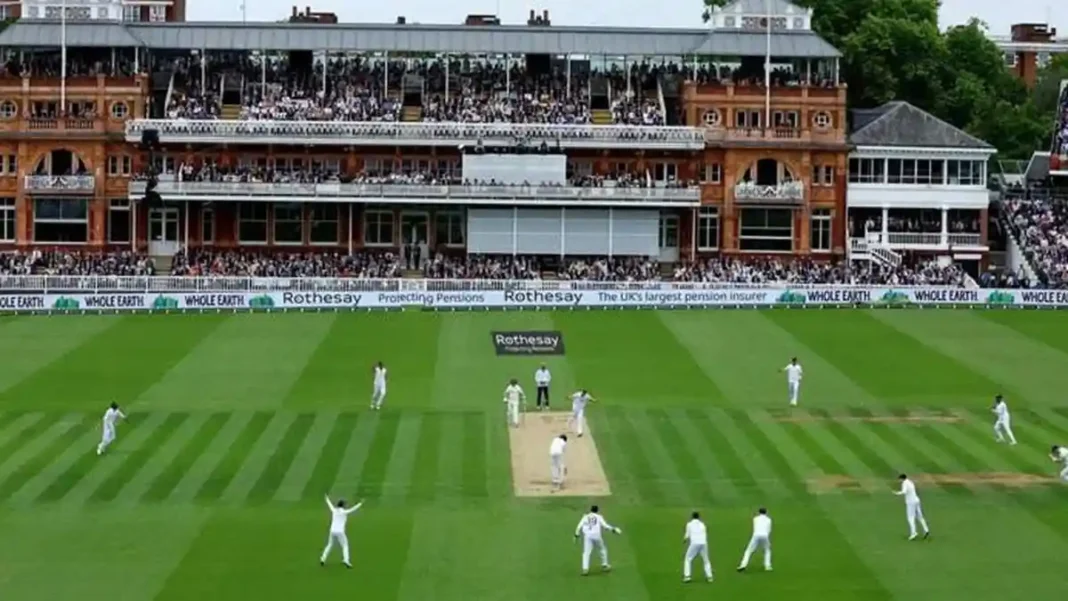
Lord’s Relays Pitch After First-Ever ICC Demerit Point
LONDON: Marylebone Cricket Club has begun relaying the Lord’s pitch that received the venue’s first-ever demerit point from the International Cricket Council, with the surface set to remain out of use for at least the next two seasons.
Pitch 9, one of five central strips used for international fixtures at Lord’s, was rated “unsatisfactory” by match referee Andy Pycroft following England’s victory over New Zealand in early June. Pycroft cited excessive seam movement and variable bounce as the main concerns in a Test where all 40 wickets fell in just 166 overs, with 24 dismissals coming through either bowled or leg before wicket.
Lord’s pitch verdict: a seven-point plan for the home of cricket
In response, MCC chair Mark Nicholas devised a seven-point action plan to address concerns over pitch preparation. The club’s director of cricket and operations Rob Lynch, along with the groundstaff, sought expert advice and commissioned data analysis as part of what Nicholas called the most comprehensive review of the Lord’s square and pitch preparation in a generation.
The reconstruction of Pitch 9 began earlier this month. In an email to members, Nicholas said the project would ensure the club prepares pitches worthy of the ground’s reputation, while warning that the changes would create scheduling challenges in the coming years.
Hybrid and drop-in pitches on the table
Beyond the temporary loss of one central strip, Lord’s is considering structural changes. Plans include introducing hybrid pitches — 95 per cent natural turf with 5 per cent synthetic material — and permanent drop-in pitches grown on the Nursery Ground before being placed on the main square. A longer preparation period ahead of major events, including Ashes Tests, is also under consideration, which could see smaller fixtures moved to partner venues.
The Pakistan connection: Gaddafi Stadium’s own demerit point
Lord’s was not the only famous venue sanctioned. Pakistan’s Gaddafi Stadium in Lahore also received an “unsatisfactory” rating and one demerit point, after the third ODI between Pakistan and Australia. Match referee Graeme La Brooy criticised the surface for being excessively slow and low, calling it unsuitable for modern ODI cricket.
Under ICC regulations, venues accumulate demerit points over a rolling five-year period: one point for “unsatisfactory”, three for “poor” and five for “unfit”. Six points within five years brings a 12-month suspension from hosting internationals; 12 points means a two-year ban. Both Lord’s and Gaddafi Stadium remain far from those thresholds, but the sanctions serve as a warning that no venue — however historic — is exempt from scrutiny.
For Pakistan, the Gaddafi Stadium rating is a reminder that pitch preparation standards apply at home too, with the PCB’s curators now under the same microscope as Lord’s famous groundstaff. It has been a busy week for red-ball cricket conversations in Pakistan, with Mike Hesson likely to continue as Test head coach and South Africa sweating on Rabada’s fitness ahead of their second Test.
Frequently asked questions
Why did Lord’s get an ICC demerit point?
The pitch for the England-New Zealand Test in June 2026 was rated “unsatisfactory” by match referee Andy Pycroft because of excessive seam movement and variable bounce; all 40 wickets fell in 166 overs.
What is the ICC demerit point system?
Venues get 1 point for an “unsatisfactory” rating, 3 for “poor” and 5 for “unfit” over a rolling five years. Six points means a 12-month international ban; 12 points means two years.
Did any Pakistani venue get sanctioned too?
Yes. Gaddafi Stadium in Lahore received one demerit point after the third ODI between Pakistan and Australia was played on a slow, low surface.
Tags: Lord’s, ICC demerit point, MCC, pitch preparation, Gaddafi Stadium, England New Zealand Test, cricket