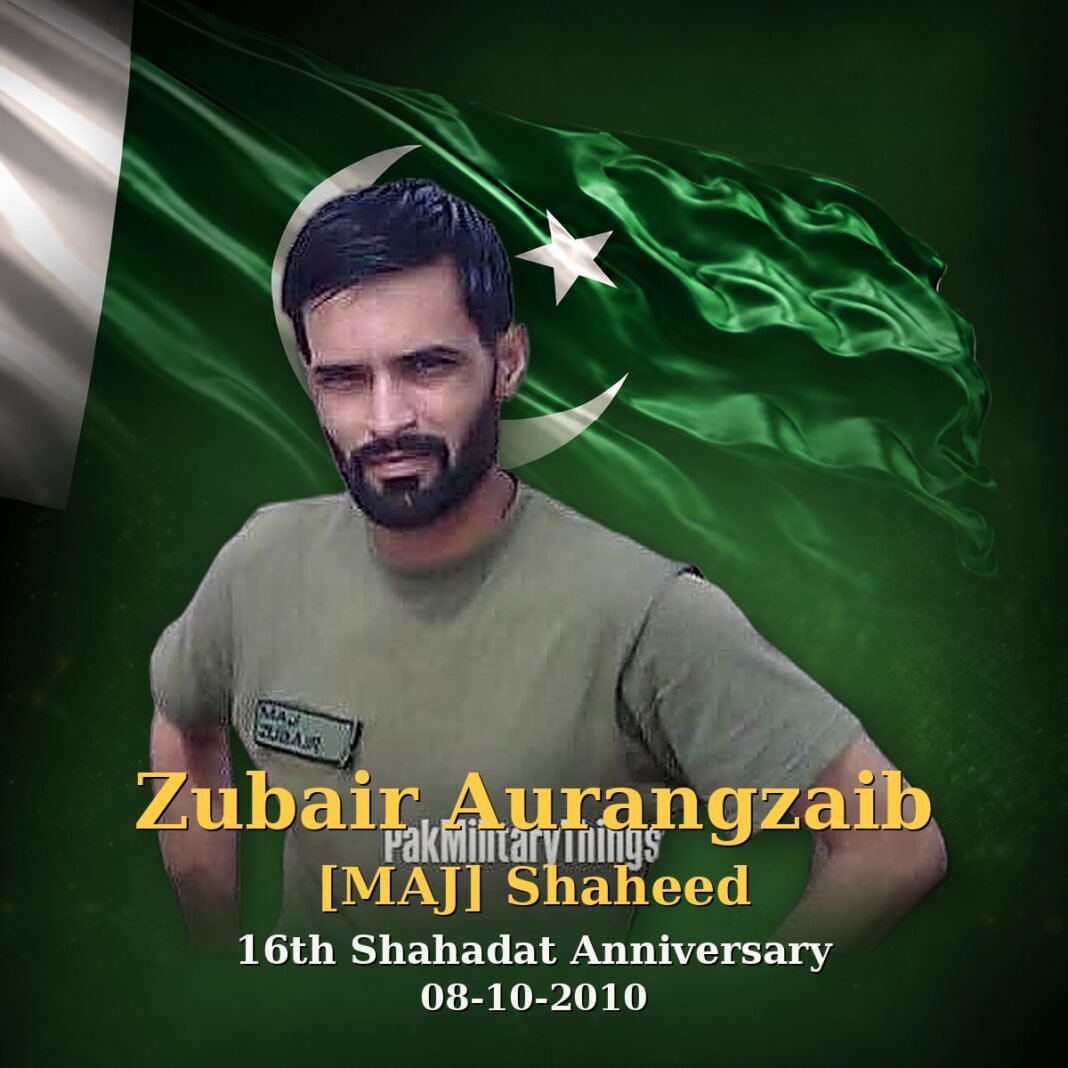
Sararogha mountain in South Waziristan was a stronghold of the terrorists, ground they had long used to threaten the peace of Pakistan. Taking it meant advancing on foot through terrain the enemy knew intimately, where every ridge could hide a gunman and every path could conceal a bomb. The Pakistan Army entrusted that mission to Major Zubair Aurangzaib, an officer of the 102 Long Course commissioned into the 22 Sindh Regiment. He pressed forward into that danger willingly. He never came back.
On 8 October 2010, during Operation Rah-e-Rast, Major Zubair Aurangzaib laid down his life while leading his men against militants in South Waziristan. Leading from the front, he engaged the militants in a fierce exchange of fire. In the heat of that battle, his foot stepped onto an improvised explosive device planted by the enemy, and he was martyred on the spot, at the head of his men.
The Battle for Sararogha
His task was to clear Sararogha mountain of terrorists, to drive them out of ground they had fortified and held. It was the kind of mission the Pakistan Army entrusts to its best officers, and Major Zubair Aurangzaib of the 102 Long Course was chosen for it because he was one of them.
He did not direct the clearing of Sararogha from a headquarters. He walked into it with his men, under fire, in keeping with the finest traditions of the Pakistan Army, where officers lead and soldiers follow. The cross exchange of firing with the terrorists was fierce, and in the middle of it, he kept moving forward. That is the difference between commanding and leading, and it is why his name is still honoured.
Improvised explosive devices have claimed many of Pakistan’s bravest soldiers, precisely because they strike without warning at men who are moving forward. That Major Zubair fell while pressing an attack, in the middle of an exchange of fire with the enemy, says everything about how he fought: not from behind, but at the very front of his men.
Sixteen Years of Remembrance
Each year on 8 October, his shahadat anniversary is observed by his family, his course mates, and all who honour the sacrifices made in the fight against terrorism. Sixteen years have passed since Operation Rah-e-Rast, and his name remains a symbol of the officer who does not ask his men to go where he will not go himself.
His name is spoken with the same pride as on the day he fell, because the manner of his falling has not lost its power. An officer who dies at the head of an assault, moving forward into fire, leaves behind something that cannot be buried: an example. Every young officer who hears the story of Sararogha learns what is expected of him.
The Price of Clearing the Mountains
The war against terrorism in the tribal belt was, at its core, a war for ground: mountain by mountain, valley by valley, stronghold by stronghold. Sararogha was among the toughest of them, and clearing such ground meant accepting that the enemy had every advantage of terrain and preparation. The Army accepted those terms anyway, because the ground had to be taken.
Every IED cleared or triggered in those mountains represented a choice the terrorists forced on Pakistan’s soldiers: to stop and cede the ground, or to keep moving and accept the risk. Major Zubair kept moving. The freedom of the tribal districts today, where children go to school and markets bustle without fear, was purchased by men who made that same choice, again and again.
Officers like Major Zubair Aurangzaib were the instrument of that resolve. He stood between Pakistan and those who wished it harm, and he did not step back.
A Legacy Carved in Sacrifice
Major Zubair Aurangzaib Shaheed died advancing, at the head of his men, on the mountain he was sent to take. May Allah bless him with the highest ranks in Jannah and give his family the strength to bear their loss.
We owe our peace to men like him, and to all the shuhada of Pakistan. They will never be forgotten.