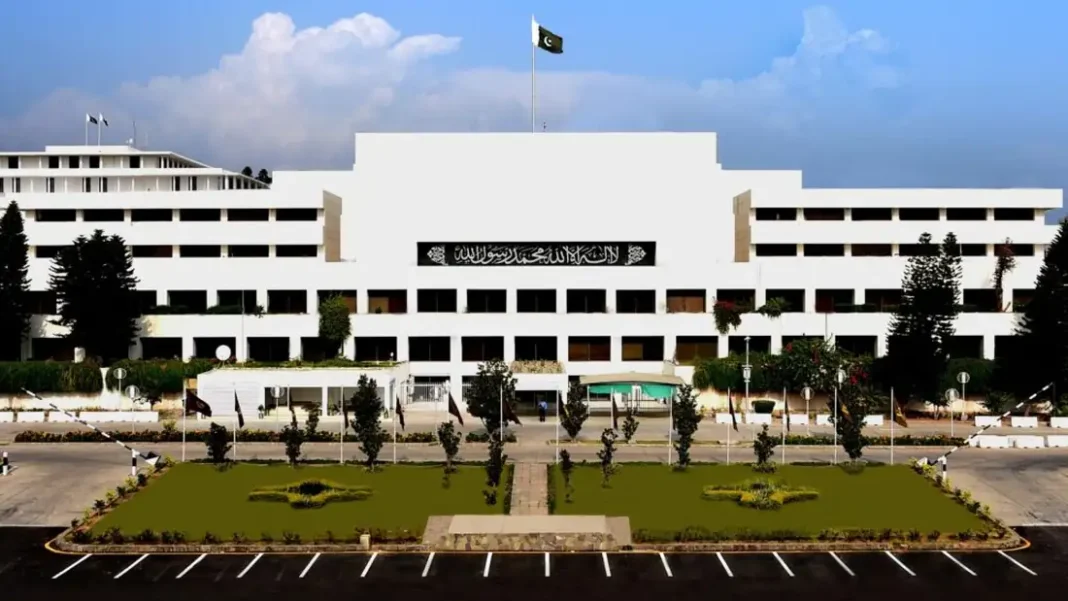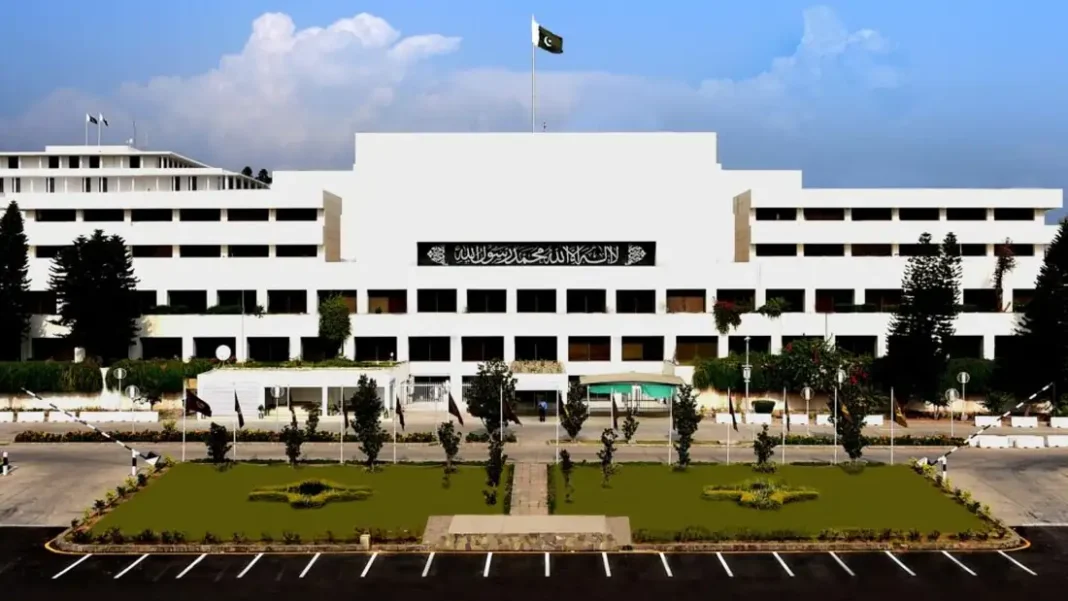


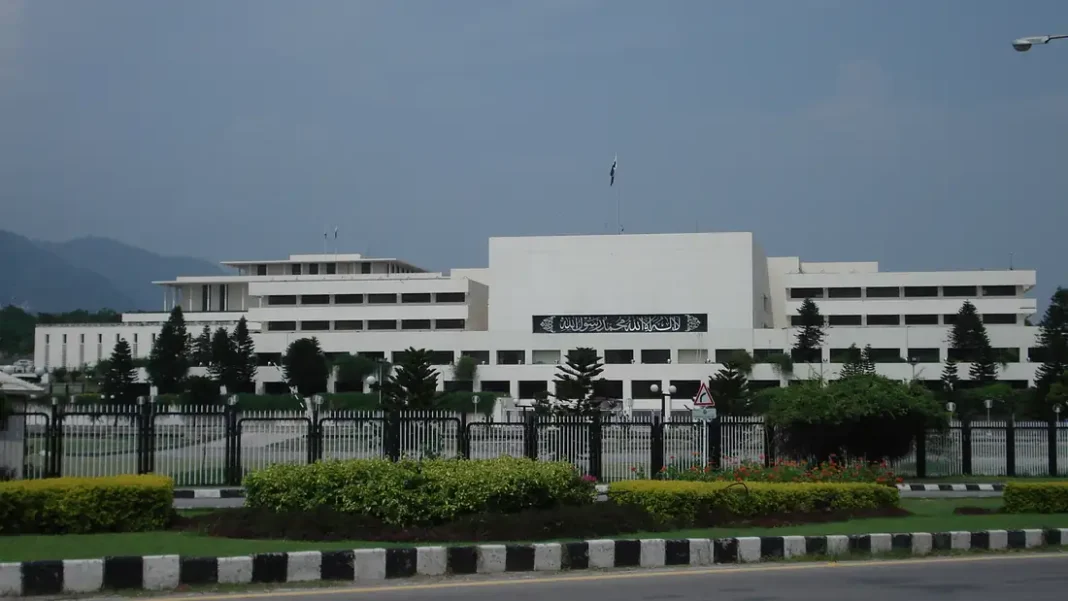
Pakistan’s federal cabinet — the ministers who run the country’s ministries — currently comprises 27 federal ministers under Prime Minister Shehbaz Sharif, drawn mostly from the PML-N with coalition allies. This page lists every minister, their portfolio and party, current as of October 2026.
Quick answer: Pakistan has 27 federal ministers (October 2026) in Shehbaz Sharif’s second cabinet. Key portfolios: Ishaq Dar (Deputy PM/Foreign Affairs), Khawaja Asif (Defence), Muhammad Aurangzeb (Finance), Mohsin Naqvi (Interior), Attaullah Tarar (Information), Ahsan Iqbal (Planning). Most are PML-N; allies include MQM-P, IPP and BAP.
In this guide
The full cabinet list
The 27 federal ministers (October 2026): Shehbaz Sharif (Prime Minister); Ishaq Dar (Deputy PM/Foreign Affairs); Khawaja Asif (Defence); Ahsan Iqbal (Planning & Development); Rana Tanveer Hussain (Food Security); Azam Nazeer Tarar (Law & Justice); Aun Chaudhry (Overseas Pakistanis); Aleem Khan (Communications); Jam Kamal Khan (Commerce); Amir Muqam (Kashmir & Gilgit-Baltistan); Awais Leghari (Energy); Attaullah Tarar (Information & Broadcasting); Khalid Maqbool Siddiqui (Education); Qaiser Ahmed Sheikh (Board of Investment); Riaz Hussain Pirzada (Housing); Musadik Malik (Climate Change); Muhammad Aurangzeb (Finance); Ahad Cheema (Economic Affairs); Mohsin Naqvi (Interior); Tariq Fazal Chaudhry (Parliamentary Affairs); Ali Pervaiz Malik (Petroleum); Aurangzeb Khan Khichi (Culture); Hanif Abbasi (Railways); Khalid Hussain Magsi (Science & Technology); Muhammad Moeen Wattoo (Water Resources); Muhammad Junaid Anwar Chaudhry (Maritime Affairs); Raza Hayat Hiraj (Defence Production).
Ministers of state and advisers sit below this tier and change more frequently; the list above is the constitutionally senior cabinet. For the newest appointments, see new federal cabinet ministers.
Party breakdown
PML-N dominant, allies included. The bulk of portfolios sit with the Pakistan Muslim League-Nawaz, the largest coalition partner. Coalition allies hold strategic posts: Khalid Maqbool Siddiqui of the MQM-Pakistan holds Education (reflecting the MQM’s Karachi base), Khalid Hussain Magsi of the Balochistan Awami Party holds Science & Technology, and the Istehkam-e-Pakistan Party’s Aleem Khan and Aun Chaudhry hold Communications and Overseas Pakistanis.
Mohsin Naqvi (Interior) sits as an independent — a former caretaker chief minister of Punjab and ex-media owner whose appointment raised eyebrows. The cabinet’s composition reflects the coalition arithmetic of the February 2024 elections: no single party commands a majority, so portfolios are the currency of alliance management. The ministers guide tracks changes.
The power portfolios
Where the real weight lies. Finance (Aurangzeb) controls the budget and IMF relationship; Interior (Naqvi) controls the police, FIA and internal security — the ministry in the headlines during the October 2026 protest standoff; Foreign Affairs (Dar, as Deputy PM) handles diplomacy; Defence (Khawaja Asif) manages the military relationship; Energy (Leghari) and Petroleum (Malik) handle the circular-debt crises; Planning (Ahsan Iqbal) oversees the PSDP and CPEC projects.
In Pakistan’s hybrid system, ministers operate alongside a powerful military establishment, particularly on security and foreign policy — the Defence and Interior ministers’ working relationship with GHQ matters as much as their formal authority. Understanding this duality is key to reading Pakistani politics.
How cabinets are made
Appointment and accountability. The Prime Minister selects ministers, who must be members of parliament (or become so within six months, as Aurangzeb, Naqvi and Cheema did via the Senate in 2024). The cabinet is collectively responsible to the National Assembly and can be reshuffled at the PM’s will — Shehbaz Sharif has adjusted portfolios several times.
Pakistan’s first cabinet took oath on 15 August 1947 under Liaquat Ali Khan — see the first cabinet of Pakistan. Since then, cabinets have averaged short lives: only a handful of prime ministers have completed full terms, and each change of government sweeps the ministerial slate clean.
How many ministers are there in Pakistan’s cabinet?
27 federal ministers as of October 2026, plus ministers of state and advisers. The number shifts with reshuffles — the PM can expand or contract the cabinet.
Who are the most powerful ministers in Pakistan?
By portfolio weight: Finance (Muhammad Aurangzeb), Interior (Mohsin Naqvi), Foreign Affairs/Deputy PM (Ishaq Dar), Defence (Khawaja Asif) and Planning (Ahsan Iqbal).
Which parties hold ministries?
Mostly the PML-N, with MQM-Pakistan (Education), Balochistan Awami Party (Science & Technology), Istehkam-e-Pakistan Party (Communications, Overseas Pakistanis) and independents in the mix.